Skip to content
ZinCuTec
Collection

Designer furniture: one design, two metals

Products

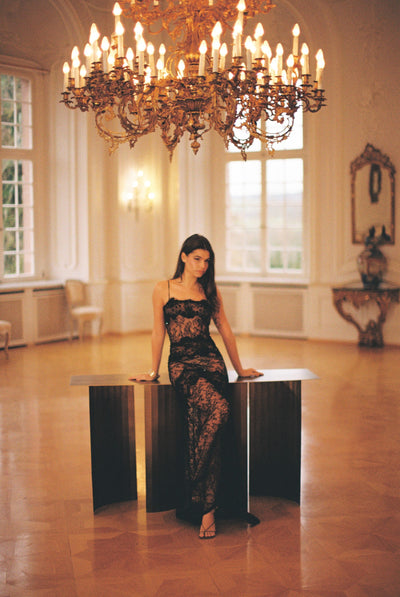
Designer furniture is rarely recognised by a single piece.

Read moreRead less

A table on its own is a form, and forms either appeal or they do not. It becomes interesting as soon as a second piece stands next to it: the same edge, the same radius, the same tone, without the two being the same. A design only shows itself in the plural.

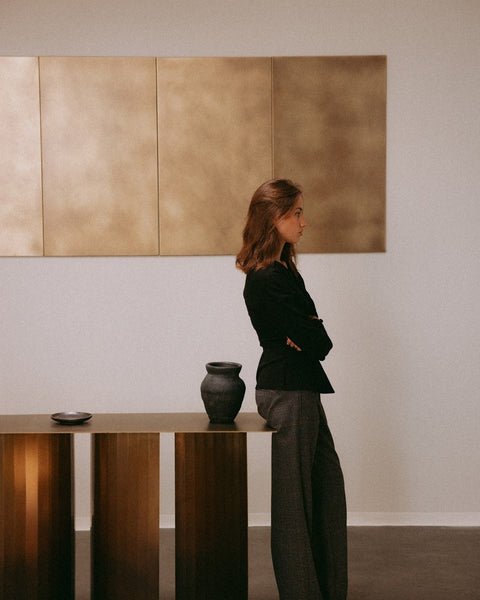
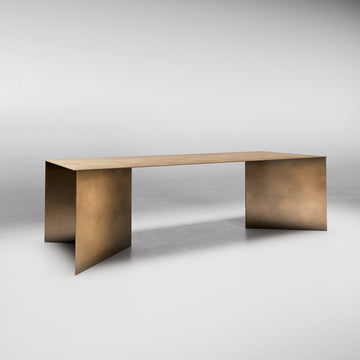
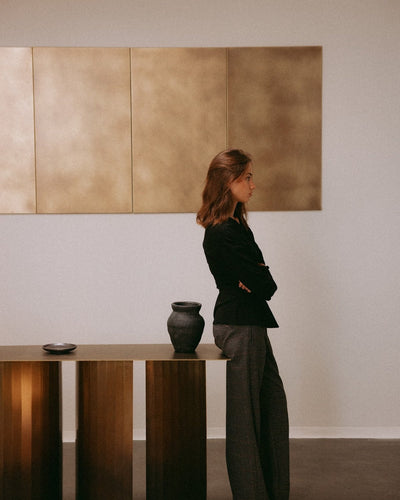
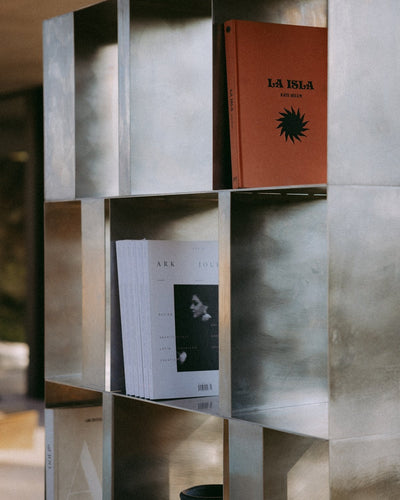
The canon behind it is narrow: patinated brass, brushed stainless steel, one workshop in Germany. Series such as ZEN, TUKKON or YUGEN run across the categories, from the dining table to the wall shelf to seating. A second piece is therefore not an addition but another word in the same sentence.

Nothing quite right?
We craft bespoke.

You can request any piece in a different size, finish or alloy. Tell us your idea, we check what is feasible and reply with a drawing and a price.

Design furniture from a single design: what connects the pieces

A furniture range can be read in two ways. Either as a list of items offered side by side, or as a series of answers to the same question. Designer furniture belongs to the second reading. It is held together not by the assortment but by the decisions made before each individual form.

These decisions are unspectacular and reach into every piece. How thick the sheet is. Which radius an edge receives. Whether a surface projects beyond the construction or ends flush. How high above the floor a body begins. A dining table and a wall shelf have nothing to do with each other functionally and yet carry the same four answers. That is how an eye recognises kinship long before it can name it.

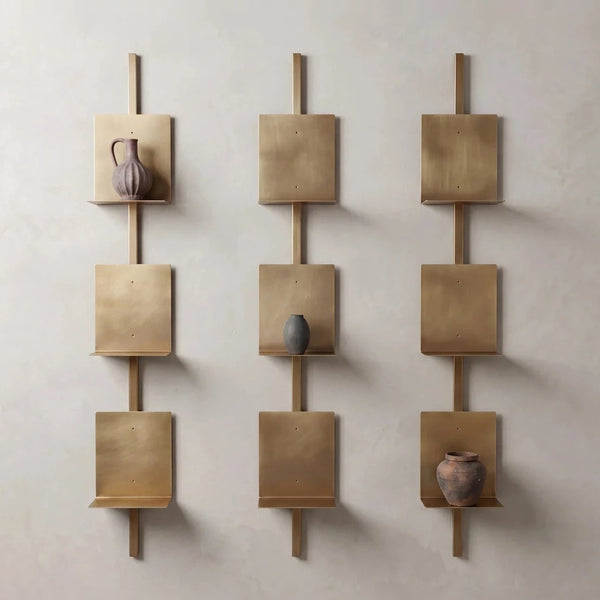
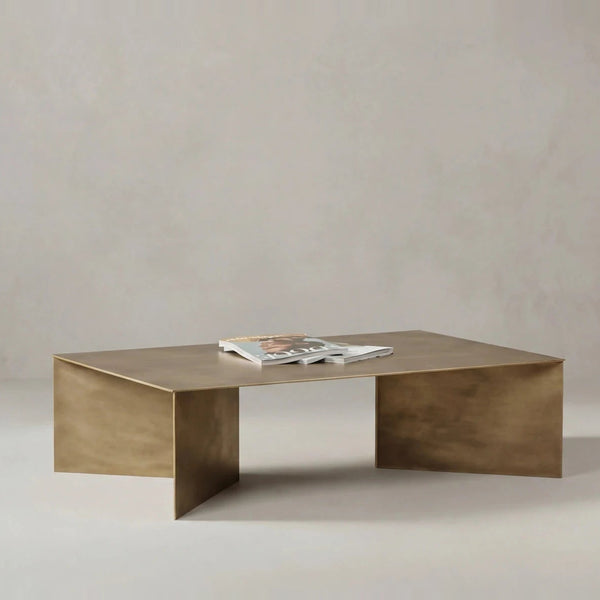
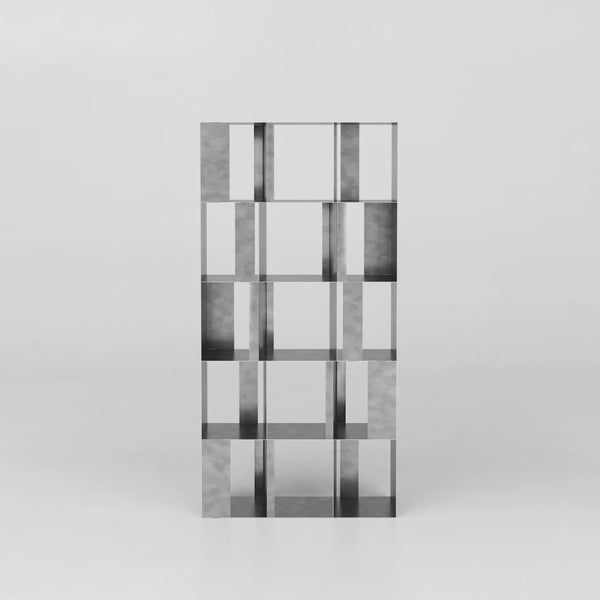
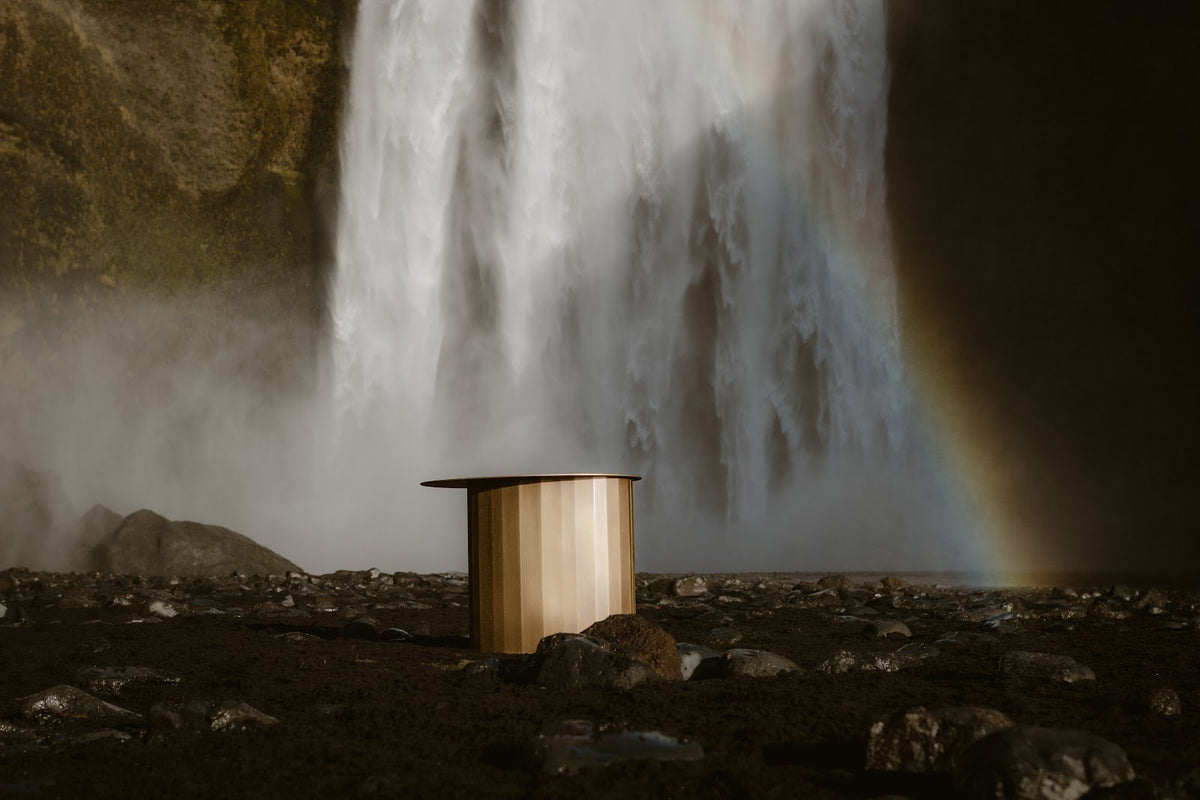
This is clearest in the series. ZEN reaches from the low coffee table through the console to the bench, TUKKON from the closed cylinder to the lounge chair, RYU and KINKO stay on the wall. Within a series no dimension repeats itself, but the attitude does. Some of these pieces are made only in patinated brass and are gathered separately under handcrafted brass furniture.

Such a language cannot be laid over an assortment after the fact. It emerges while designing and rules out forms that would be taken for granted elsewhere. A piece of furniture that does not fit in is not adapted but never drawn in the first place. Perhaps that is the least conspicuous quality of good designer furniture: you can see what is not there.

Modern furniture that does not become fashionable

Modern and fashionable share the same root and have come to mean opposite things. A piece of furniture is fashionable if it can be dated: by a colour, by a leg shape, by a handle that was everywhere for three years. A piece is modern if such signs are missing. It belongs to no decade because it has borrowed from none.

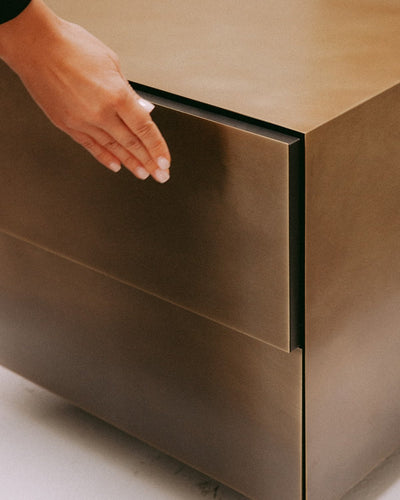
With modern metal furniture, this restraint is less a stylistic decision than a consequence of the material. Sheet metal can be folded, cut and joined; it cannot be turned or carved, and it can only be decorated with great effort. What remains are surface, edge and proportion. Three means that have not gone through any fashion because they offer too little to grab onto.

This has a side that only becomes visible after years. A designer piece without signs of the time it was made does not grow old, it only grows older. It stands in a room that changes around it and does not stand out in it. Walls are painted, sofas replaced, rugs exchanged; the metal remains the calm constant in this equation.

Modern designer furniture is therefore rarely bought on a whim and rarely replaced out of disappointment. It stands between these two movements. What is striking about it usually only becomes apparent on the second day, and then not loudly.

Show moreShow less

Luxury furniture and exclusive furniture: a question of how it is made

Two words accompany designer furniture almost everywhere, and neither actually describes the furniture. Exclusive says something about access, luxurious something about effort. On the shelf of a furniture store they usually mean the same thing: rarely seen, hard to get. That still says nothing about the piece itself.

Taken literally, exclusive means excluding. That presupposes a stock from which someone can be excluded. In a workshop this stock does not exist. An exclusive designer piece does not exist at all before it is ordered; the metal sheet it is made from is still lying flat at that point. Exclusive here does not mean kept scarce but made individually.

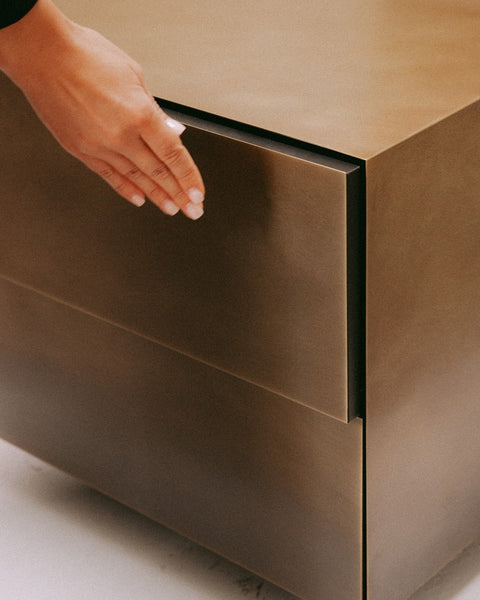
Luxury furniture is usually read by what has been added: more material, more shine, more visible work. With designer furniture made of solid metal, the effort lies where nothing happens. A surface without a joint. A radius at which the light does not falter. An angle that stays the same over the entire length. This kind of work is hard to demonstrate because its result looks like absence.

Perhaps that is why both words have become so interchangeable. They promise an exception and in the end only name a position on the shelf. A production that sets up every piece of furniture individually cannot even offer the exception. For it, the exception is the rule, and a word that describes everything soon describes nothing.

Special furniture, room by room

Designer furniture from a single design is hard to sort by room, because the pieces do not take their identity from the door they stand behind. A bench stands in the hallway or at the table. A console holds keys or an object. A low table is a coffee table until someone places it in front of a window. The categories in the shop, from the dining tables to the coffee tables to the shelves, are an order for navigation, not for the room.

Room by room, the question still arises, and there are separate overviews for that. Designer furniture for the living room groups around a low surface and a wall; in the dining room everything is oriented towards the table, including what stands against the wall behind it; in the hallway, depth decides whether a piece of furniture may stay at all. In the end, the differences between these three rooms are differences in distance, not in style.

The same applies at the workplace, within narrower limits. Office furniture in the design of the living area was long an exception; today the desk often stands in the same room as the sofa. OYAKATA is the only model among the desks and is designed for a fixed working height, but not for a particular place.

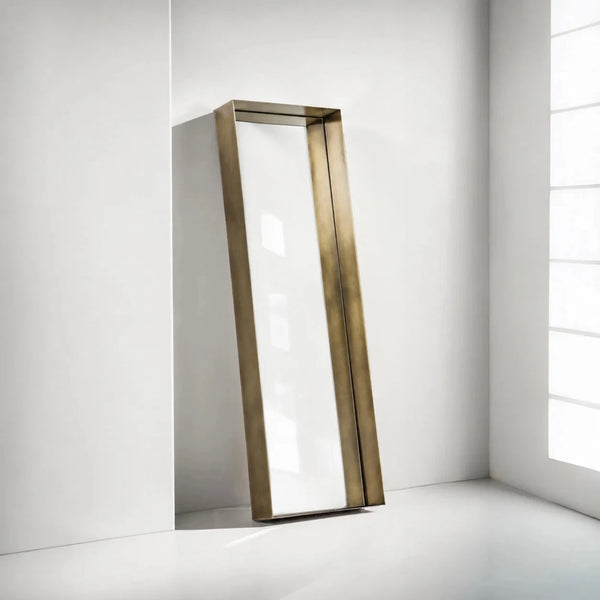
Special pieces of furniture in this range are not the conspicuous ones. They are the ones you recognise in two places in a home without it looking like a matching set. In addition there are four objects, decor in the narrower sense: a mirror, a chessboard and two wall pieces of hammered brass. They carry nothing and hold nothing. They ask the same question in a different format.

Designer metal furniture: the material as the design

Every material brings a grammar with it, and anyone who works in it long enough writes in it. Wood allows mass and joinery, stone allows volume, sheet metal allows one thing above all: the surface that changes direction at a line. Designer metal furniture therefore consists of angles, not of blocks.

This one property decides a great deal. Stiffness does not come from thickness but from geometry: a panel edge folded downwards carries more than a sheet twice as thick without an edge. That is why this designer furniture looks lighter than it is and weighs more than it looks. That is why there are no decorative edges, no applied profiles and no chamfers that would have something to hide.

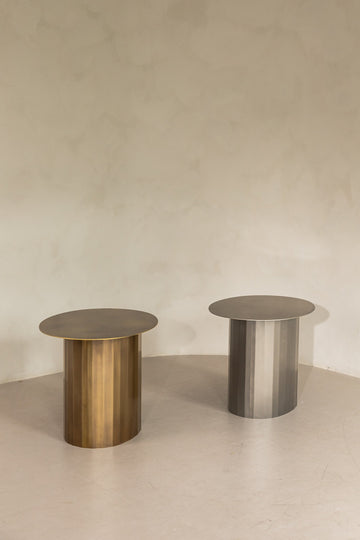
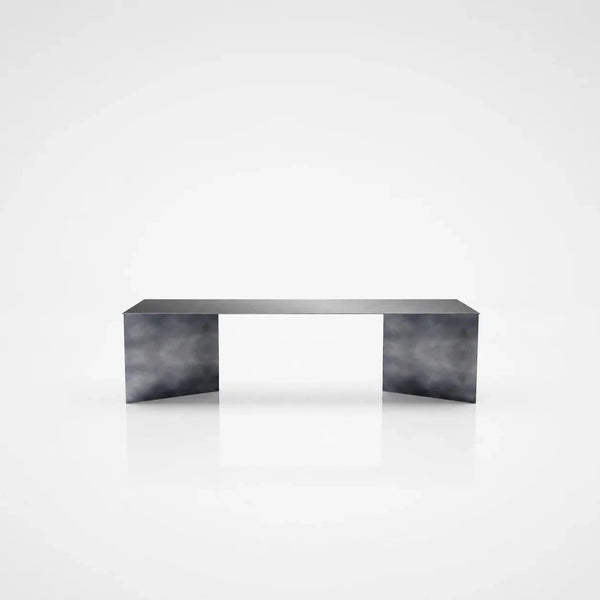
Two surfaces complete the range: brushed stainless steel and patinated brass. The brass tone is created by patination in the workshop, not by coloured paint, and a subsequent sealing holds it in place. Where a piece differs, this is stated on the product.

That is also the difference from what retailers sell as industrial furniture, where metal usually only forms the frame. A design that commits to one material loses possibilities and gains a signature. Whether that was a good trade is not decided by the sheet metal but by what is placed on it for years.

Buying designer furniture online: ordering, delivery, advice

An online furniture store usually shows stock. This one shows designs. Every photo belongs to a piece that already stands somewhere else; your own usually begins as an order to a workshop and is individually made, with the delivery time shown on each product. Anyone who buys designer furniture online here is mostly not acquiring something finished but a production.

This sequence has an advantage that a warehouse cannot offer: as long as nothing has been built, things can still be changed. A video call can be arranged via the product pages, in which dimensions, surface and location are discussed. If a dimension deviates from the range, it is drawn and given a fixed price before anything is cut.

Delivery is handled by a freight carrier and ends at the curb. Delivery terms are listed on the Payment & Shipping page. If a piece happens to be in stock, a return period of 14 days applies. What comes after the curb is the shortest and at the same time the heaviest part of the journey.

Anyone looking for designer furniture from this workshop usually starts at one of two points: with a category, if the piece is already decided, or with a dimension, if the room dictates it. Both paths lead to the same question. It is not which piece of furniture appeals today, but which one will still speak the same language in ten years.

Frequently asked questions

What is designer furniture?

Designer furniture is furniture whose form goes back to an original design rather than a production specification. At ZinCuTec the frame for this is narrow: two metals, patinated brass and brushed stainless steel, and one workshop in Germany. Every piece is built individually.

How do you recognise genuine designer furniture?

Most reliably by whether the design language holds across several pieces: radii, sheet thicknesses and proportions then repeat across the categories. Secondly by the information available: whoever drew and built a piece of furniture can say why an edge sits where it does. Thirdly by production to order.
Which designer furniture does ZinCuTec offer?

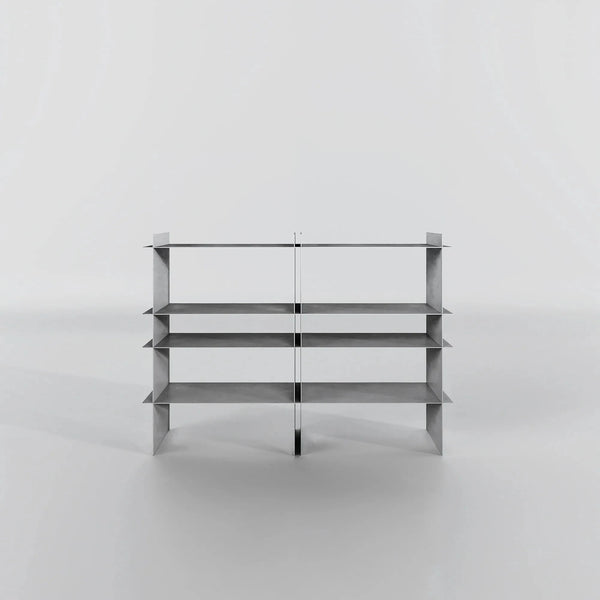
The collection brings together the entire range: dining tables, coffee tables, side tables, bedside tables, consoles, the desk, wall and standing shelves, the bench and the lounge chair, as well as four objects, including a mirror and a chessboard. All are made of patinated brass, brushed stainless steel or both.

Why is the furniture made of metal and not wood?

Because sheet metal allows forms that would not hold in wood: thin surfaces with a large span, edges without visible joints, closed bodies without an inner frame. Then there is the durability of the surfaces. The range focuses on metal furniture.

How long does designer furniture made of metal last?

Metal furniture is intended for long-term use. The pieces are sealed, dining and coffee tables with 2K clear lacquer, all others with clear lacquer; the sealing preserves the patina created during patination in the workshop. For everyday use, the care described on each product is all that is needed.

Can designer furniture be made to measure?

Yes. Dimensions, surface and alloy can be changed on most models. This is preceded by a description of the room, a drawing and a fixed price; only then does the order go into production. Some wishes fail because of the statics of the sheet metal, and this is said in advance.

How does buying in the online shop work?

For most models, the order triggers production, which takes five to six weeks; some pieces are available sooner. The freight carrier delivers to the curb; the terms are listed under Payment & Shipping. There is a 14-day right of return, provided the piece was not specially made. A video call can be arranged in advance via the product pages.