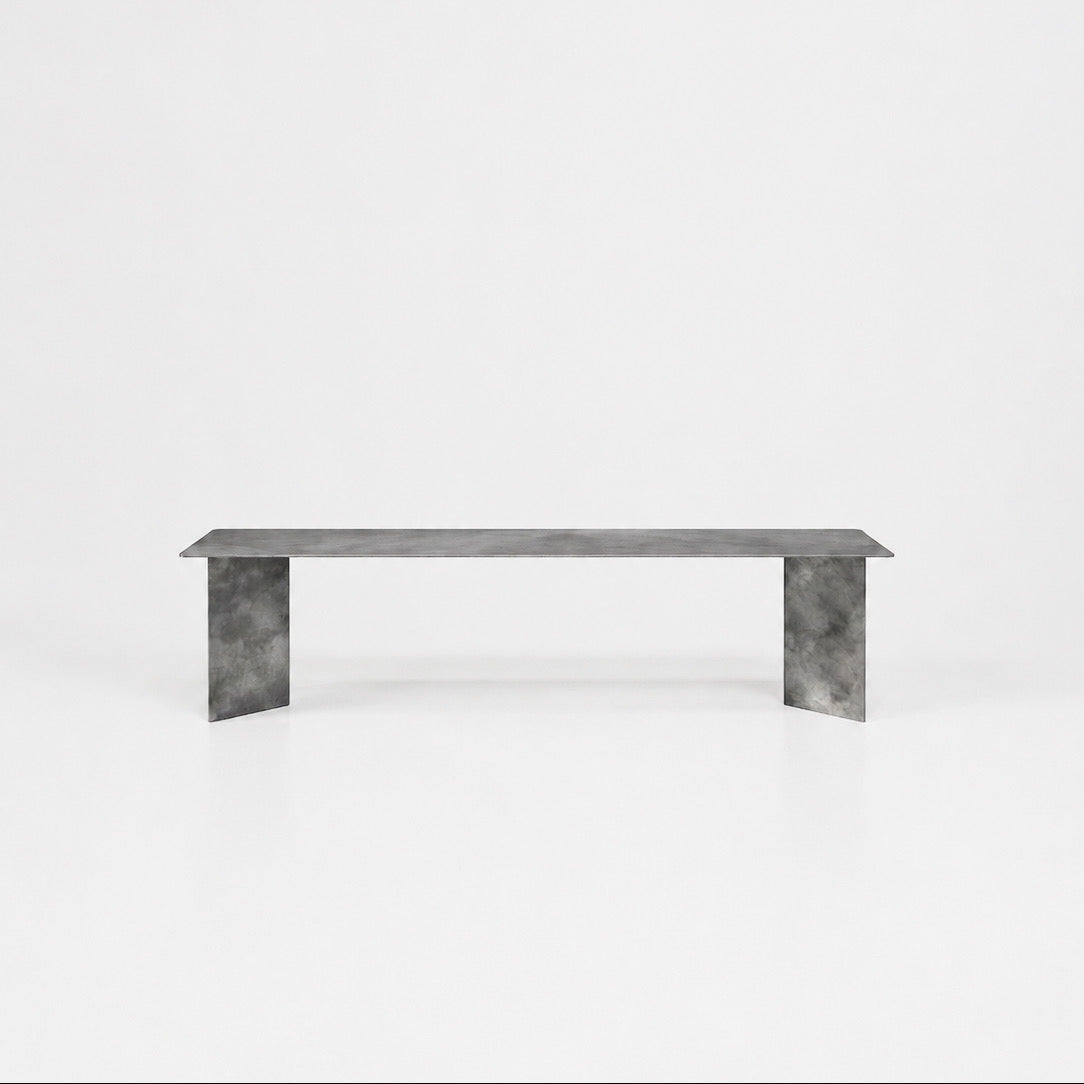
Most living rooms do not come together all at once.
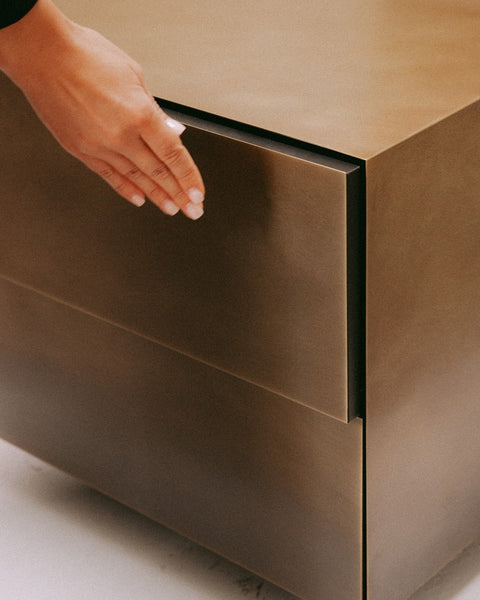
They accumulate over years. The sofa belongs to one phase of life, the coffee table to another, and the shelf was at first a stopgap that stayed after all. Rooms like these work, and yet they lack something that is hard to name: they tell several stories at once, without any of them reaching an end. Our living room furniture is made in the same workshop and from the same two materials: patinated brass and brushed stainless steel. A coffee table from today and a shelf from the day after tomorrow therefore belong together without any need for coordination.
You can request any piece in a different size, finish or alloy. Tell us your idea, we check what is feasible and reply with a drawing and a price.
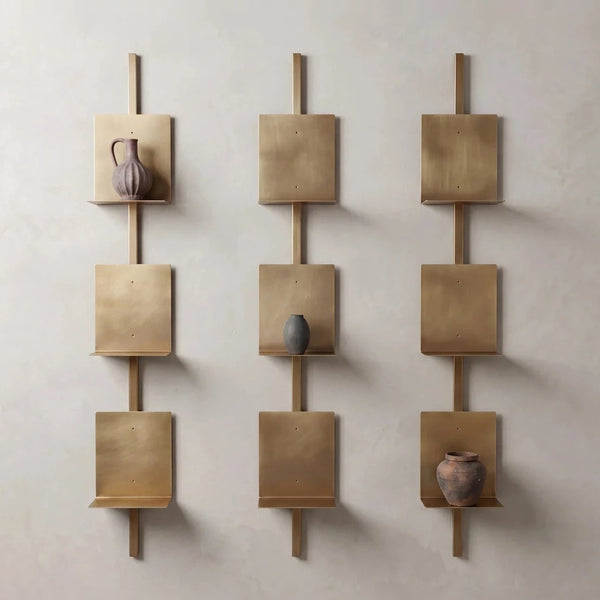
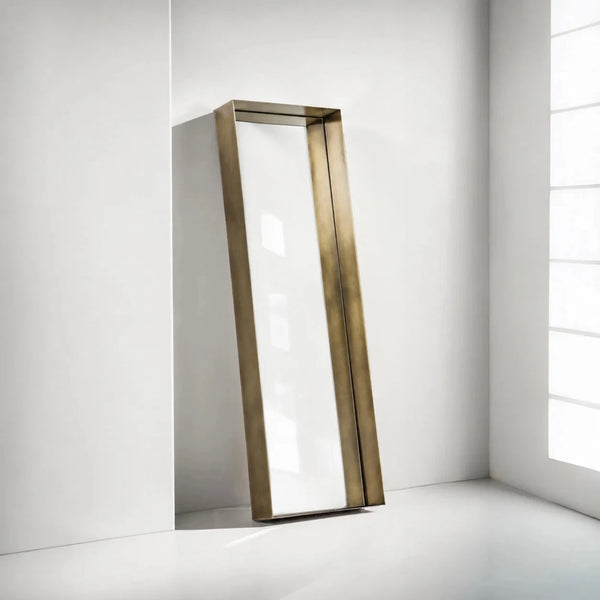
Almost every living room divides into three zones, and it helps to consider them separately. The seating zone consists of the sofa, armchair and the table between them. The surface zone lies at the edges; this is where side tables, a console or a low shelf stand. The third, the wall zone, carries everything that does not stand on the floor.
If one of these zones is missing, its task shifts to the others, and visibly so. Without a wall zone, everything migrates to the floor and the space becomes cramped, even though the square metres have not changed. Without a surface zone, everything ends up on the coffee table, which then stops being a surface and becomes a depot.
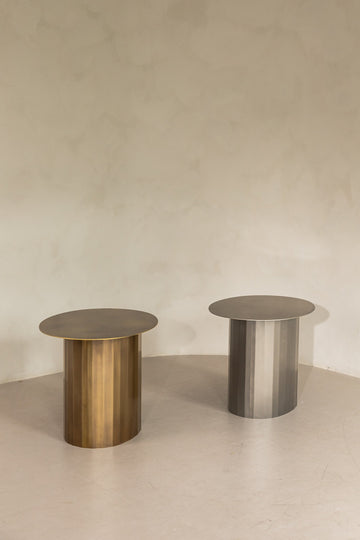
The zones demand different amounts of attention. In the seating zone, comfort is decisive, and it can only be tested by sitting. In the surface zone, height is decisive: a side table should sit roughly at armrest height so that a glass can be put down without anyone having to turn around.
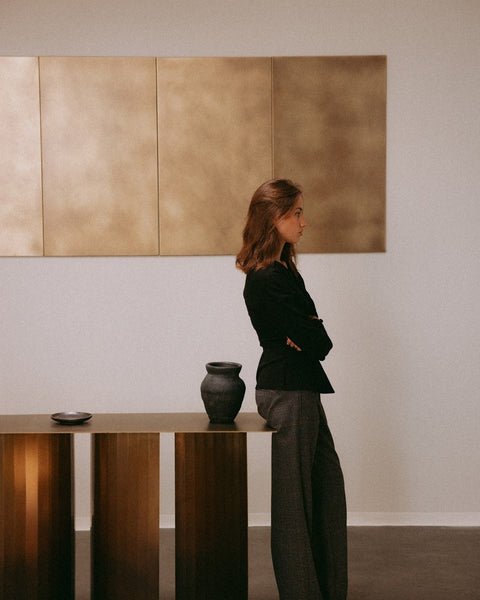
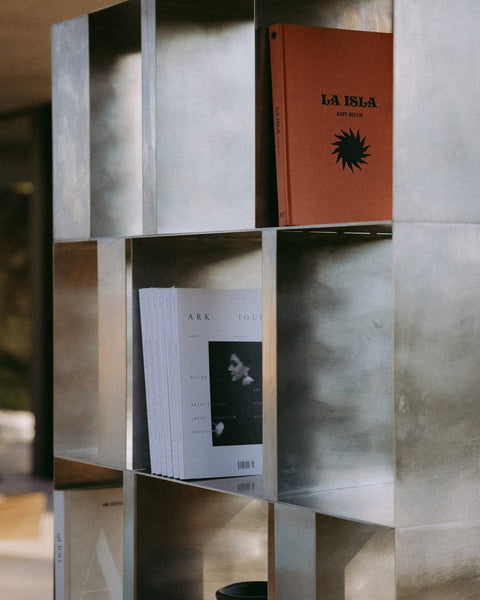
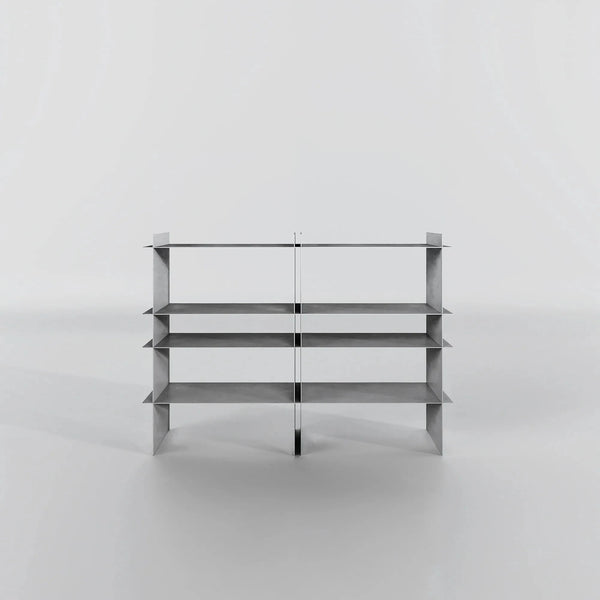
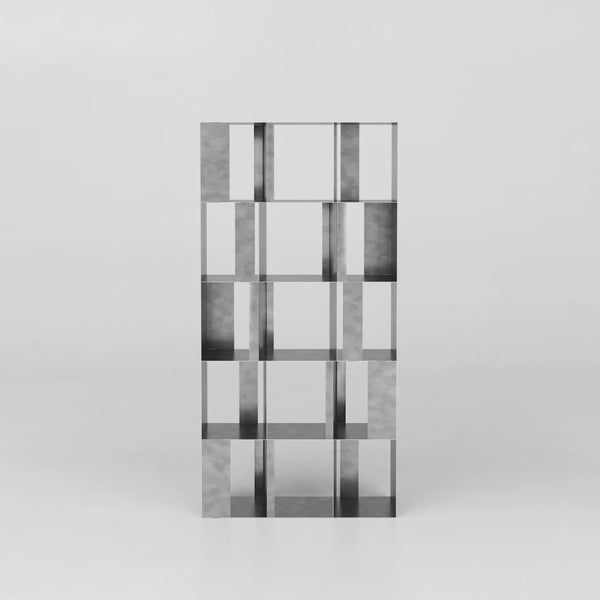
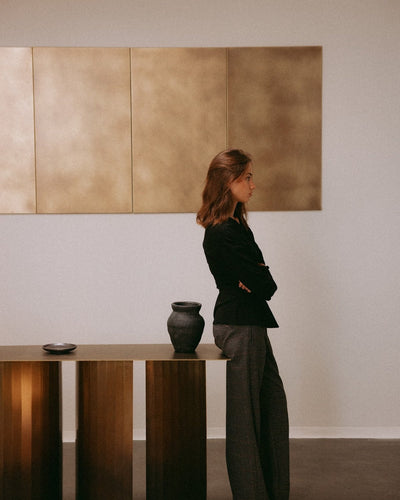
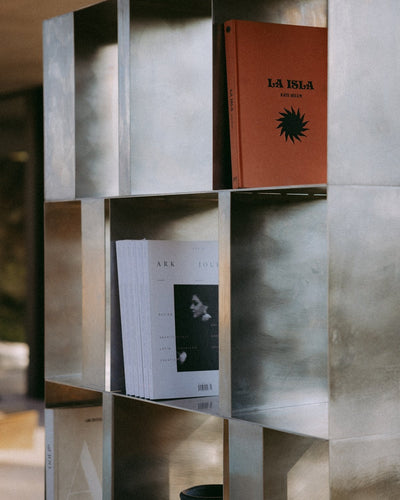
In the wall zone, it is not quantity that counts but weighting. If you mainly keep books there, you will find the right form among the bookshelves. A well composed wall often needs fewer elements, but ones that are allowed to claim their space. Two precisely placed pieces look calmer than five smaller ones, and not only for reasons of taste: every additional object creates new edges and axes that the eye has to relate to one another.
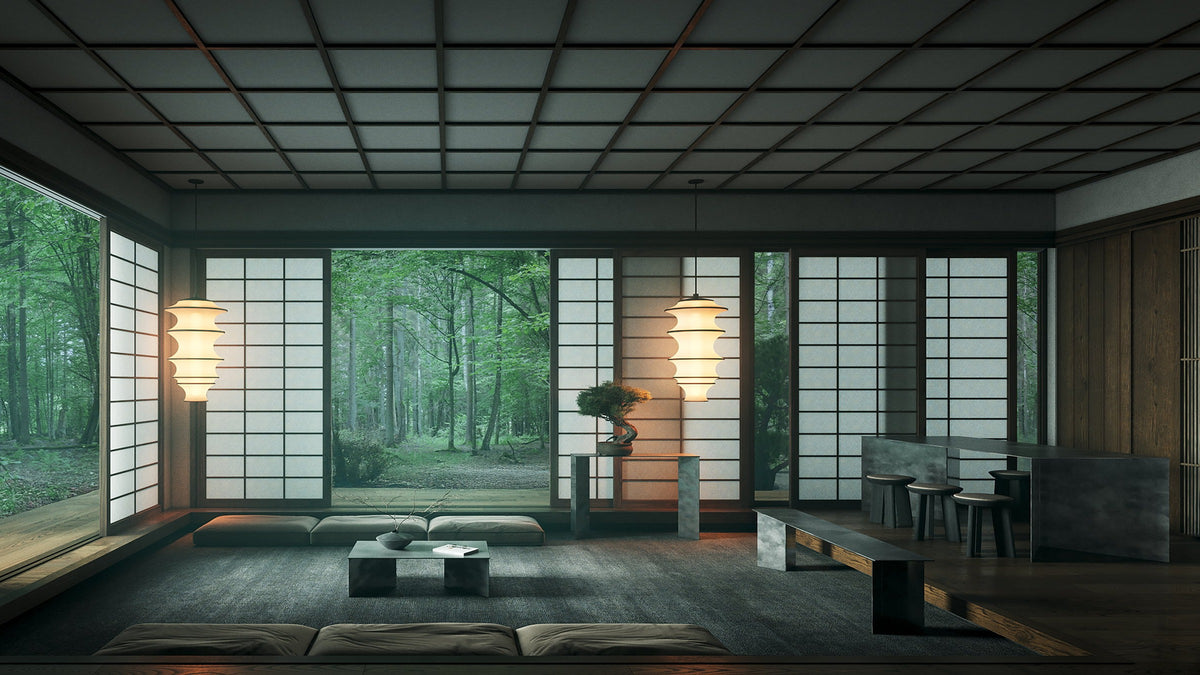
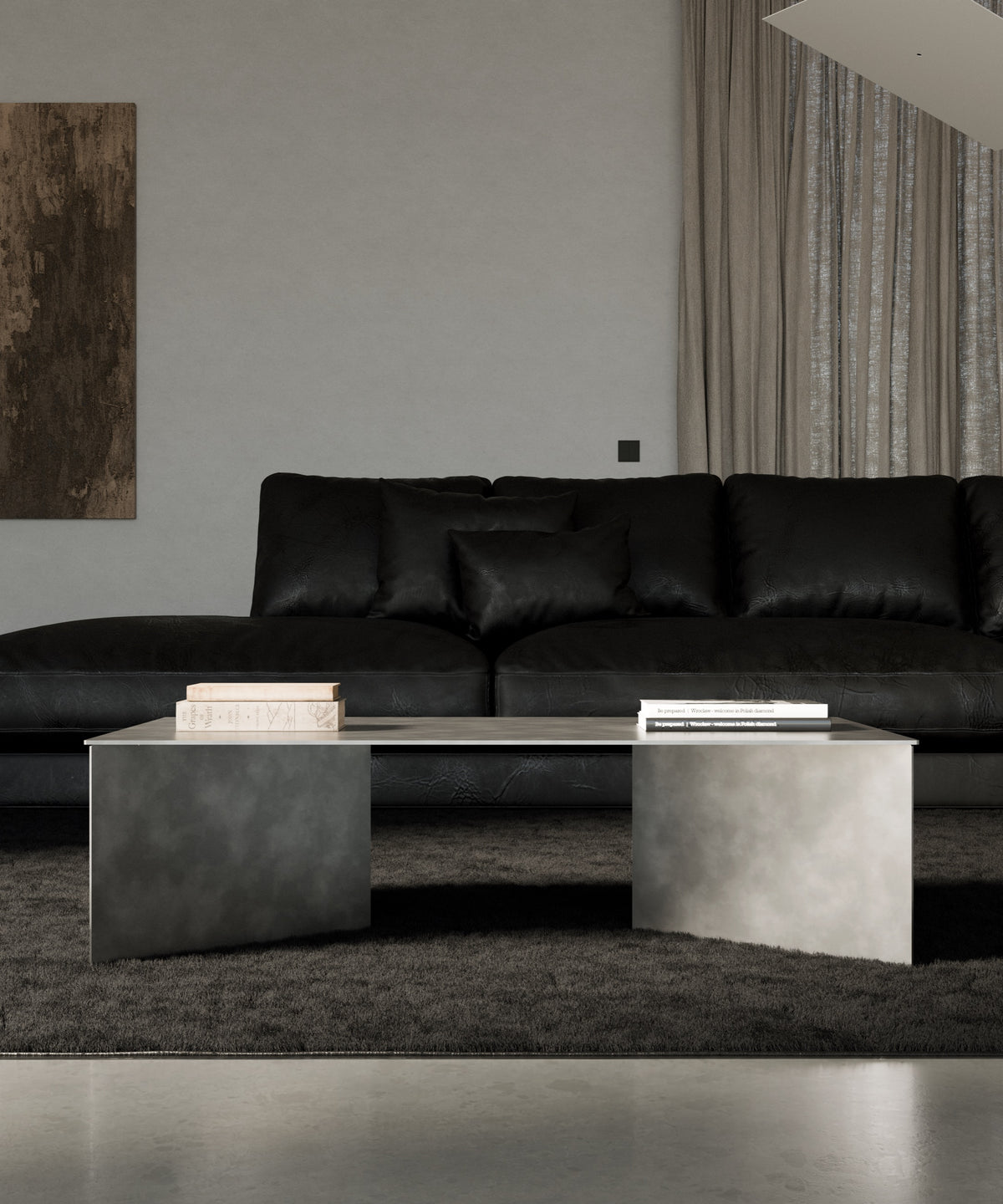
The most common objection to a modern living room with metal furniture is that it feels cold. That is true when metal alone defines the room. The objection loses its force as soon as textiles and other tactile materials are set against the metal. The key is not to hold metal back but to give it a counterpoint. Only in contrast does its precision become tangible.
A wool rug, heavy curtains and a textured sofa take the hardness out of a room faster than any wooden surface. They do so without different styles having to be brought together. Textiles work on a different level: they change not the look of the room but its sound. A room with textiles is audibly softer than one without.
The second factor is light, and it is overlooked even more often than textiles. Cold white ceiling lighting makes any room uncomfortable, regardless of the furniture in it. Two or three warm light sources at different heights achieve more than any material decision made beforehand.
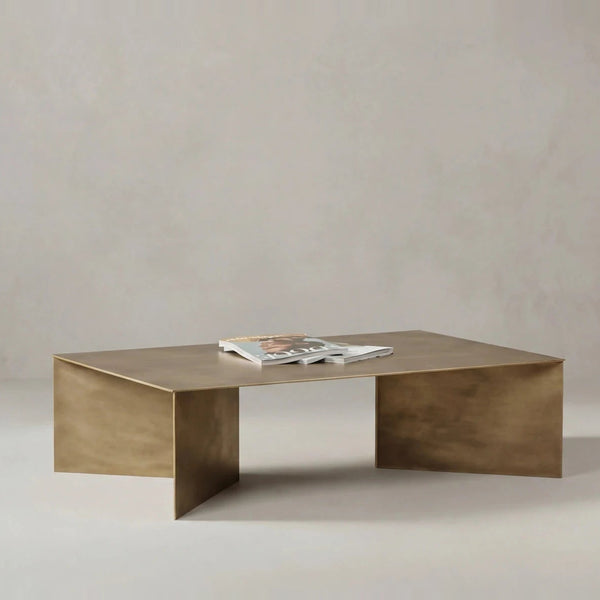
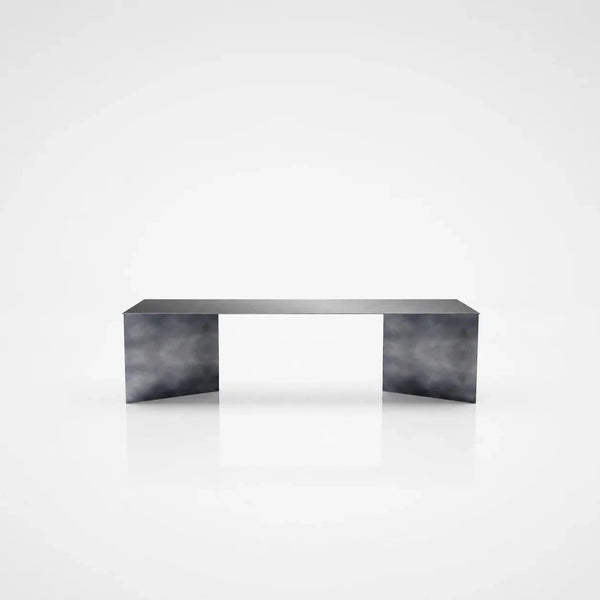
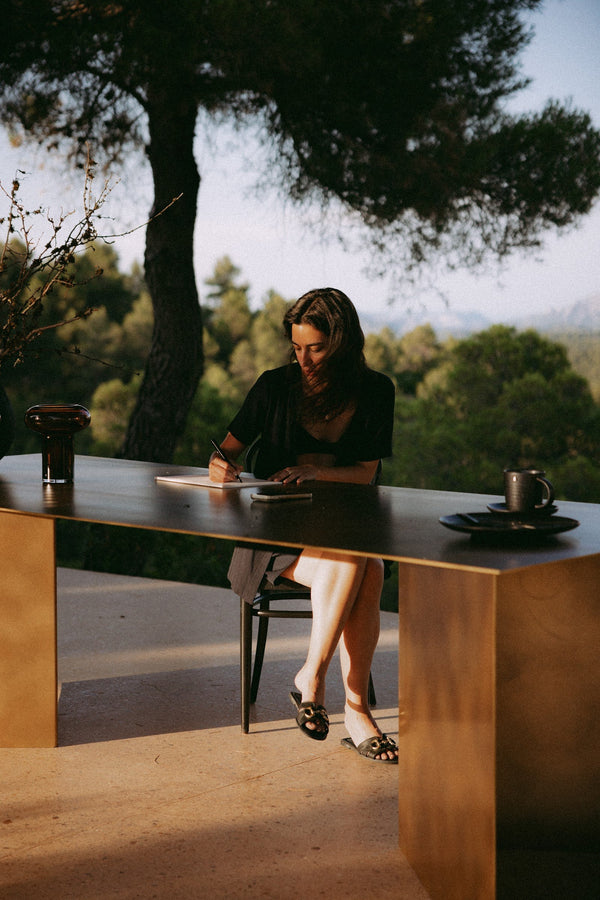
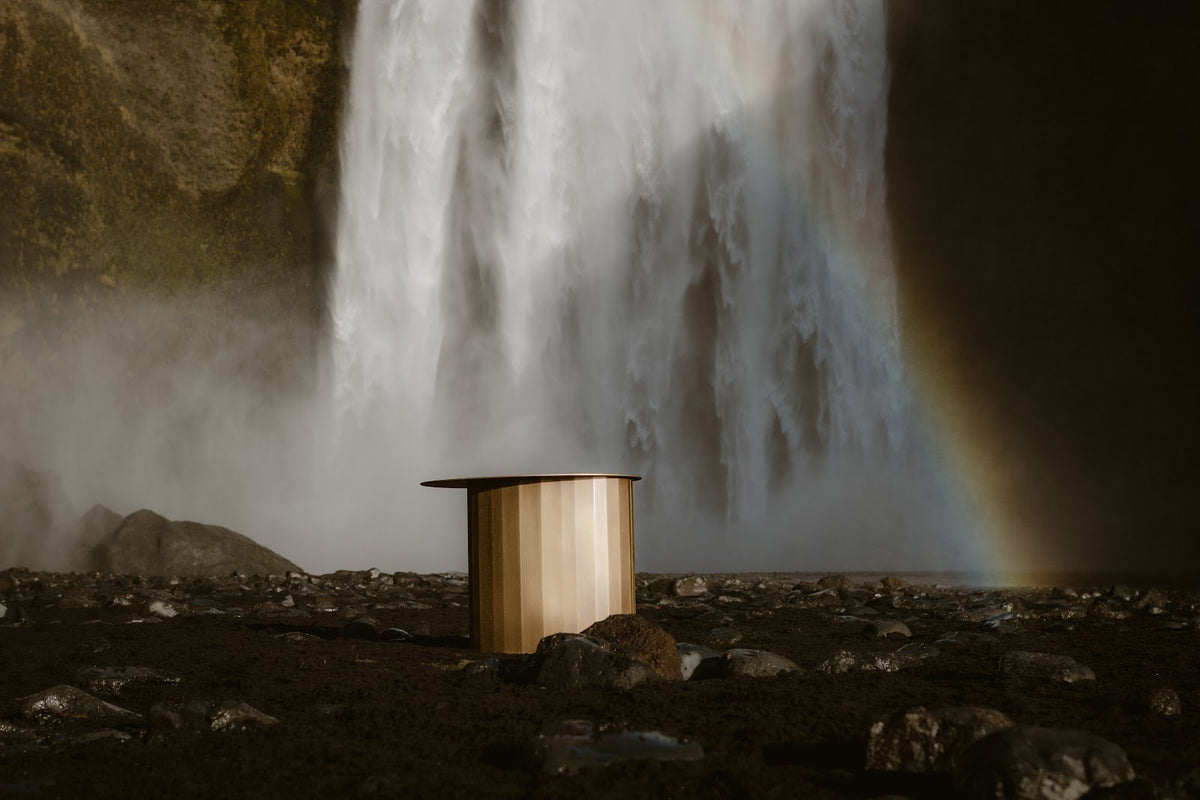
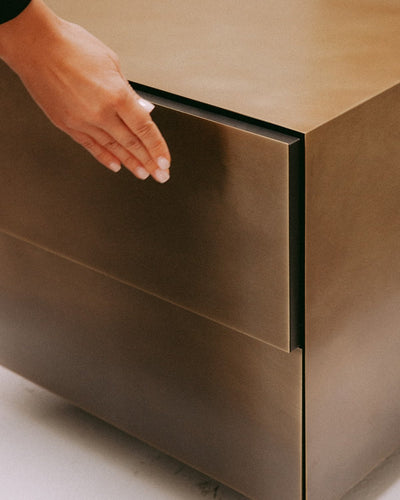
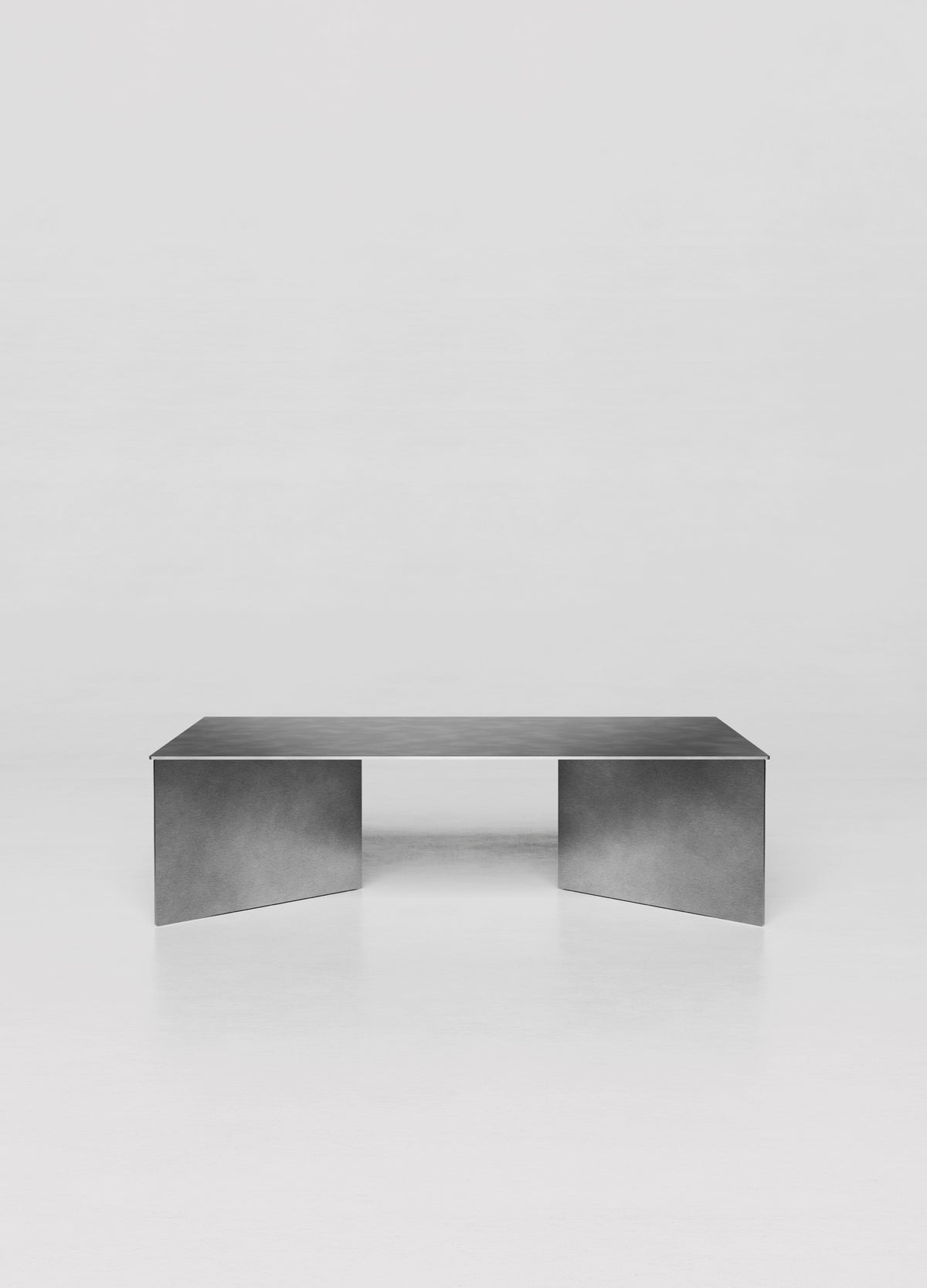
The simplest lever remains the material. Patinated brass brings warmth to a room; brushed stainless steel feels cooler. If you are choosing between the two finishes and looking for a warmer atmosphere, you will find it in brass. This difference is hard to capture in photographs, but in the room it shows immediately. That is one of the characteristics of materials that work with light rather than with colour.
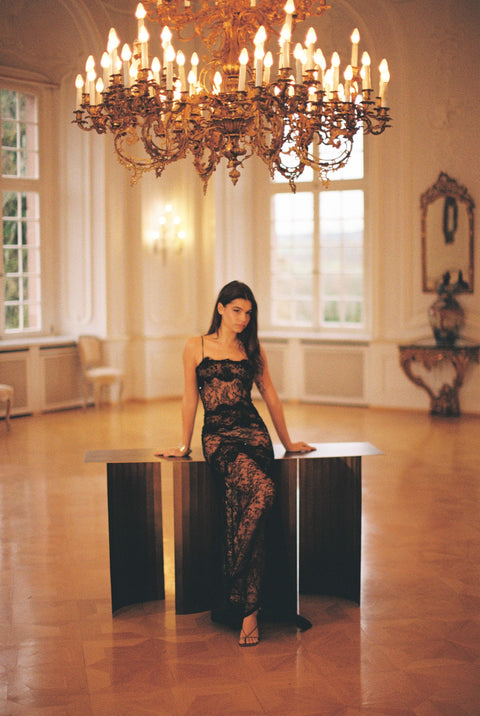
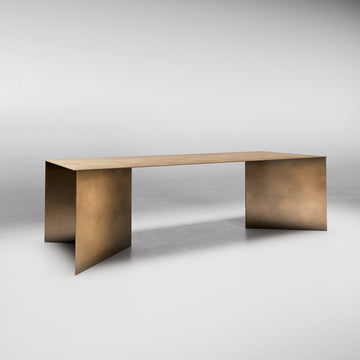
For the centre of the room, there are four coffee tables to choose from, from the low large format at 130 cm long to the round version with a diameter of 60 to 100 cm. At the edges, the side tables take over.
Both types are designed so that they can stand side by side without kinship turning into uniformity. With tables from different makers, repetition is the norm: two designs pick up the same motif, interpret it only slightly differently and so begin to compete with each other. It is one of the reasons why many living rooms look unfinished.
Then there is the seating with a bench, a stool and a lounge chair, the shelves for the wall zone and the objects, which have no function and therefore hold the gaze. An object without a purpose is looked at for longer than one that immediately explains what it is for; THE ROYAL GAME is the clearest example of this in the range.
A complete living room from a single source is therefore possible; it is just not the usual route. Most people start with one piece and add to it later, often over several years. This is exactly what the range is designed for: no series that are discontinued, no collections that replace one another. A range that stays the same puts the room under no pressure to hurry.
Interior ideas have a short half-life, furniture a long one. Distinguishing between the two is worthwhile, because the costs are distributed so differently. What ages quickly are colours, patterns and anything that is currently a trend. What remains are proportions, dimensions and material.
A coffee table with the right height and an honest surface will still stand there just the same in five years, even if the wall colour has changed twice. Conversely, no wall colour can rescue a table with the wrong proportions. The flaw then sits at a level that cannot be painted over.
In practice, this means that whatever is short-lived belongs in the interchangeable layers: in textiles, cushions and wall colour. The long-lasting pieces stay quiet because they have to survive each of these changes without standing out. A piece of furniture that belongs to a particular wall colour loses its place along with it. It has then not grown old but become out of place. And that is the more difficult way of going out of date.
The same applies to the wall on a smaller scale. A single large object lasts longer than a group of pictures, because it is not an arrangement that at some point no longer adds up. A group needs looking after; it loses its balance as soon as one part is missing. A single object does not have this problem.
A living room does not have to come together in a single purchase, and with handmade pieces that rarely makes sense. Because the range does not change with the seasons, an addition will still match the first order years later. With brushed stainless steel, this applies without restriction.
Patinated brass is a different matter. The patina of a piece made later differs slightly, because it was created in a different bath on a different day. If you are planning two brass pieces side by side, it is better to order them together. Not because the process is imprecise, but because its precision does not lie in uniformity.
Most pieces are made after the order is placed, while some are available sooner; the delivery time is shown on each product page. If a dimension does not fit, it is changed without this becoming a separate project. In a workshop that makes every piece individually, departing from the standard is not an exception but the same work with different numbers.
If the question remains which piece should come first, a floor plan or a photo with measurements is enough. The answer then names the piece of furniture that opens up the room most sensibly, occasionally even one that is not made here at all. That happens more often than you would expect from a manufacturer. For planning a good room, it is often the more honest recommendation.
Start with the largest piece, usually the sofa. It sets the axis of the room and the other pieces can be planned around it. Small furniture and objects should come later in the process.
Three questions help evaluate any supplier: Is the piece made to order, will the model still exist in five years, and can the place of manufacture be named? At ZinCuTec the answers are made to order, yes, and Germany. If immediate availability is essential, a stockholding retailer may be more suitable.
Yes. Fabric provides texture that metal does not, and the contrast between soft and hard surfaces makes both more interesting. Two very smooth surfaces can otherwise make a room feel cooler.
Burnished brass feels warmer and darker, while brushed stainless steel is brighter and quieter. Brass can add depth to darker rooms, and stainless steel works particularly well in bright spaces. Mixing both works when one finish remains clearly dominant.
A useful guideline is around two thirds of the sofa length. For a 220 cm sofa, a table around 130 to 150 cm often works well. Leave about 40 cm between the table and sofa for legroom and circulation.
Yes. The collection is designed without seasonal discontinuation, so adding another piece after two or five years remains possible. For burnished brass pieces that should match closely, ordering them together is recommended.
We supply furniture and advise on its selection, but we are not a full interior-design studio. If you send a floor plan, we can assess which pieces work in each position and where another solution may be more appropriate.