Modern coffee tables are among the quiet objects in a room.
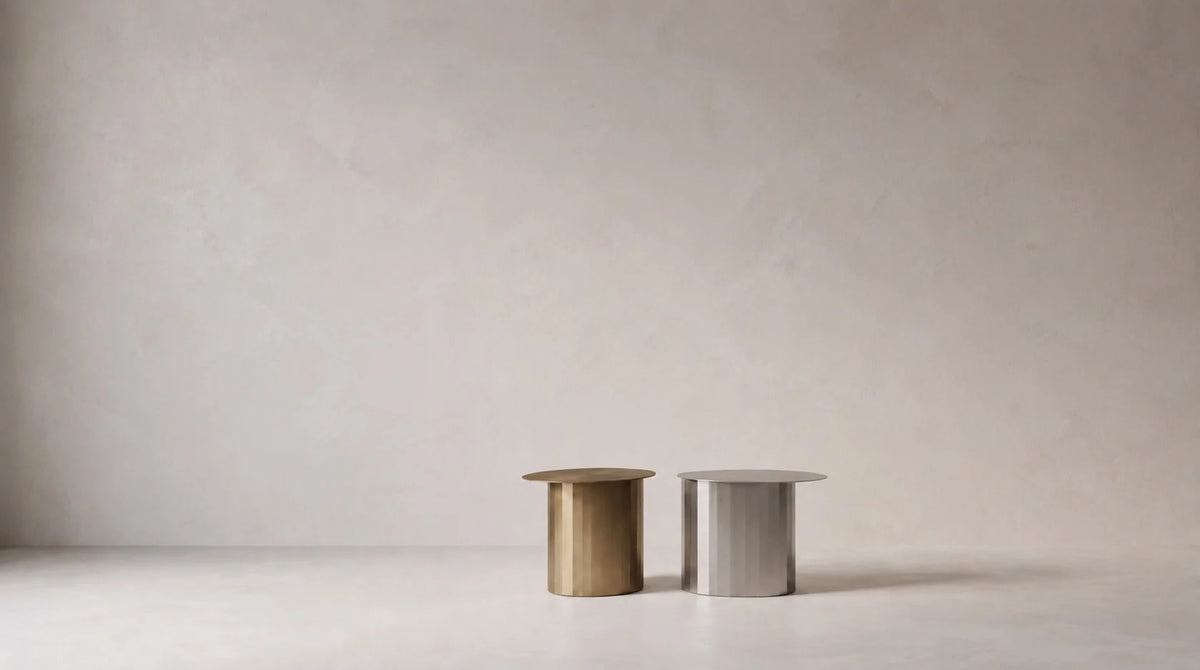
They sit below our line of sight, close to the floor and usually where the official hours of the day come to an end. Around them, people read, talk, fall silent and occasionally put down something that will later be forgotten. Perhaps their significance lies in precisely this restraint. They give the room a centre without having to become one themselves. The coffee tables in patinated brass and brushed stainless steel are made in a workshop in Germany. Every surface is worked by hand. It therefore carries not only the properties of its material but also the traces of a process that can never be repeated in exactly the same way.
You can request any piece in a different size, finish or alloy. Tell us your idea, we check what is feasible and reply with a drawing and a price.
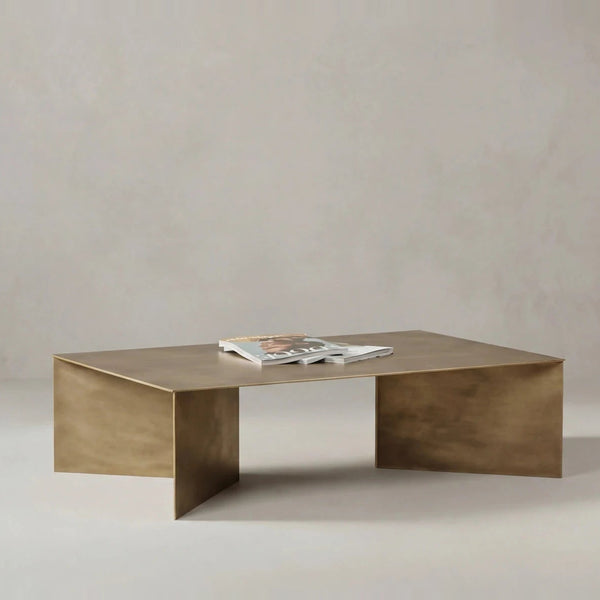
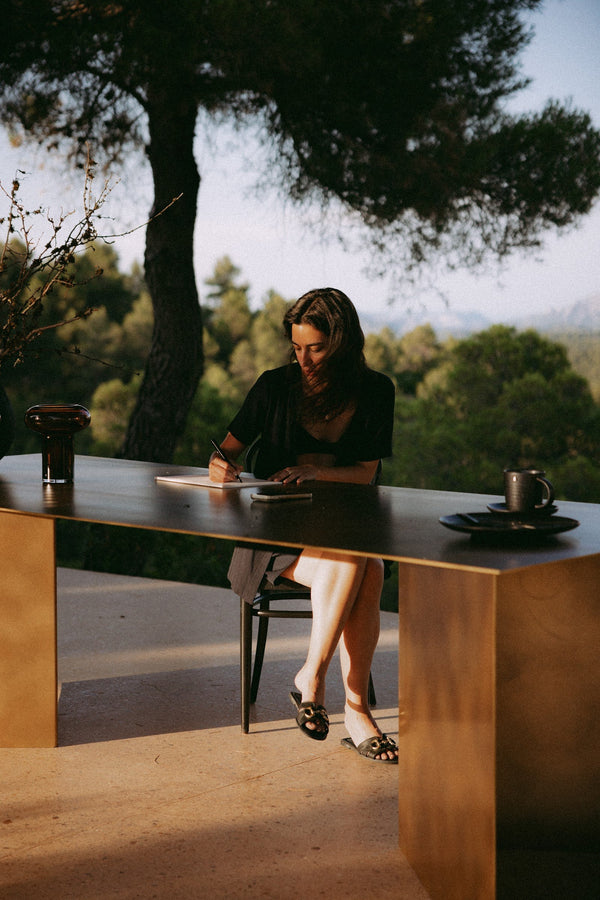
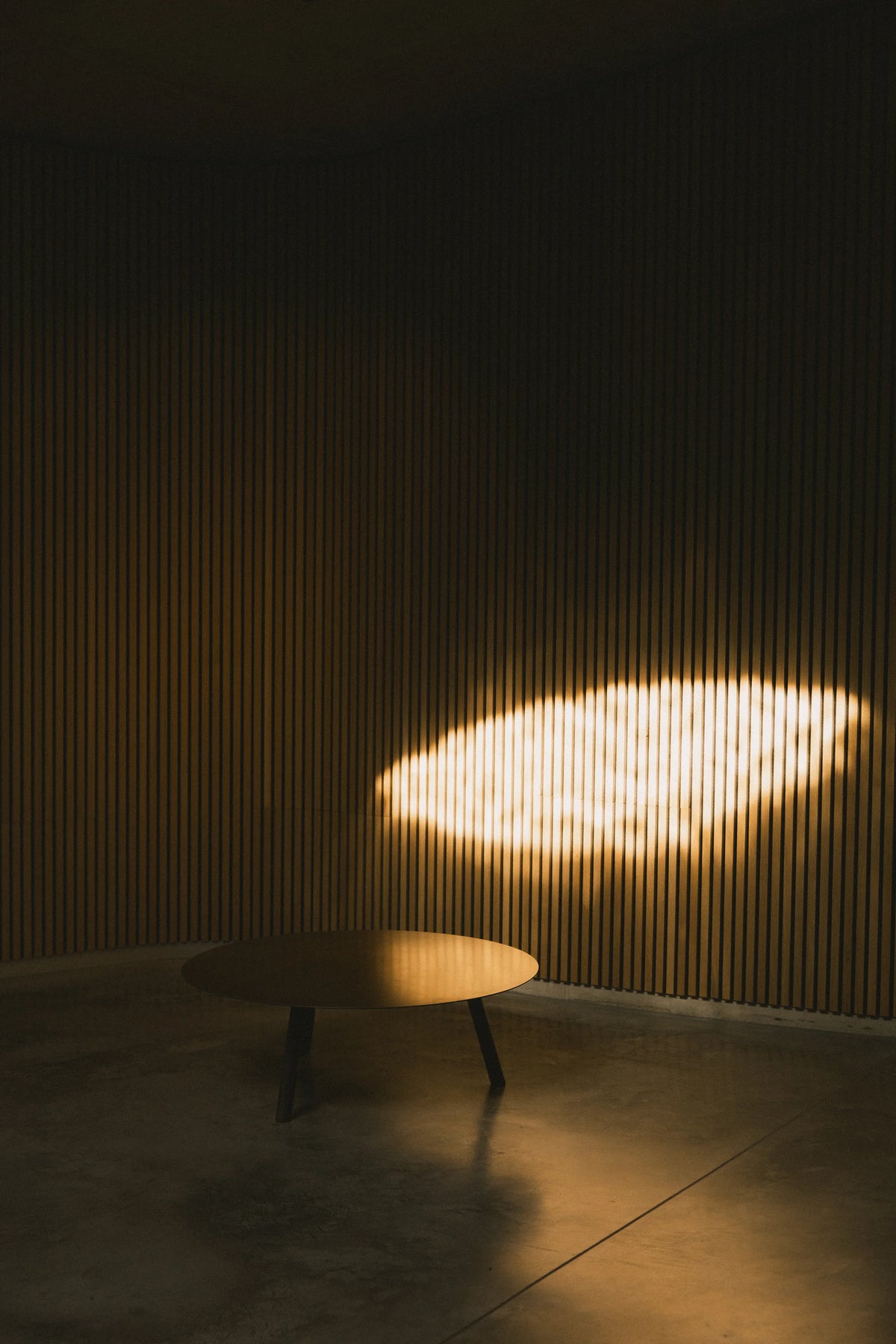
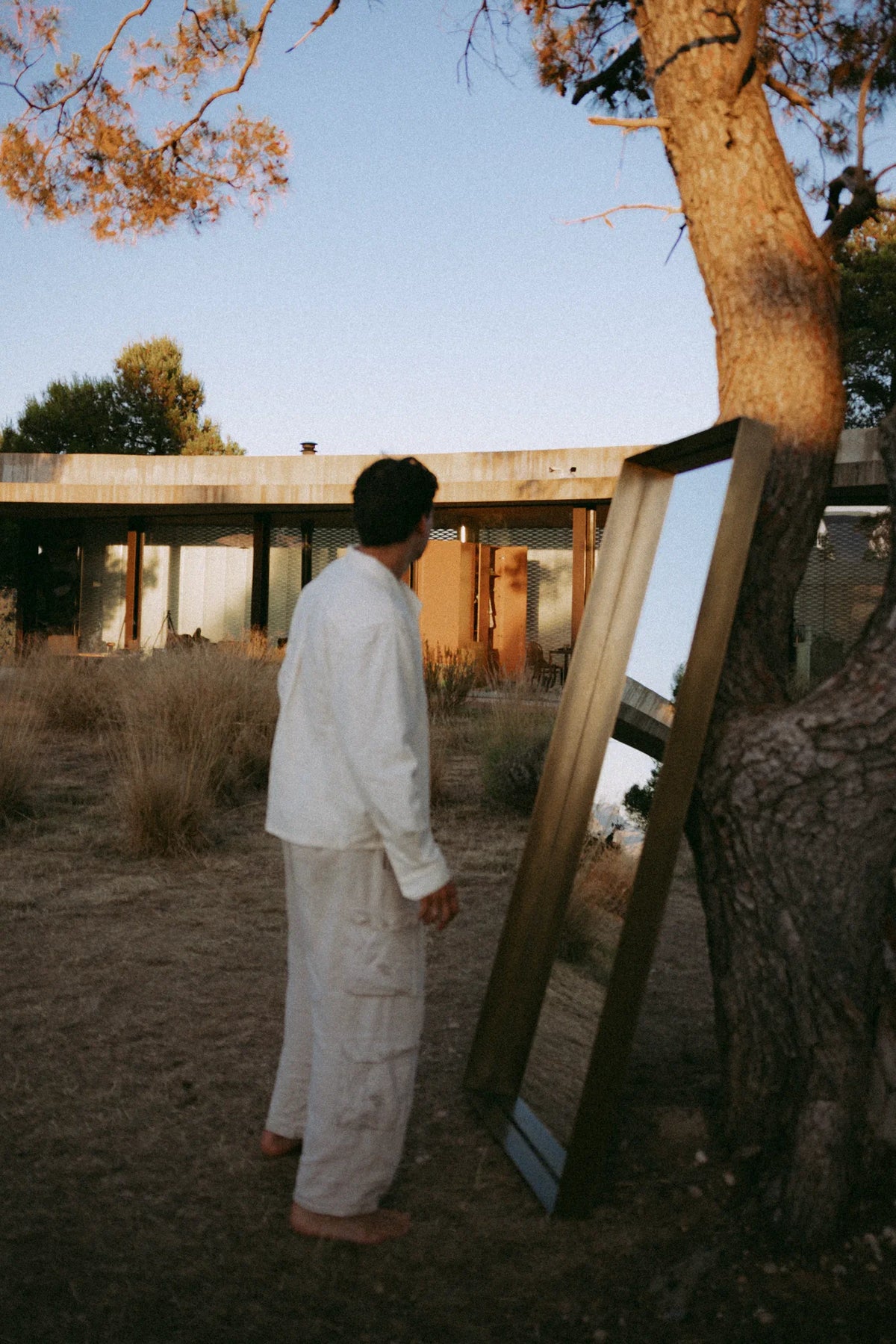
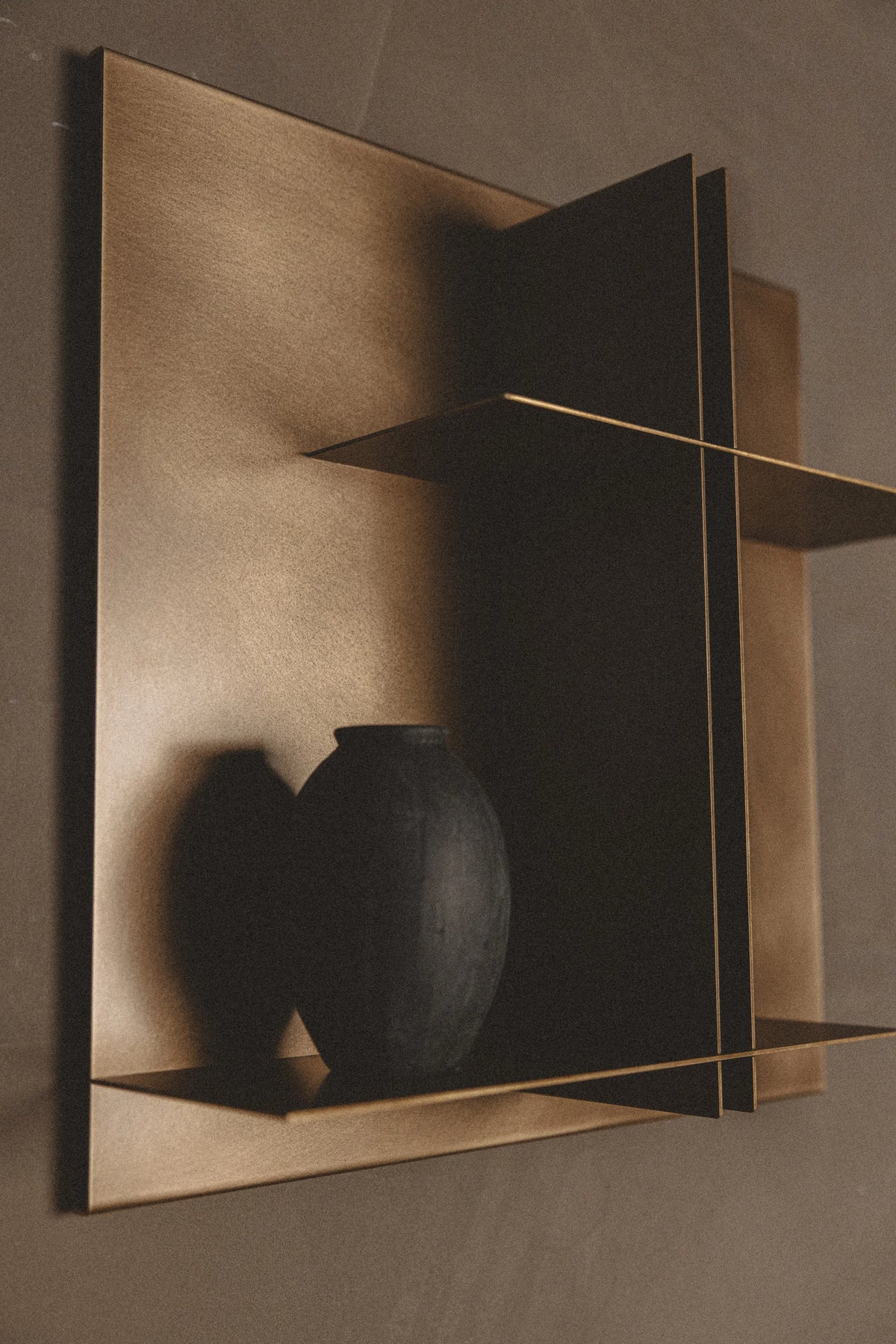
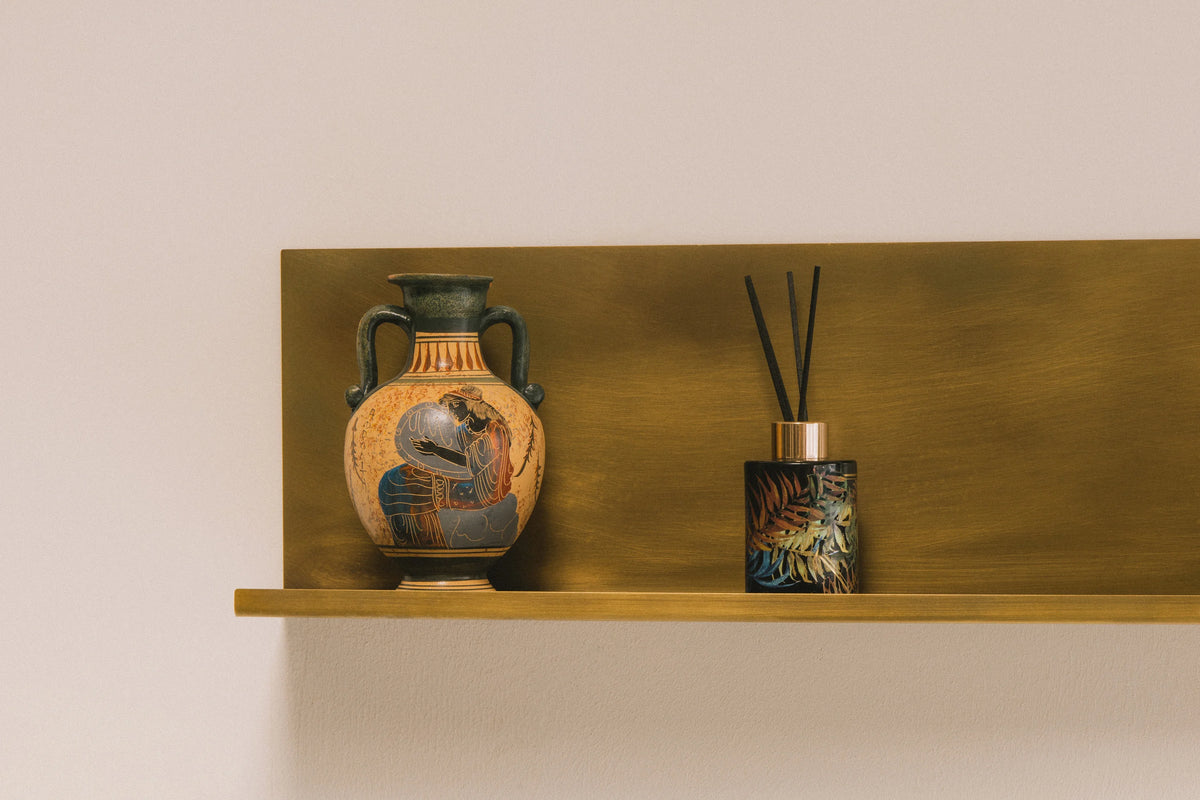
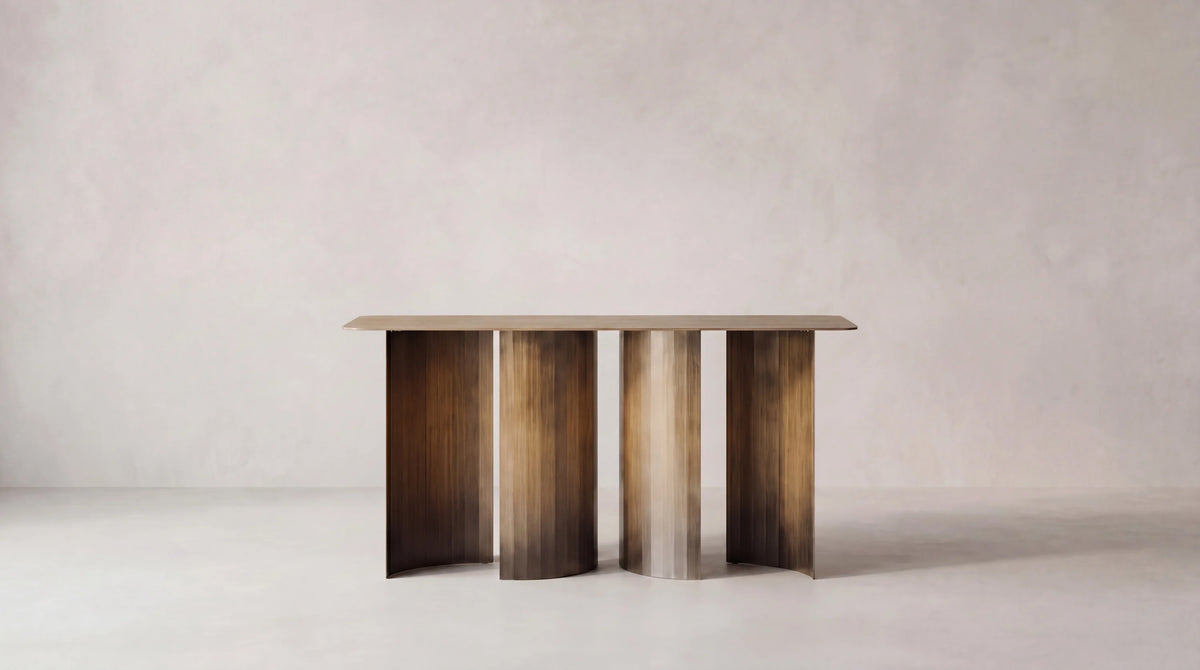
Brass is one of those metals that have been part of people's immediate surroundings for centuries. It is found on door handles, instruments and fittings, on objects whose beauty arises not despite touch but through it. In patinated form, the material loses its superficial shine. It becomes dark, almost earthy, and moves between bronze, amber and deep brown depending on the light.
Anyone searching for a gold coffee table is often looking less for a colour than for a particular warmth. In retail, this effect is usually imitated with lacquer or a metallic coating. Yet a gold look and patinated brass relate to each other as an image does to the object itself. The bronzing does not sit on top of the metal. It arises from a reaction at its surface and is therefore part of the material itself. That is where its depth lies. It does not simply reflect light; it absorbs it, refracts it and changes with it.
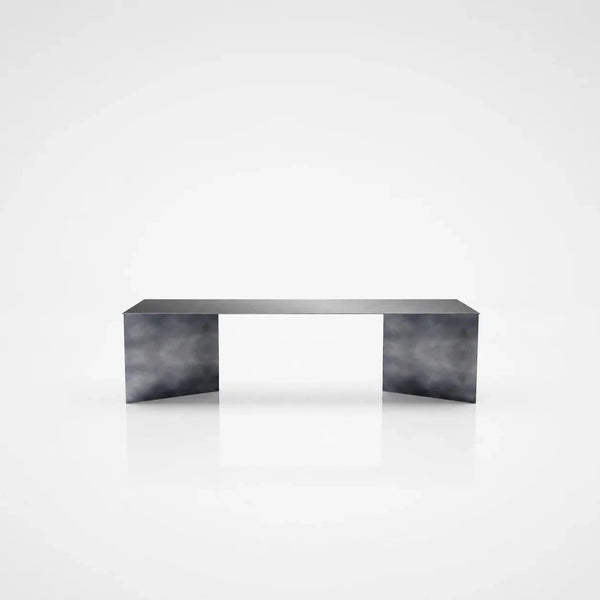
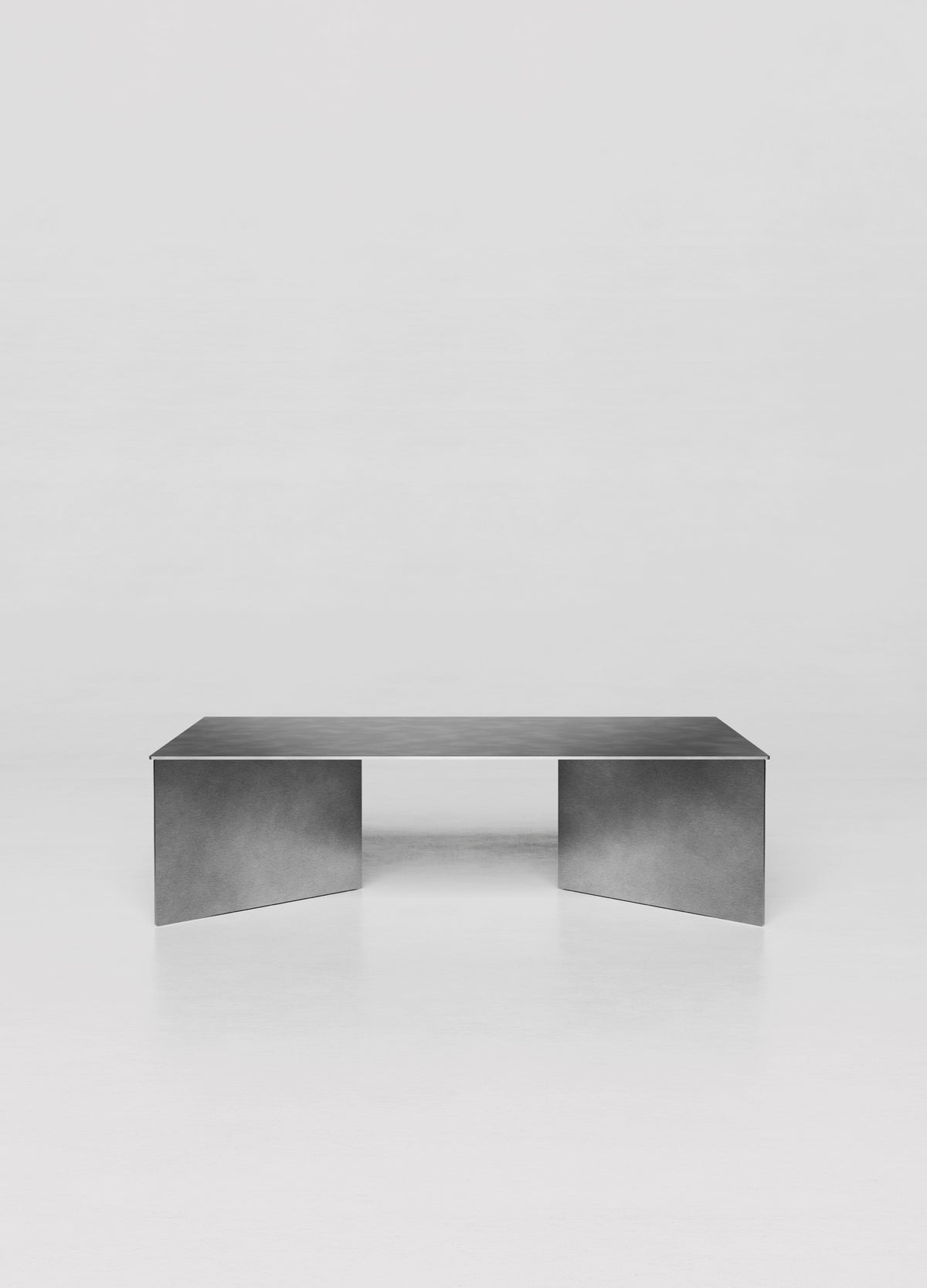
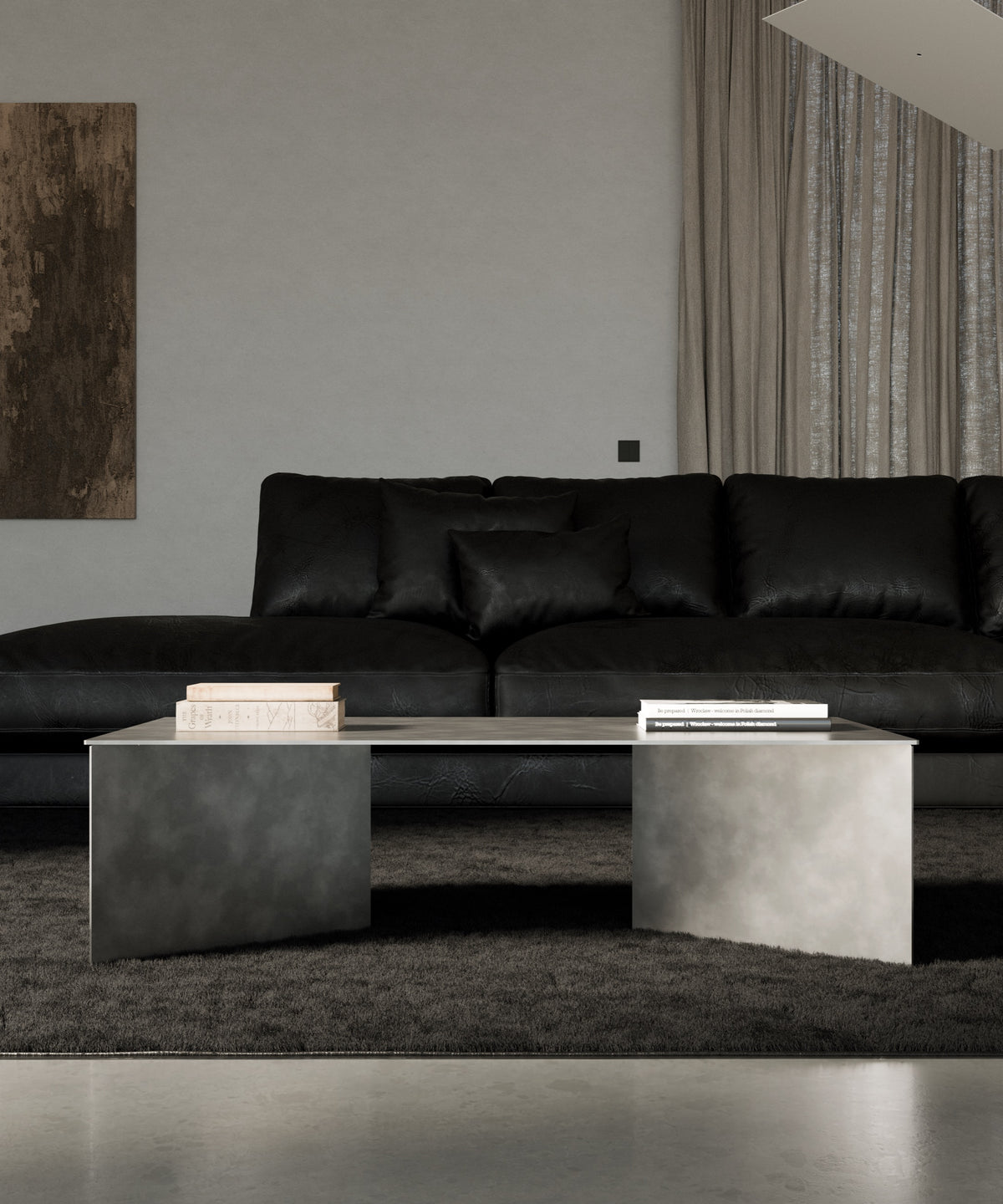
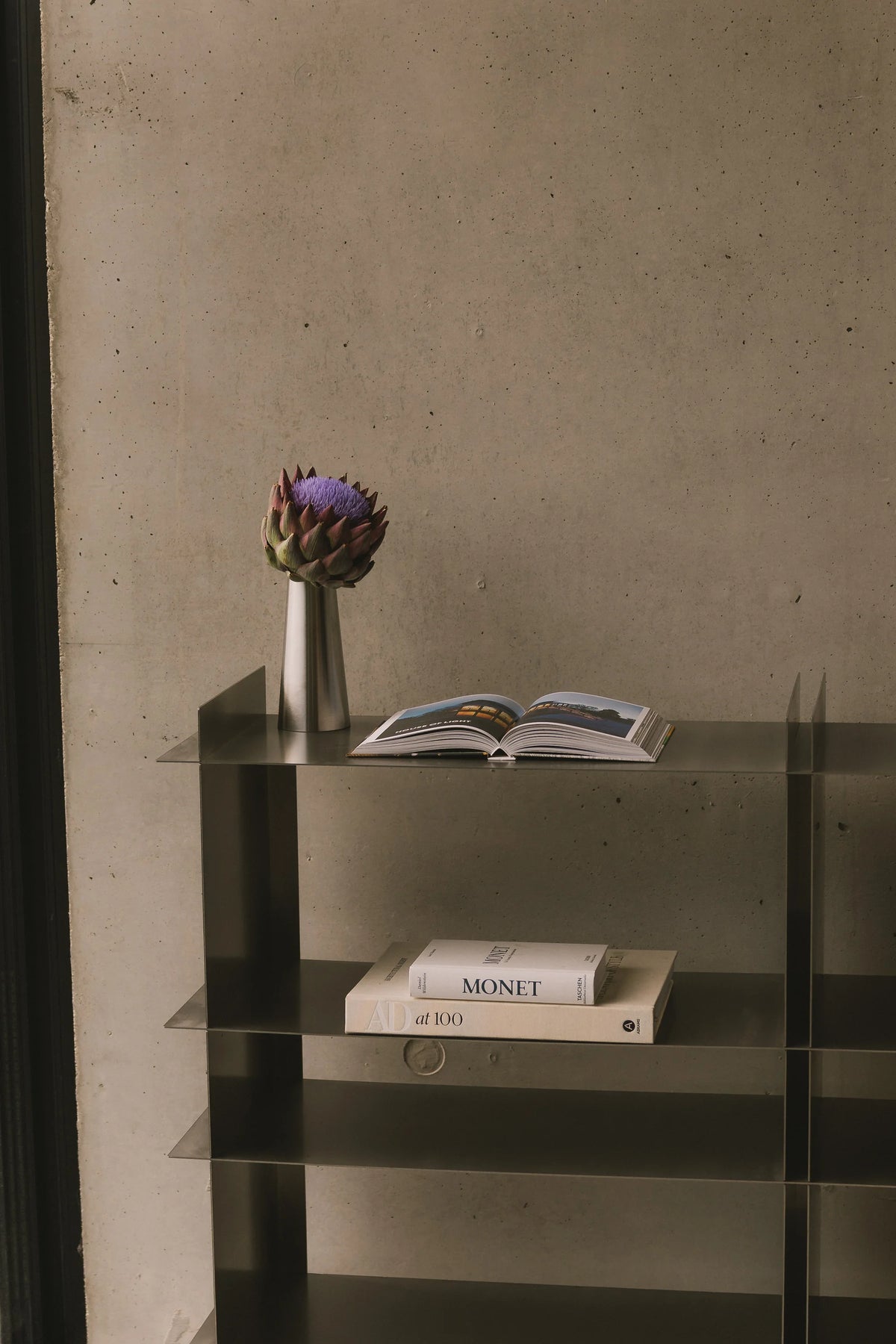
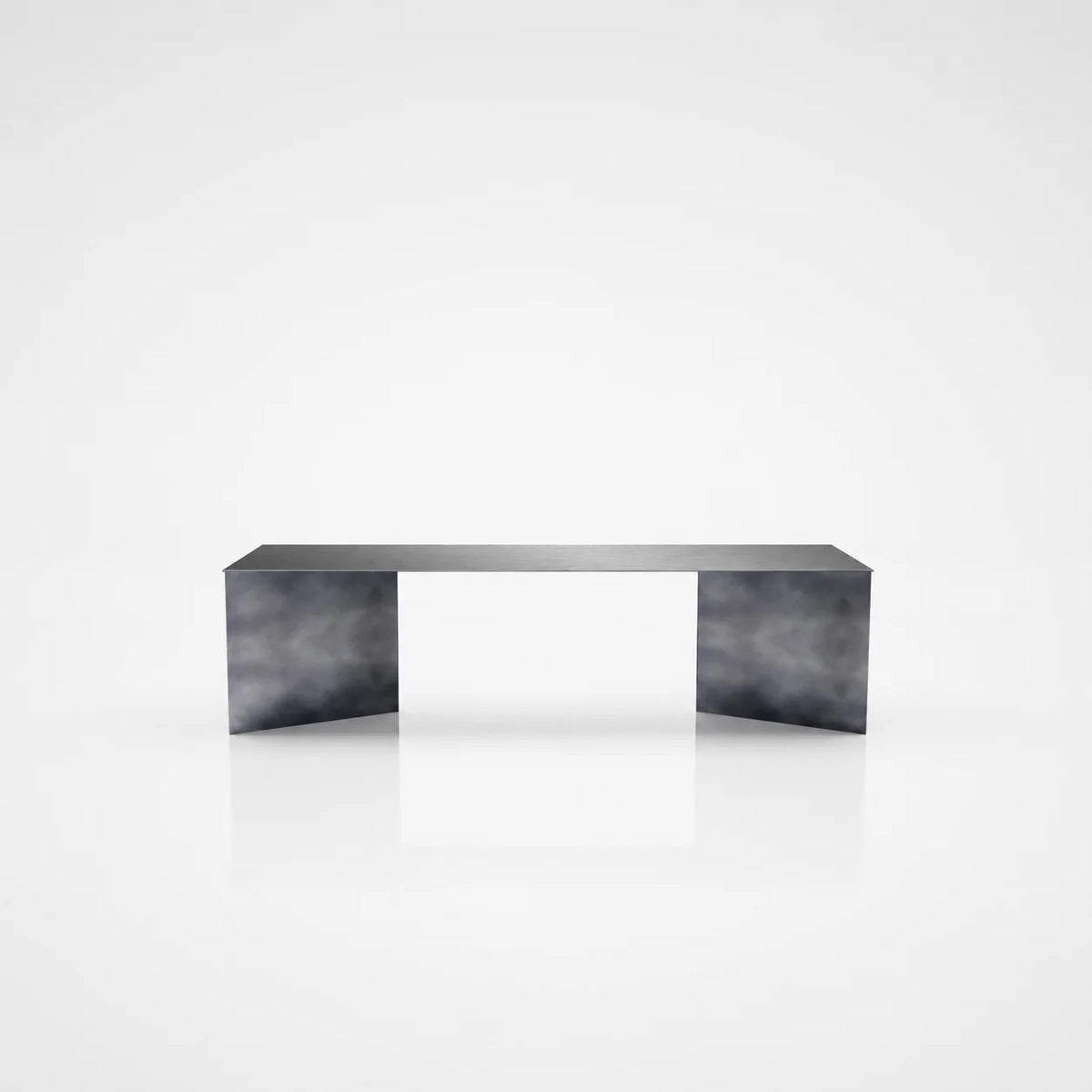
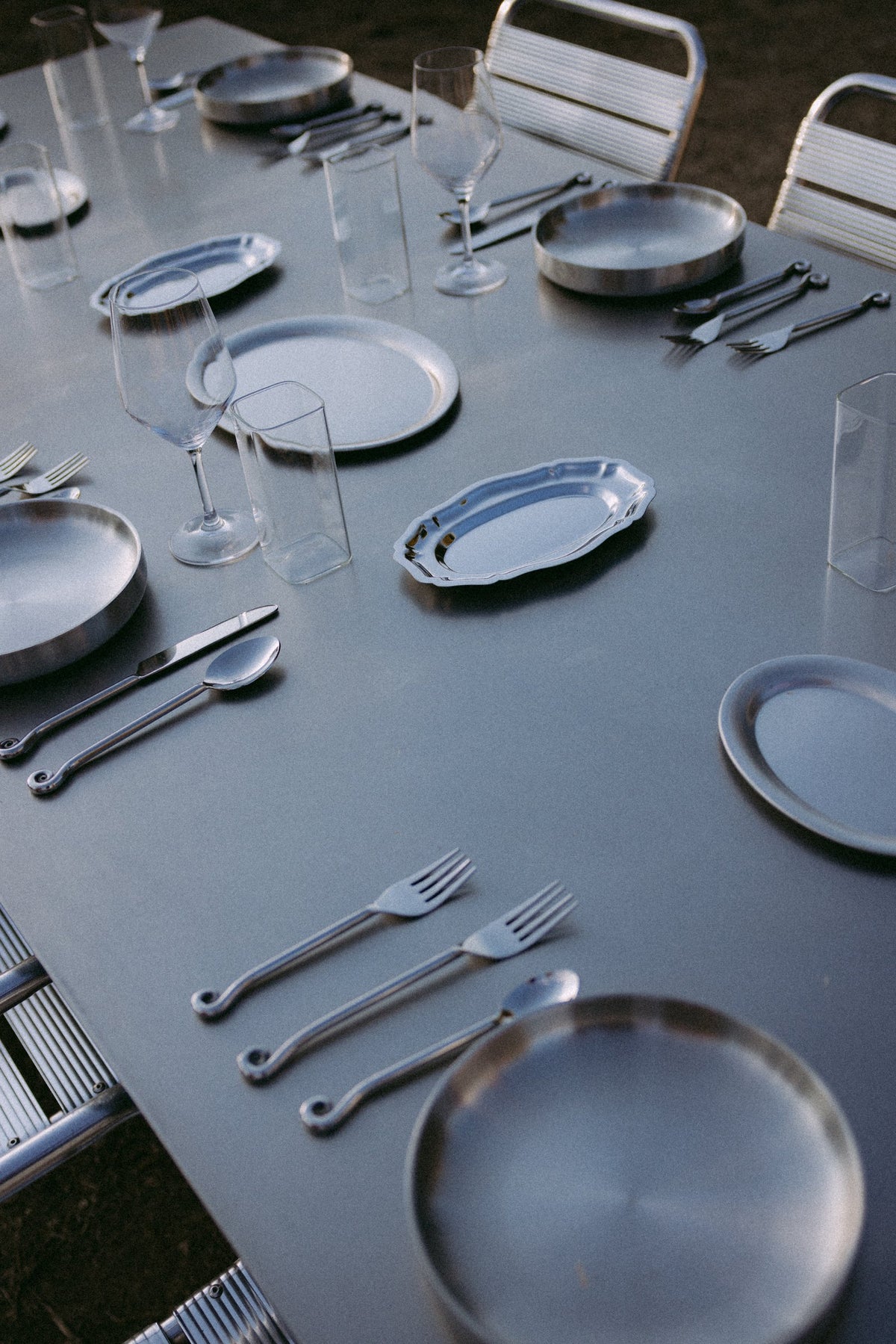
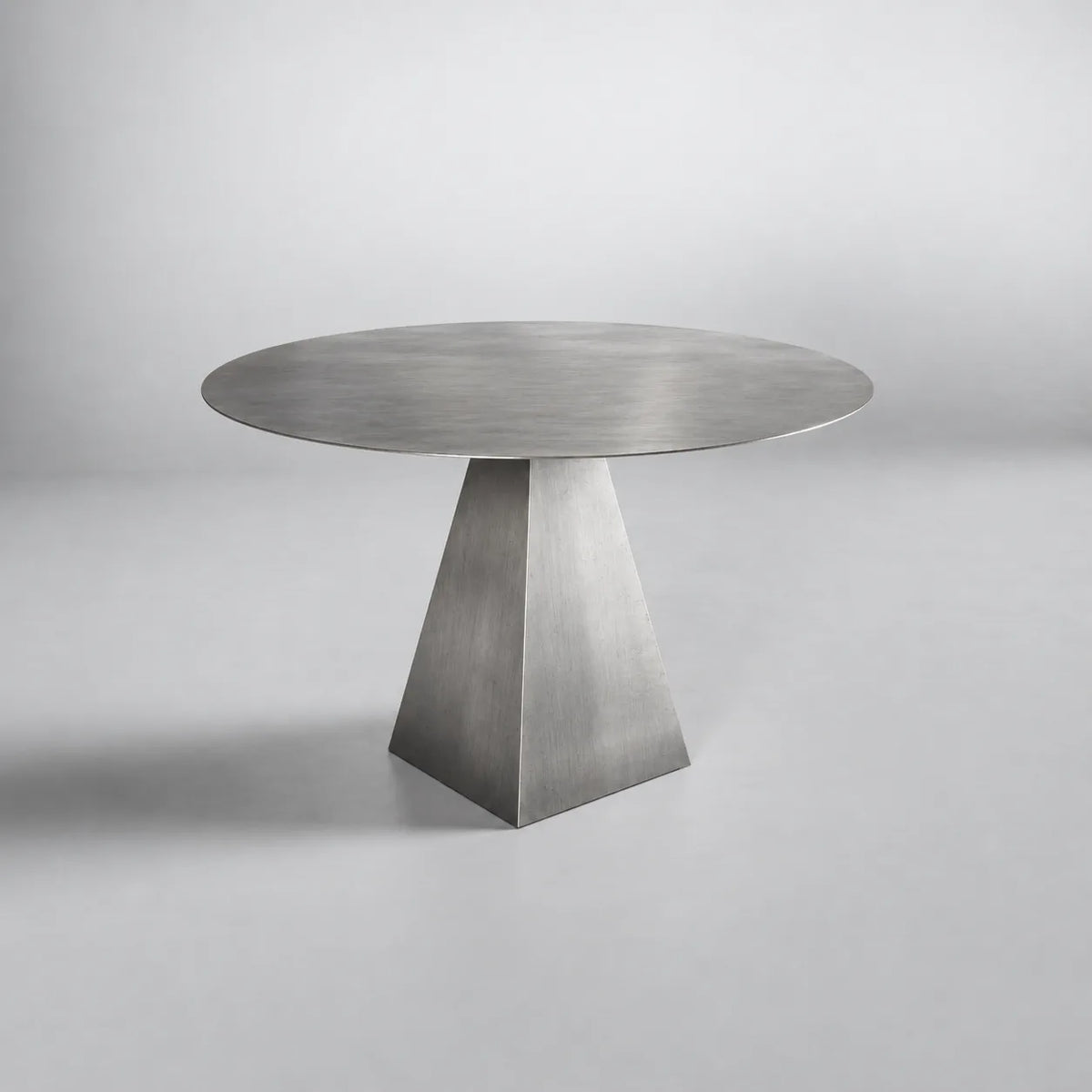
Brushed stainless steel has a different temperature. Its character is lighter, more precise and cooler. The brushing organises the incoming light into fine lines, so that the surface does not mirror the light but guides it. Next to wood, linen, leather or wool, stainless steel does not look out of place but brings clarity. It adds a controlled brightness to materials whose effect is shaped more by warmth and texture.
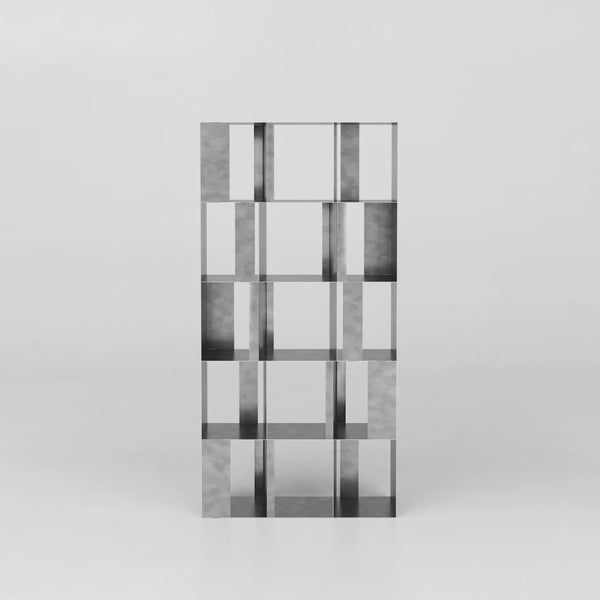
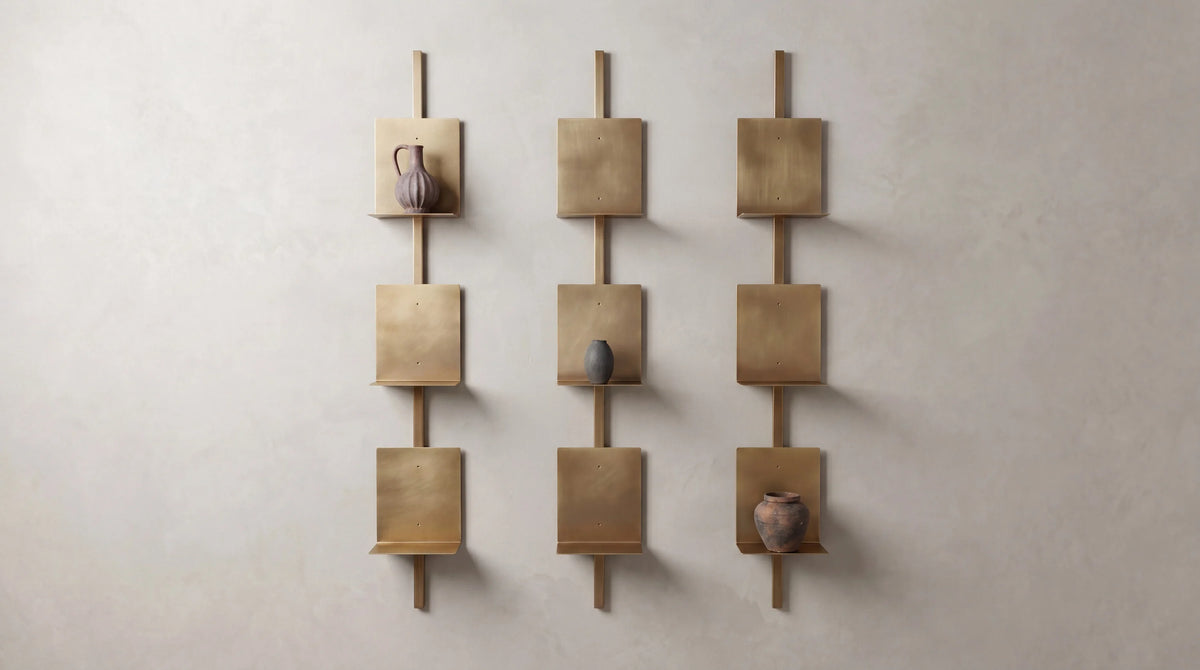
Which of these two temperatures belongs in a room is rarely decided by the table alone. Often the answer is already there: in door handles, lights, taps or picture frames. A new piece of furniture can take up this language or deliberately contradict it. The same question comes up again with the matching side tables and shelves in metal, only on a different scale.
A coffee table takes up comparatively little space and can still change the balance of an entire living area. Its effect rests less on decoration than on proportion. Ideally, the top sits at the seat height of the sofa or just below it. The length of the table is roughly two thirds of the sofa's width. Around 40 cm of clearance leaves enough room to move while keeping the surface within reach.
These dimensions are not rigid rules. Rather, they describe an order that the body understands immediately. If the table is too high, it comes between the people sitting there. If it is too small, it loses its connecting effect. If it stands too far away, closeness turns into an awkward reach. Rooms that seem effortless often owe this ease to proportions that nobody consciously notices.
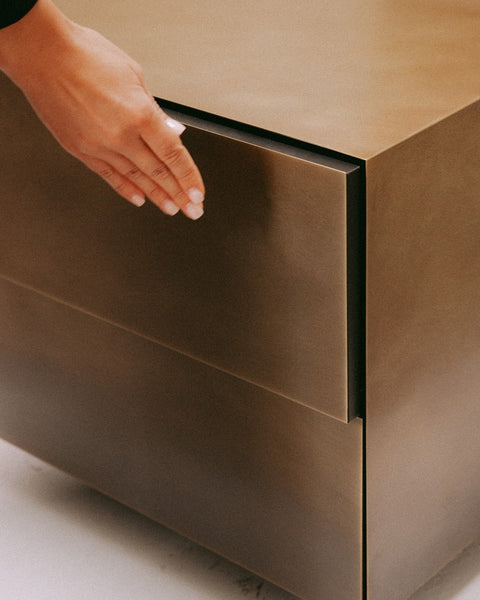
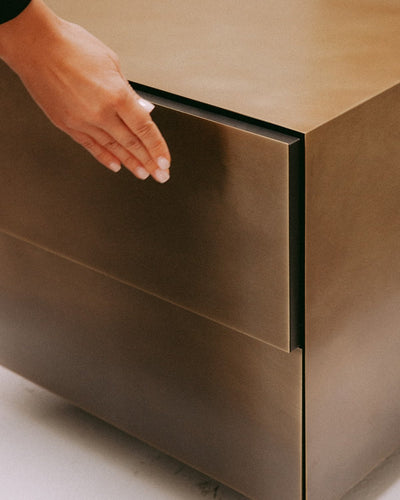
It is one of the peculiarities of furniture making that additional functions do not necessarily create additional value. A drawer calls for a joint, a castor for a visible construction, a pull-out for a mechanism. With every function, something comes between material and form. With a metal coffee table, however, it is precisely the continuous surface that matters. It carries light, touch and the subtle differences of the workmanship.
The industrial style often seeks the contrast between metal and reclaimed wood and makes the combination of materials its theme. Alongside it, there is a more restrained approach: one material, one form, no explanation. What remains then is not emptiness but concentration. A surface that looks different in the morning than in the evening and has enough presence in a quiet room to do without further gestures.
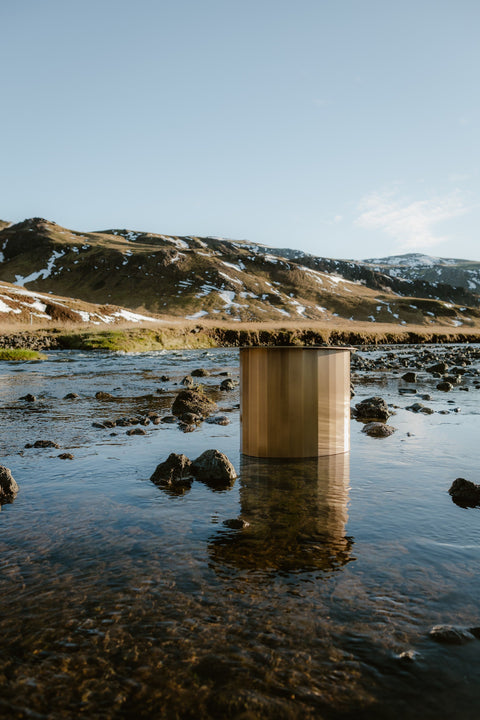
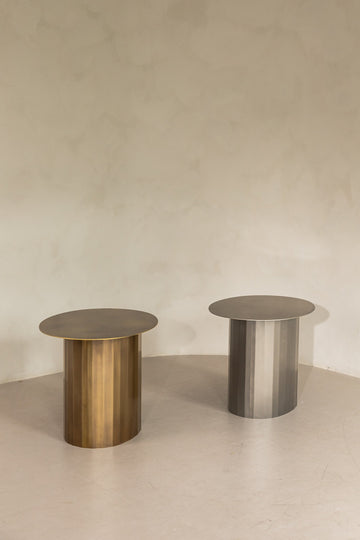
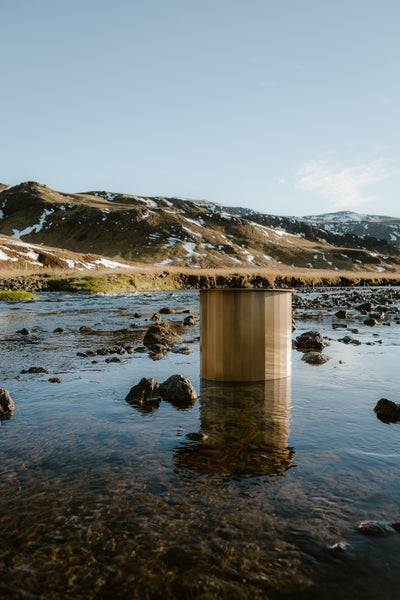
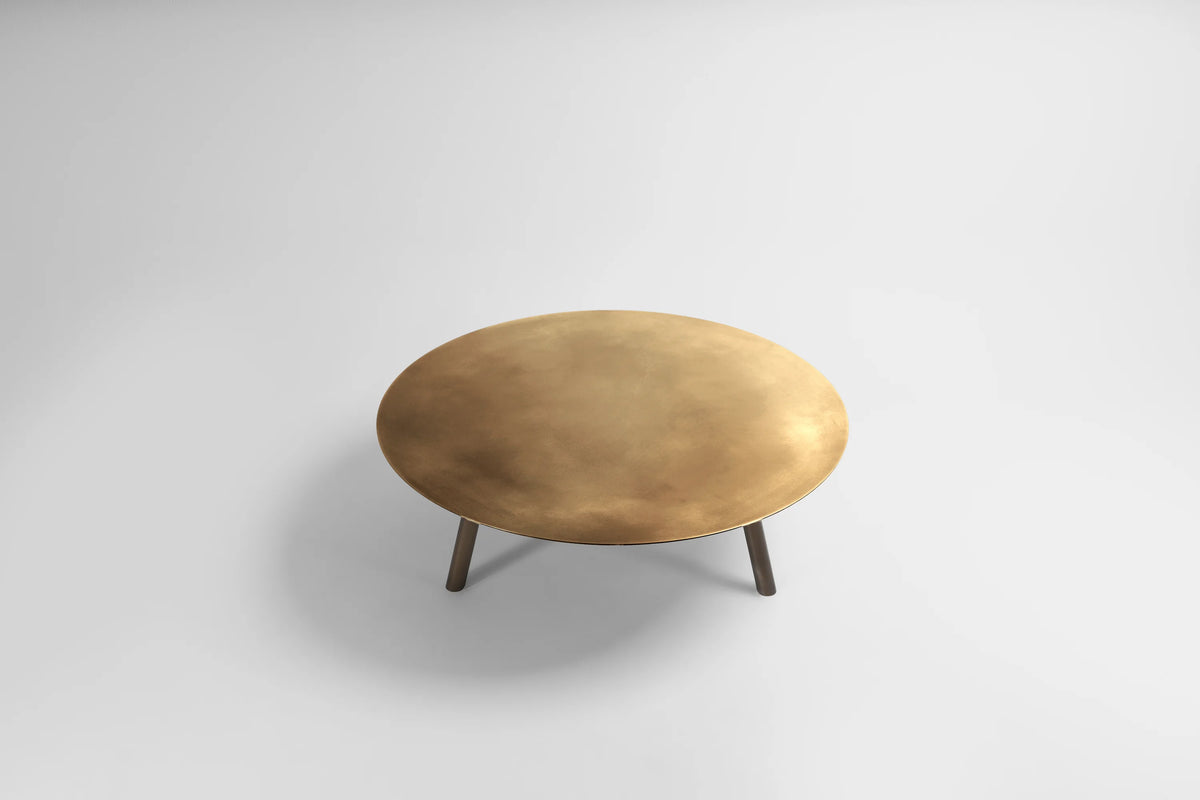
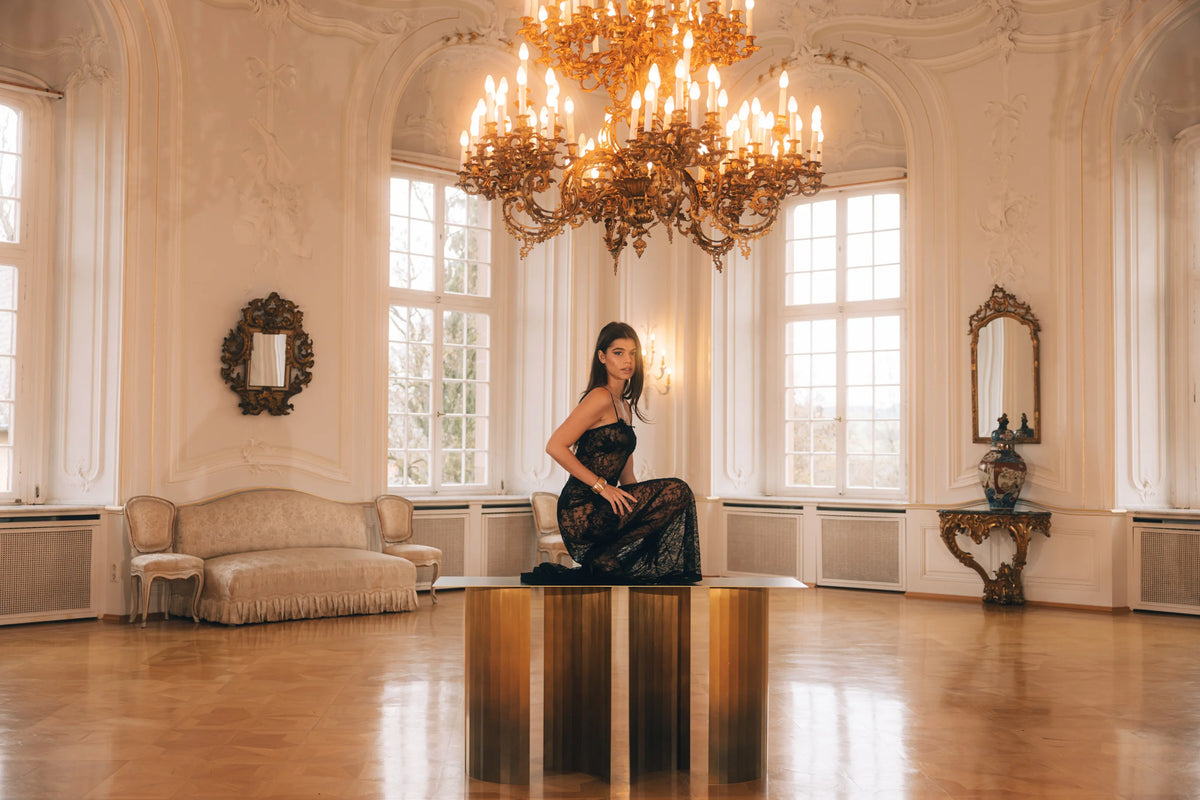
ELYSIAN consists of a circular brass disc resting on three cylindrical legs. It is available in ⌀60 × 33 cm, ⌀80 × 33 cm or ⌀100 × 33 cm. The circle is one of the few forms that have no preferred direction. It has neither front nor back, no corner pointing into the room and no beginning where the eye would have to linger.
Therein lies its particular calm. In smaller rooms, it lets movement flow around it instead of directing it. In households with children, the absence of sharp corners becomes an almost incidental form of consideration. ELYSIAN is made exclusively in patinated brass. The directional grain of brushed stainless steel would visually interrupt the unity of the circle. Oval tops are made as custom pieces.
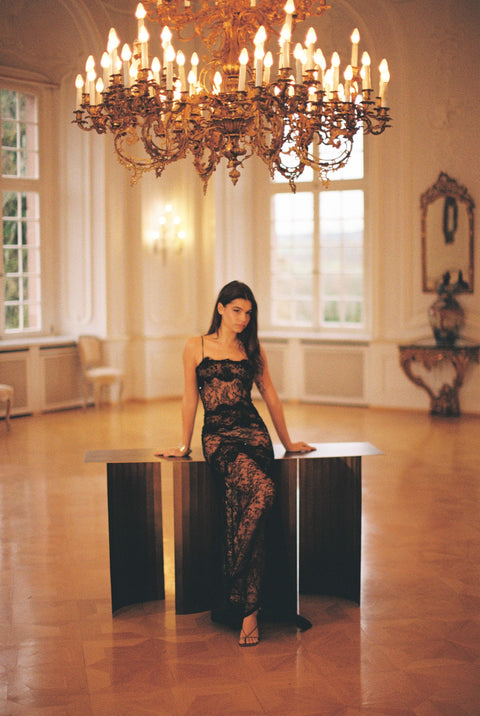
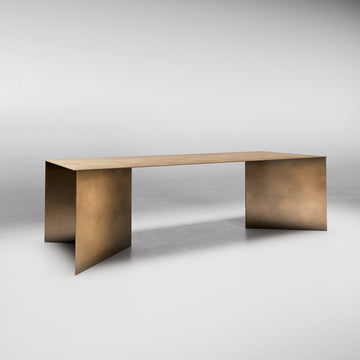
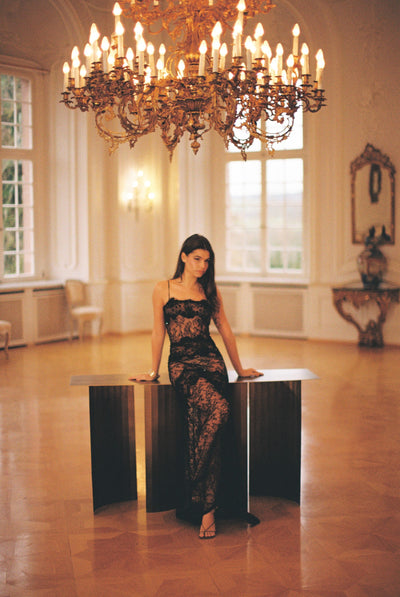
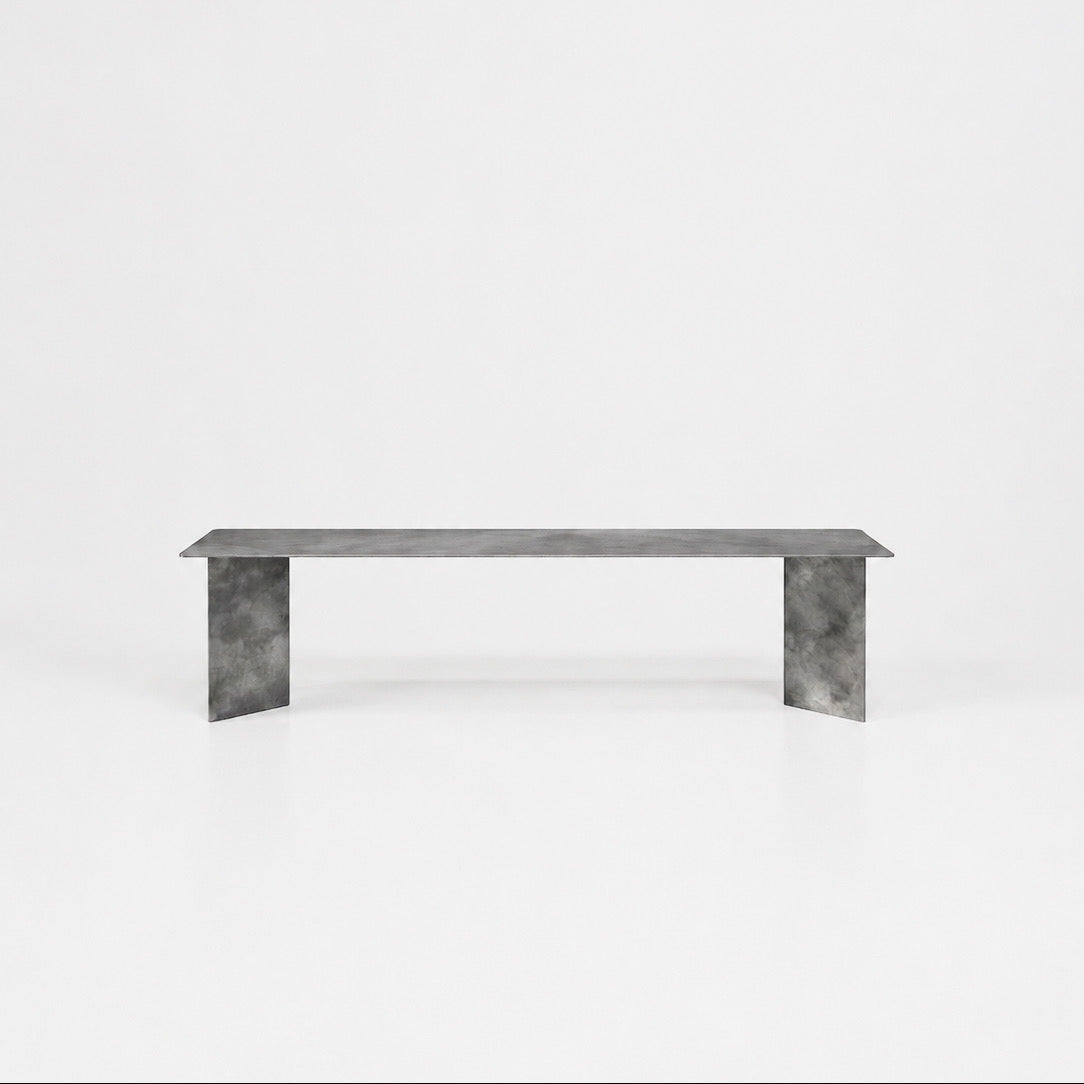
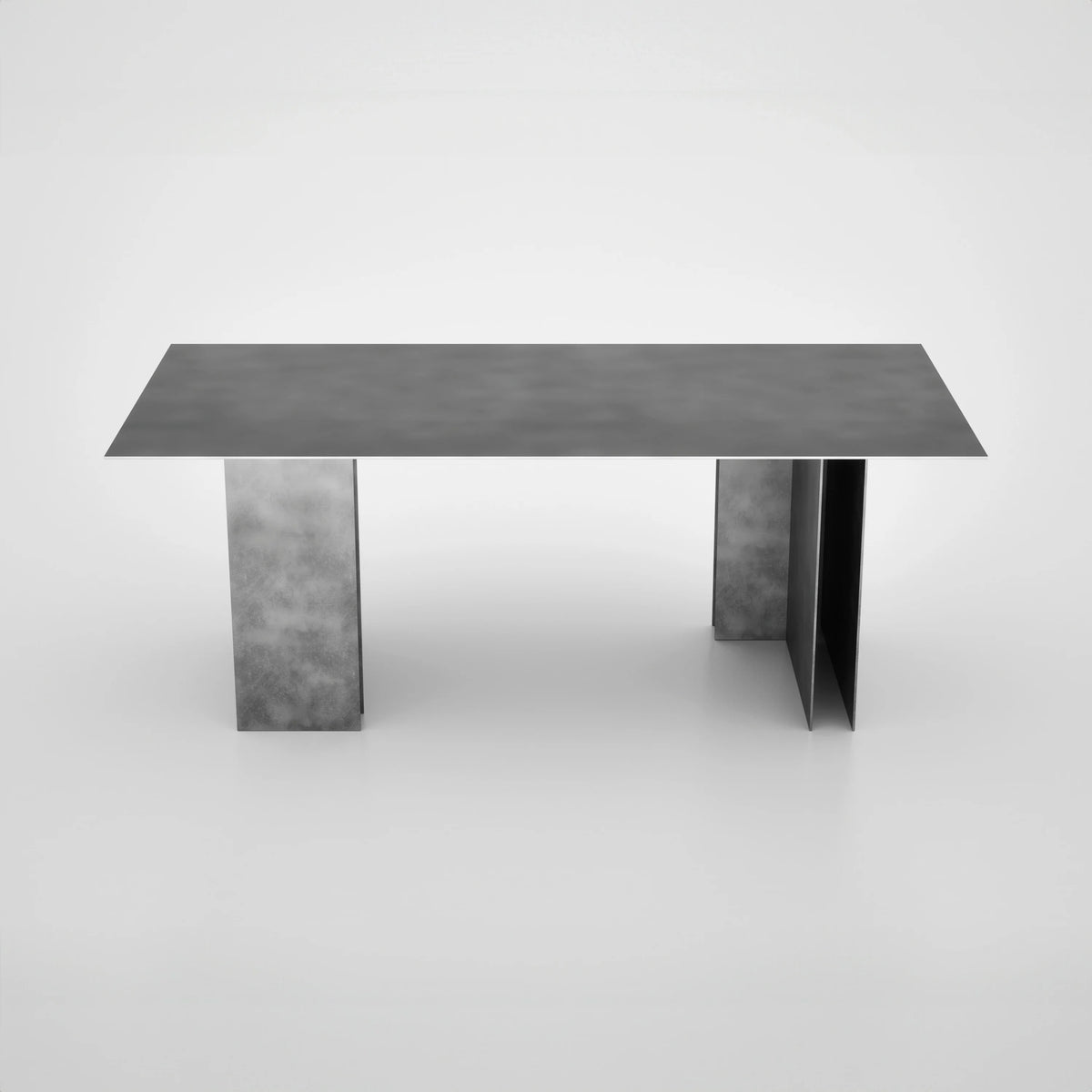
KANJI measures 130 × 52 cm with a height of 23 cm. Its low height makes it seem less like a single piece of furniture than an additional level of the room. In front of deep, low sofas, it continues their horizontal line. Objects do not rest on it in a raised position but almost within the architecture of the seating area.
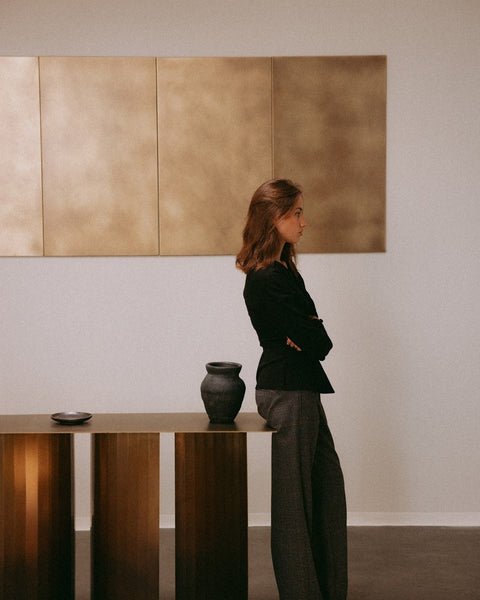
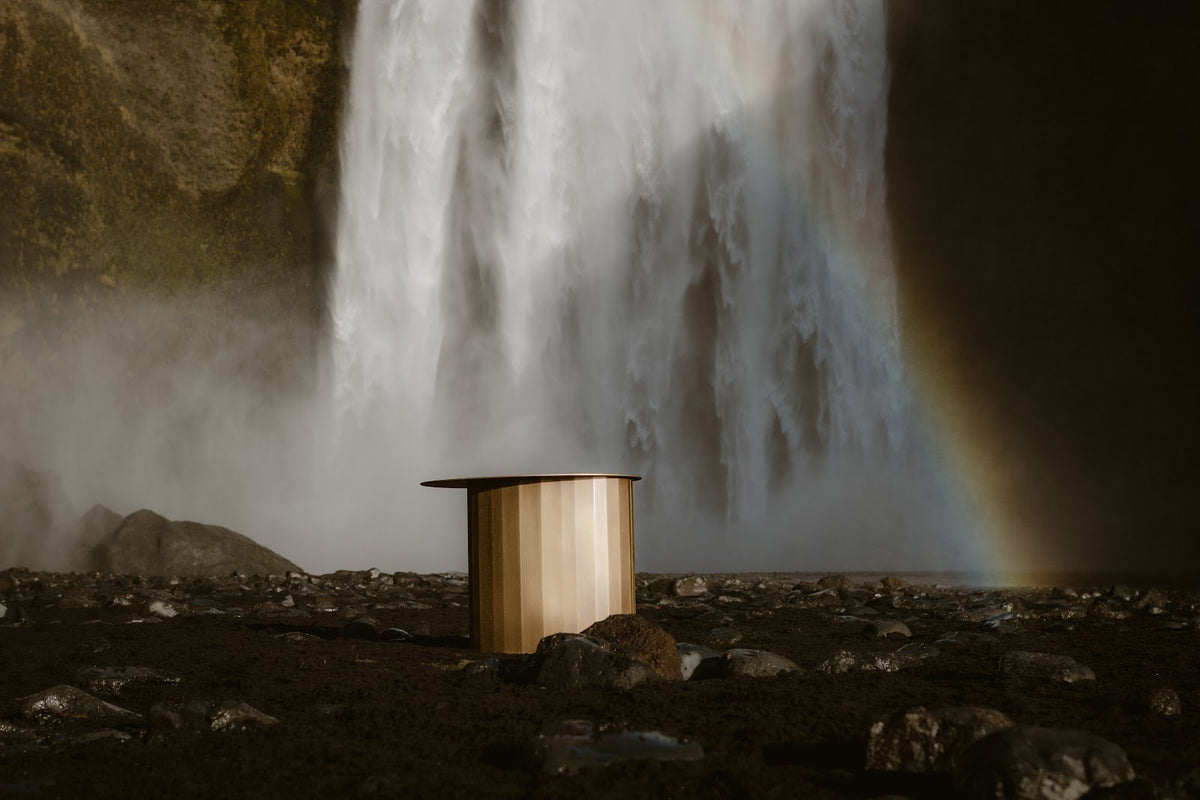
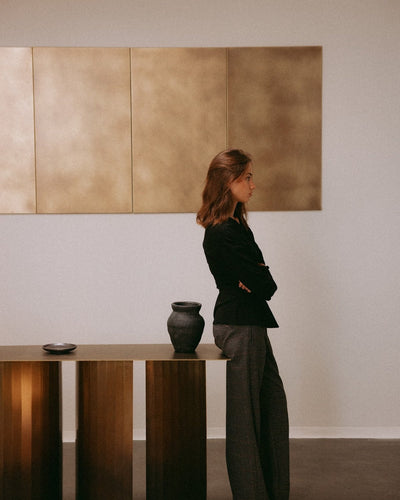
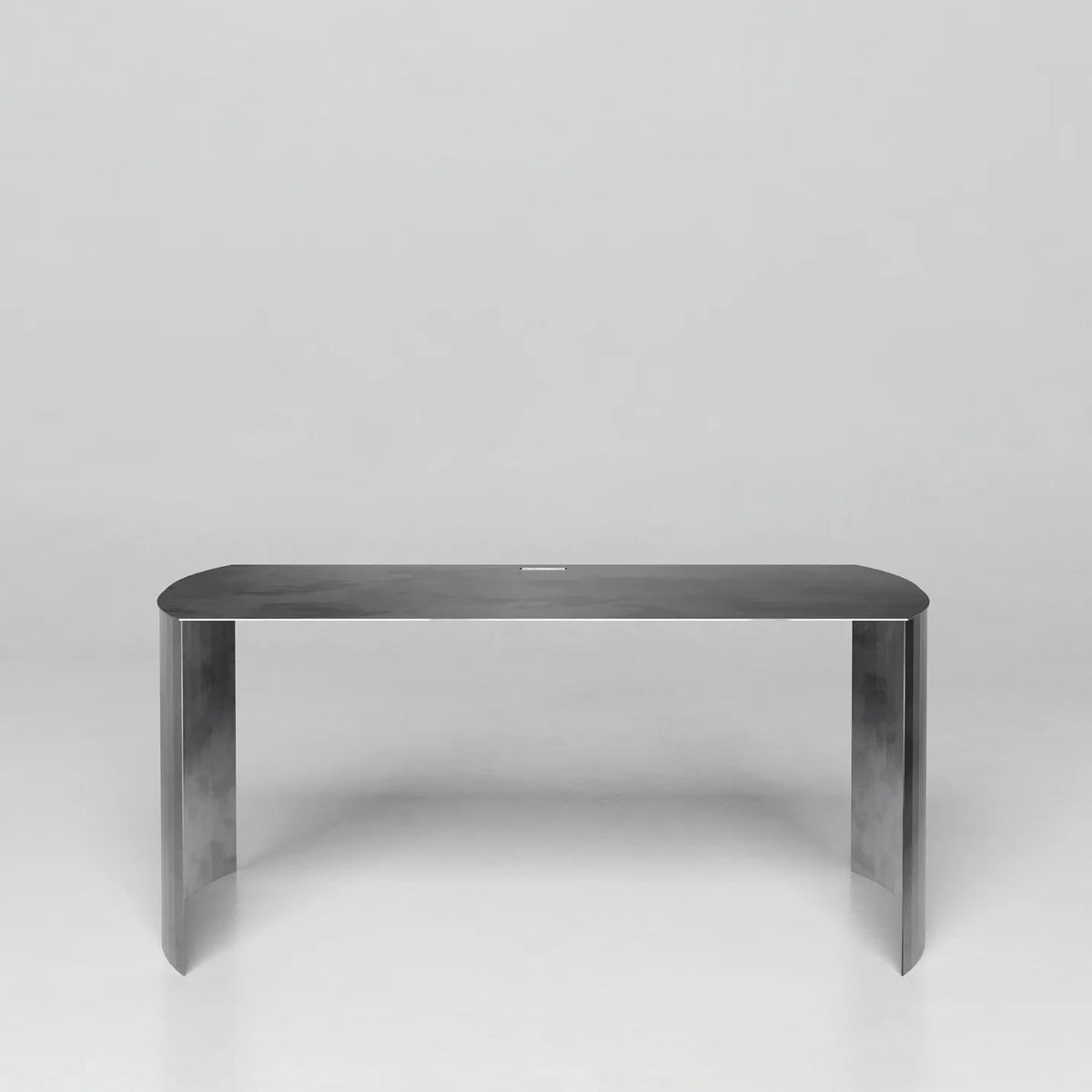
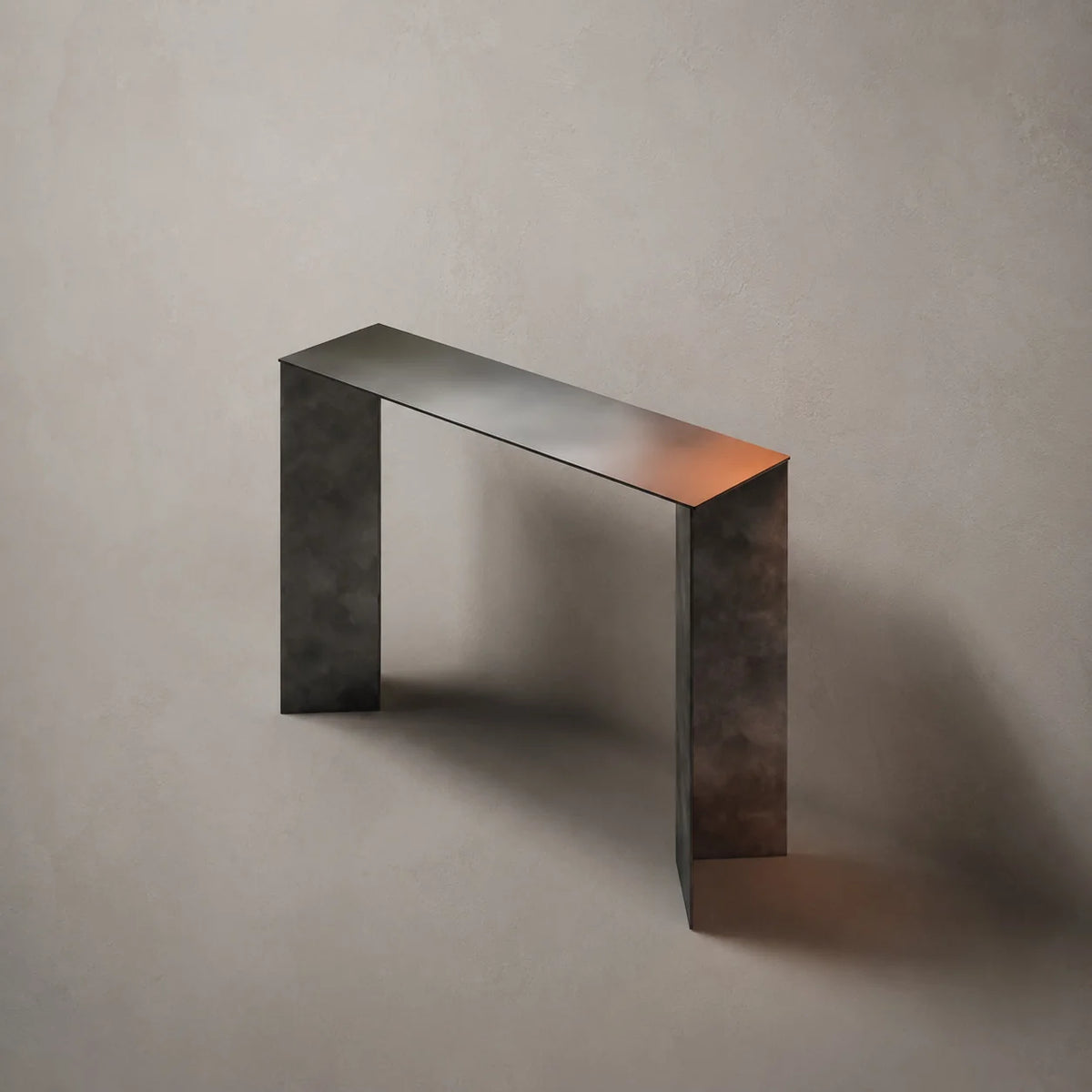
ZEN COFFEE TABLE, 100 × 63 × 27.5 cm, is the most restrained of the four forms. A matt surface rests on two curved legs whose movement only becomes apparent at a second glance. TUKKON, a cylinder of 60 × 45 × 45 cm, has by contrast the self-contained quality of an independent volume. It can stand next to an armchair without depending on a sofa or a larger arrangement. None of these forms quotes a well-known classic. Instead, they all revolve around the same question: how far can a table hold back without losing its presence?
Here, a coffee table usually begins not as stock on hand but as an order. Only then does a sheet of metal become a specific form, a form a body and a body a surface. For most models this takes five to six weeks; some tables can be delivered sooner, and the lead time is stated for each piece. It is the time that craftsmanship needs when it treats each piece not as a variant in a series but as an object in its own right. You can see what this looks like in our coffee table in brushed stainless steel or burnished brass.
Delivery is by freight forwarder to the kerb and is free of charge for coffee tables. Items in stock come with a right of return of 14 days. Five or six weeks can seem like a delay when availability has come to be taken for granted. Yet they can also be read as the visible distance between making something and merely having it in stock.
In everyday use, a solid metal coffee table needs little attention. A soft, dry cloth is enough. Keep abrasive cleaners away and wipe up liquids promptly. Sealing with 2K clear lacquer protects the surface, and there is no veneer edge where moisture could penetrate the material.
Patinated brass and brushed stainless steel bring different tones into the room. The brass patina is created before sealing and is preserved by it. Glasses and other objects should not leave new marks; suitable coasters and the care instructions help to protect the surface.
Not every room follows the dimensions furniture is usually designed for. An alcove may be a few centimetres too narrow, a sofa unusually deep, an existing seating group lower than today's standard. Such deviations look minor on a floor plan, yet in the room they decide whether a piece of furniture appears natural or accidental.
In a workshop where every piece is made individually, made-to-measure work is not an interruption of the system. It is its logical continuation. A description becomes a drawing, the drawing a price and the price a table. Dimensions and proportions change; the material language stays the same as for the four existing forms.
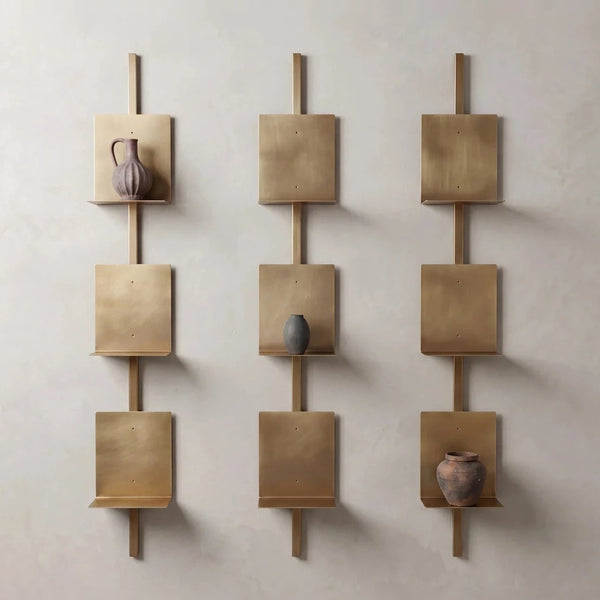
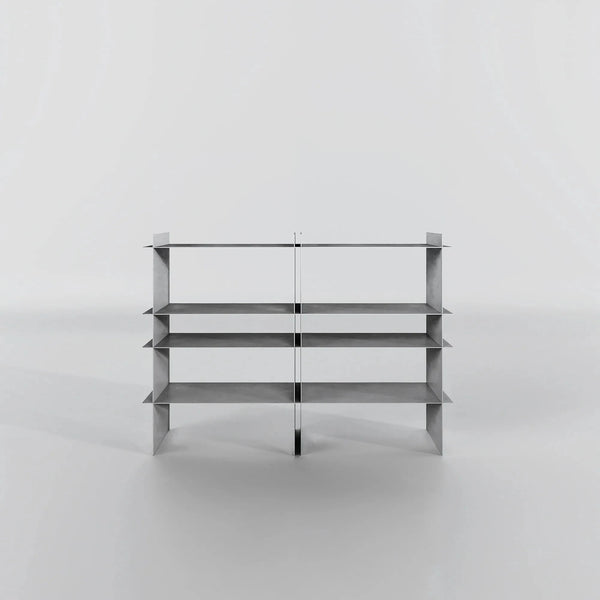
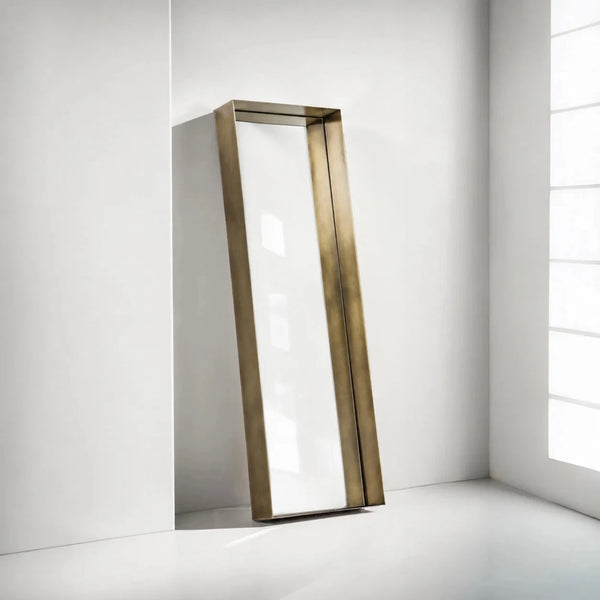
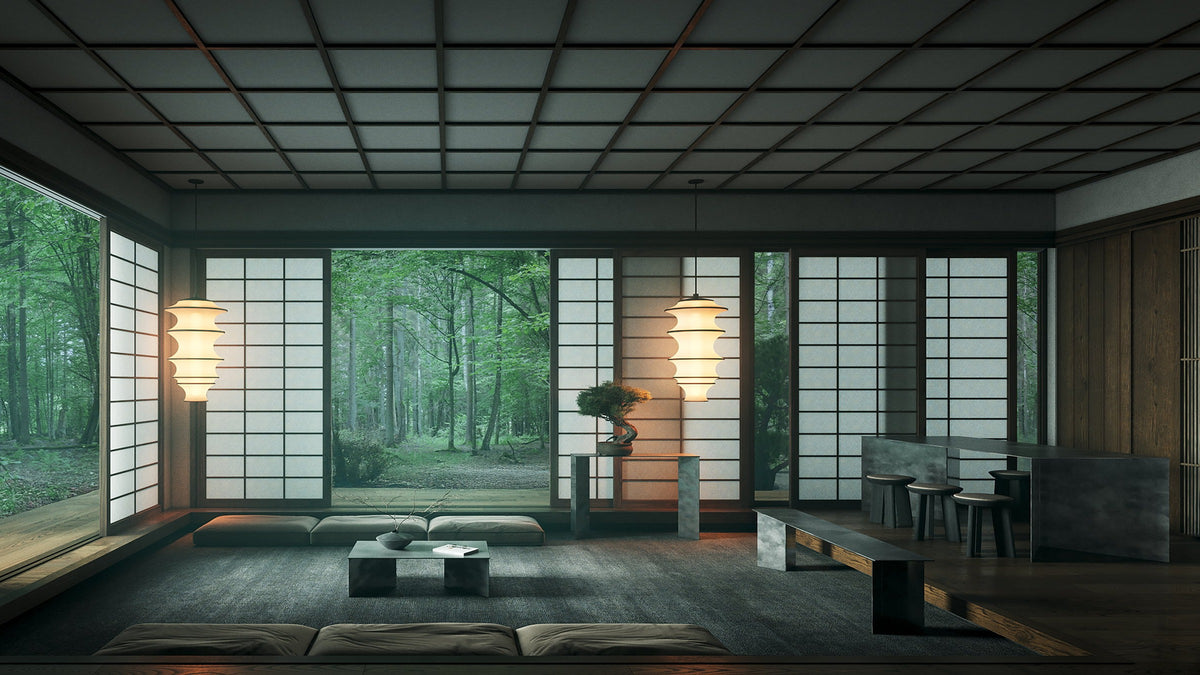
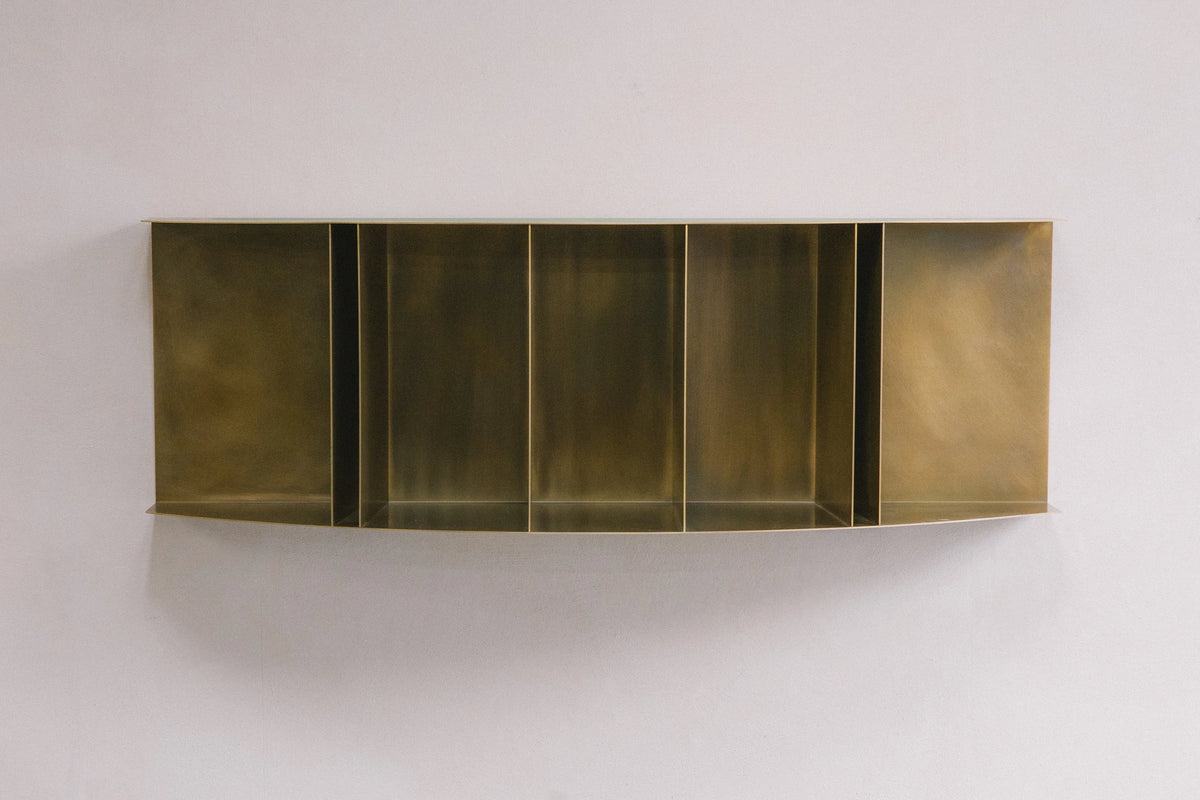
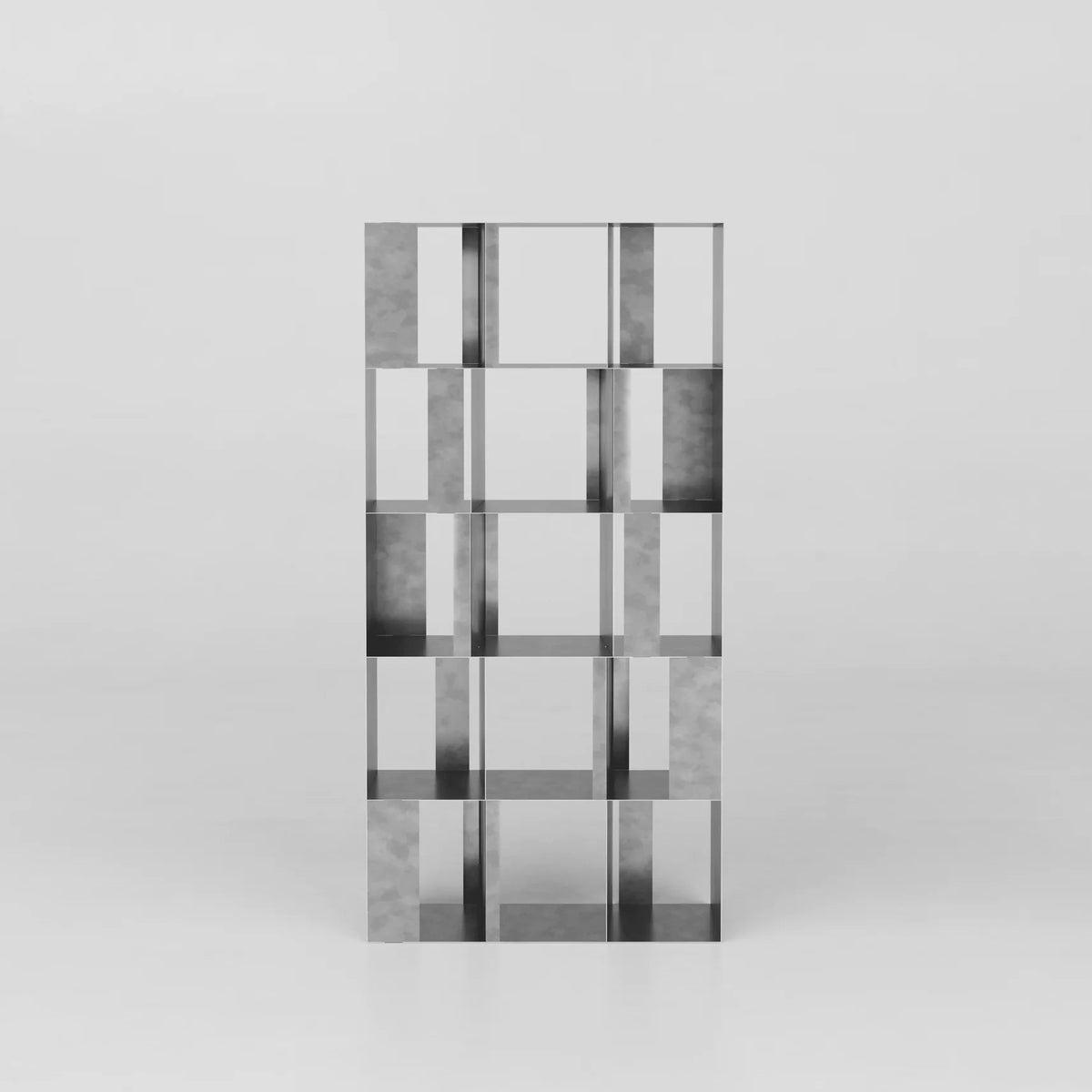
Anyone who starts not with a single piece of furniture but with the room as a whole will find, in the living room overview, further pieces that follow the same formal vocabulary, from the bench to the wall shelf. The individual pieces need not be identical. What matters is that they share the same idea of material, reduction and permanence.
Patinated surfaces can only be partly captured in photographs. A picture records a single fall of light, whereas the metal lives precisely from its changeability. In a video call, the surface can be shown from different angles and under changing light. That a photograph cannot pin it down completely is not a flaw of the image. It is down to the material, which shows a different side of itself depending on its surroundings.
As a rule, the tabletop should sit at sofa-seat height or a few centimetres below it, usually between 35 and 45 cm. ZinCuTec models range from 23 cm for KANJI to 45 cm for TUKKON. Lower tables read as stronger horizontal surfaces, while higher models are easier to reach.
Round and compact coffee tables work especially well in small living rooms because they leave circulation routes more open. ELYSIAN with a 60 cm diameter and TUKKON with a 60 × 45 cm footprint take up comparatively little space. Both models can also be grouped and later repositioned independently.
Solid brass and stainless steel tolerate moisture and heat better than many wooden or veneered surfaces. All coffee tables are sealed with a 2K clear lacquer that protects the finished surface. Use a soft, dry cloth and avoid abrasive cleaners.
Yes. The patina is created by burnishing in the workshop before the table is sealed with 2K clear lacquer, and the sealing preserves it. Because the burnishing is done by hand, every table turns out slightly different. A soft cloth is all the care it needs; avoid abrasive cleaners.
A gold look is usually paint or a coating applied to another base material. Burnished brass is solid metal with a chemically treated surface. Paint reflects light more evenly, while burnished brass shows varied tones that change with light and viewing angle.
Most coffee tables are made to order and take five to six weeks; some models are available sooner, as shown on each product page. Coffee tables are delivered free of charge by freight to the kerbside. Stocked models have a 14-day return period.
Yes. All four forms can be made in other dimensions, finishes and alloys. We first prepare a drawing and price based on your idea, then manufacture the table in our workshop in Germany.