





Furnishing a large living room: creating zones instead of building walls
A lot of space is a gift that asks to be ordered. How a large room gains areas for sitting, reading and dining, which pieces give it scale and how freestanding shelves structure it.

In brief
- Furnishing a large living room means first defining zones: an area for sitting, one for reading and, where there is room, one for dining.
- Large rooms need pieces with scale; a long, low coffee table, a large rug per zone and a few large pieces look calmer than many small ones.
- Freestanding shelves structure the space without closing it off: a half-height shelf as the back of the sofa, a modular shelf as a backdrop for the reading corner.
- Long and rectangular rooms are arranged crosswise, with sofa and rug forming axes across the length and the zones lying one behind the other.
- A large living room becomes cosy through islands of light and fabric that make each zone liveable in its own right.
Contents
If you get to furnish a large living room, you have a rare problem. The space is enough for everything, and precisely for that reason it often lacks an anchor: the sofa stands against a wall, the coffee table in front of it, and between them and the rest of the room lies an empty floor that recalls a hall more than a home.
This article describes how a large room gains areas without walls being built. The basics, from the seat to the light, can be found in the main article Furnishing a living room; here the focus is on what only becomes a question when there is a lot of space.
Furnishing a large living room: zones first, then furniture
A large living room is not furnished as a whole, but in parts. Before the first piece of furniture is in place, it is worth listing the things that should happen in this room: sitting and talking, reading, perhaps eating, perhaps working. Each of these activities gets its own area, and only together do these areas make up the room.
- Sitting: sofa, armchair, coffee table on a rug
- Reading: an armchair, a lamp, a shelf
- Dining: a table under its own light
The seating group is the most important area and gets the best place, usually with a view of the window or the calmest wall. It does not have to stand against a wall. In a large room, the sofa may move freely into the space, and behind it a path emerges that connects the zones. How far it moves is decided by the distance to what is opposite: conversations need closeness, and a seating group in which people talk across three metres feels lost.
The other zones relate to the seating group. A reading spot lies at the edge, ideally by the window or in a corner, where quiet and daylight come together. A dining area needs to be close to the kitchen; how living and dining come together in an open floor plan is described in the article Open living and dining area.
Between the zones the floor remains free, and this floor is part of the design. It visibly separates the areas without drawing an edge, and it lets the room stay large even though it is furnished. When designing a large living room, you therefore plan the paths between the zones just as deliberately as the zones themselves.
Scale: what a large room asks of its pieces
In a large room, small furniture loses its effect. A delicate coffee table in front of a wide sofa looks like a stool, a row of small pictures on a long wall like a footnote. Large rooms can take large pieces, and they even need them, so that the eye finds places where it can rest.
- Coffee table: long and low rather than small and tall
- Rug: large enough for all the feet of the group
- Wall: one large piece instead of many small ones
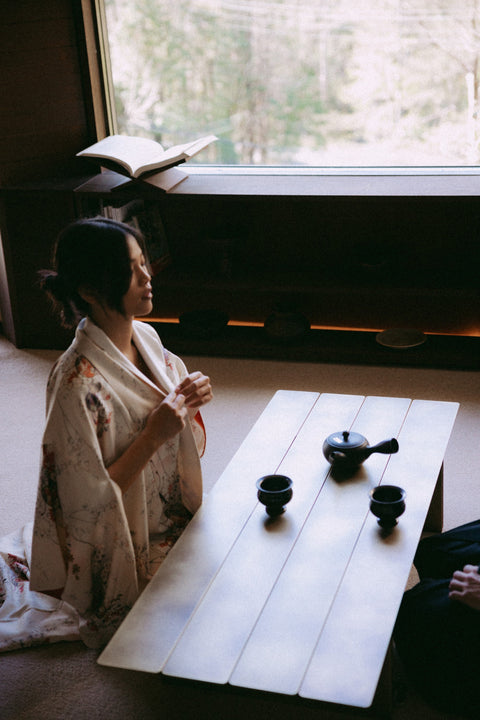
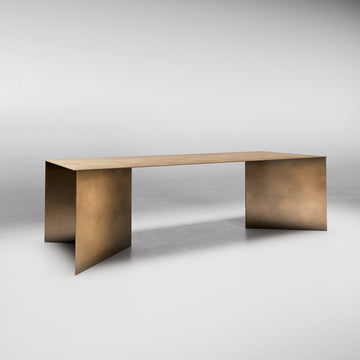
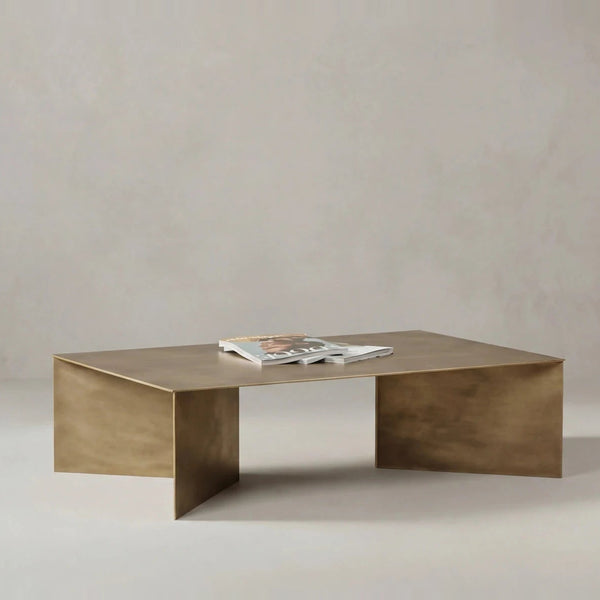
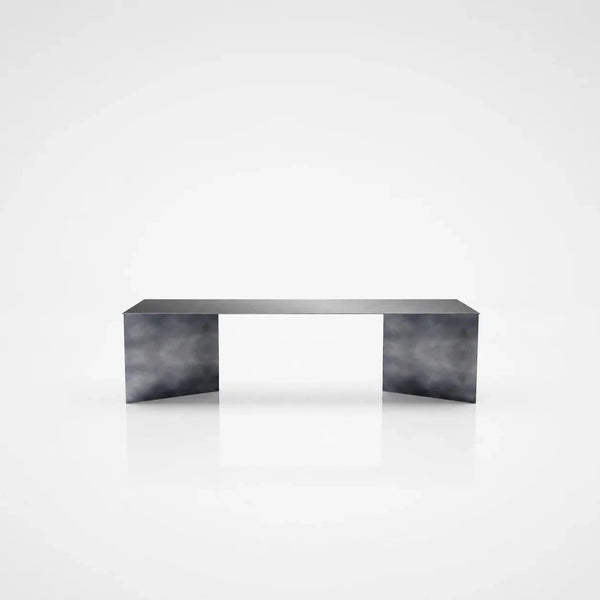
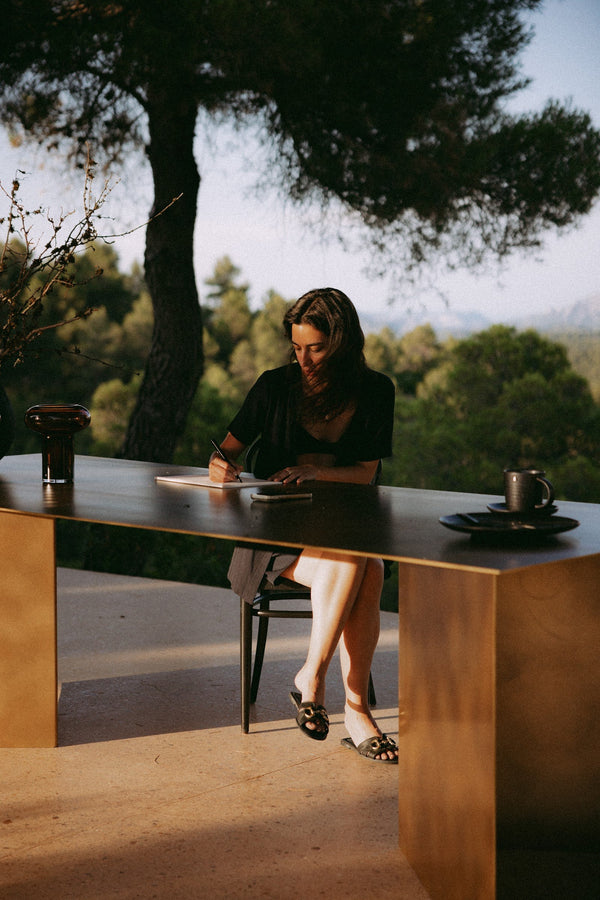
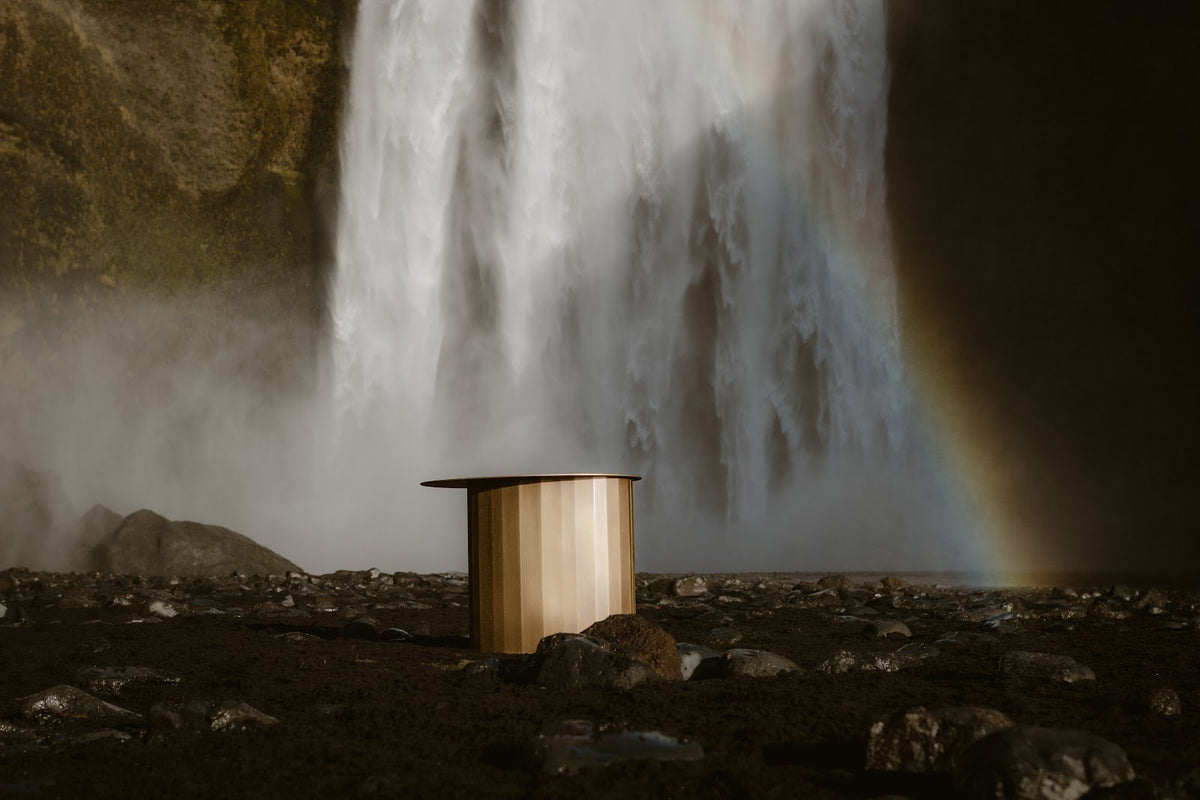
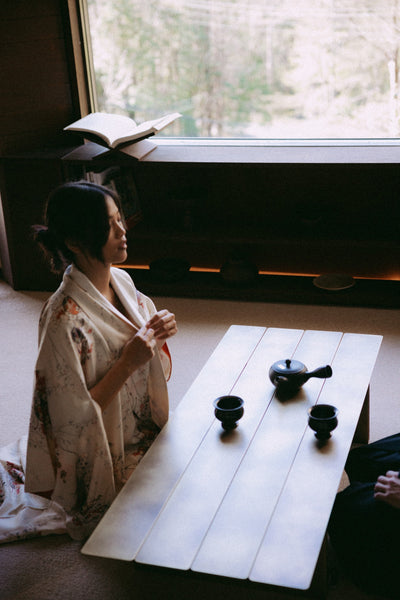
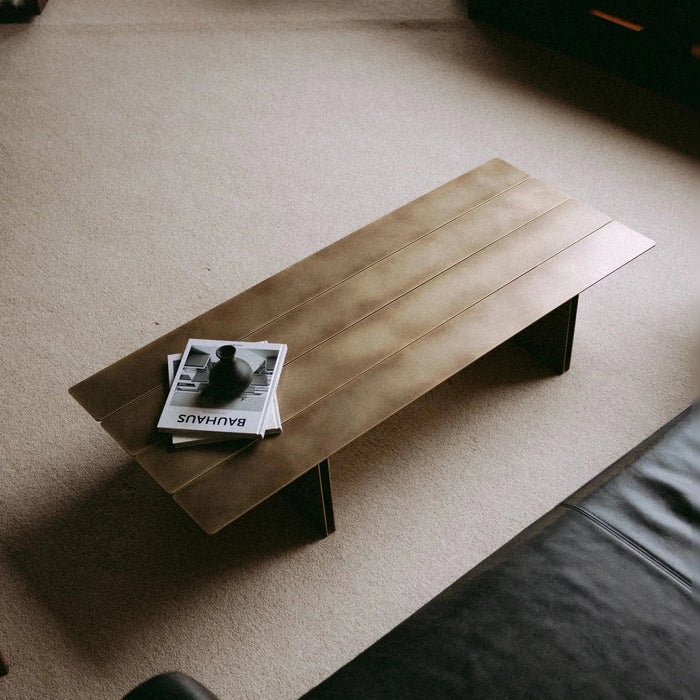
KANJI is made for this scale. With a 130 × 52 cm surface and a height of just 23 cm, the coffee table lies like a dark or light plane in front of the sofa and fills the centre of a large seating group without blocking the view across the room [1]. The product page calls it a sculptural coffee table on an architectural scale [1]; this is exactly the scale the centre of a large living room needs.
The same applies to sofa and rug. A large living room can take a corner sofa or two sofas facing each other, and a rug should be large enough for all the seating in the group to stand on it with at least their front feet. A rug that is too small cuts the group apart; one that is large enough draws it together into one place.
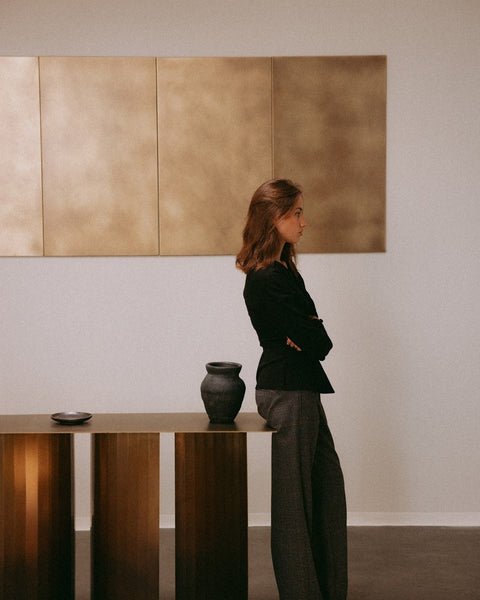
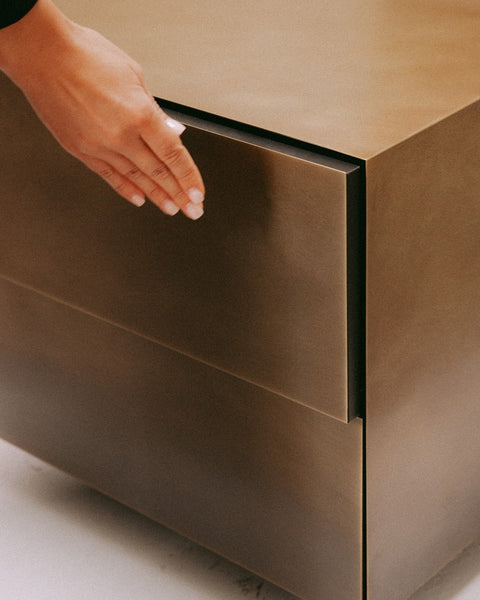
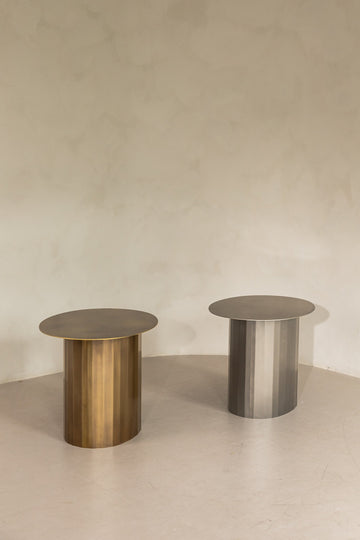
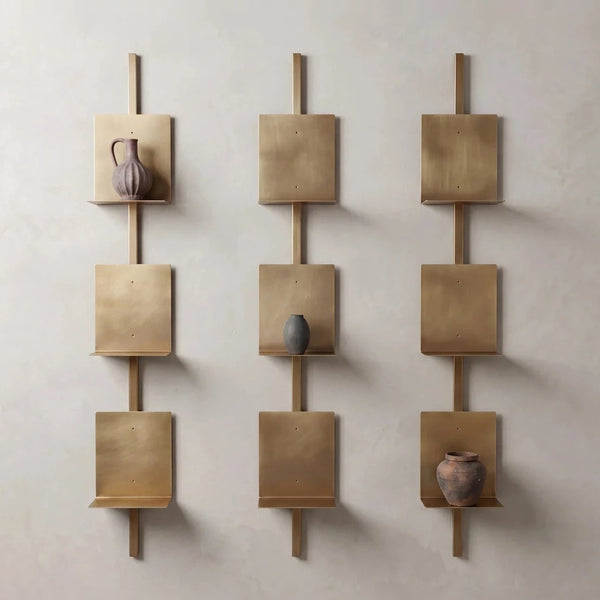
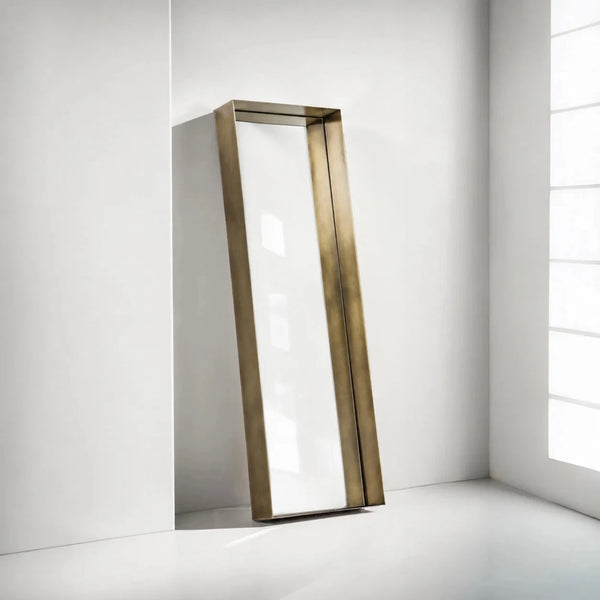
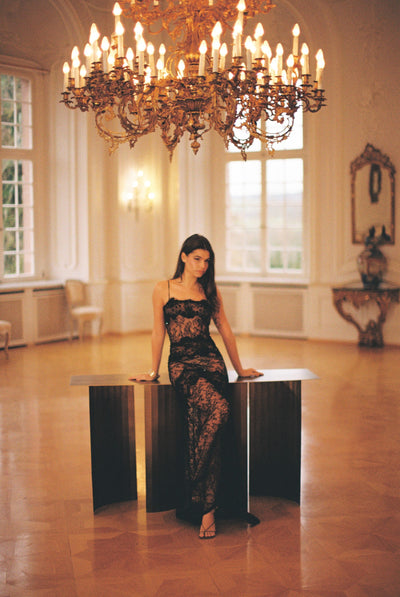
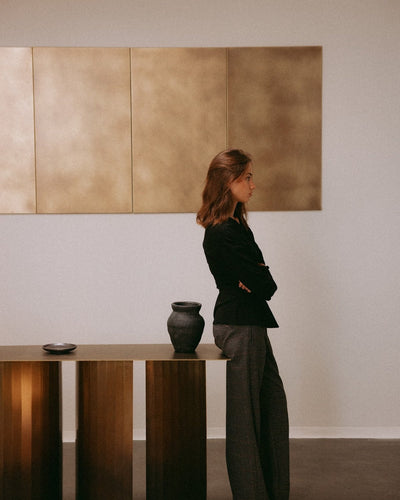
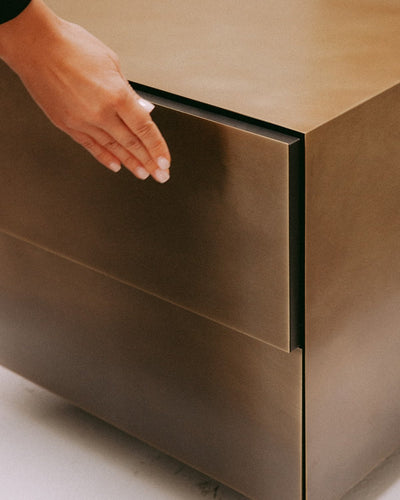
On the wall, a long surface takes on the role that a shelf plays in small rooms. Instead of a large sideboard, a console such as the TUKKON CONSOLE can stand there, 150 cm wide, in burnished brass whose tone begins dark and rich at the bottom and passes into golden nuances towards the top [1]. Above it, a single large object is enough, or a mirror such as REFLEXION in the 200 × 80 cm format [1].
Mentioned in this article
Pieces from this article.

Dividing a large living room: shelves instead of walls
Sometimes free floor is not enough, and a zone needs a back. Dividing a large living room then does not mean making it smaller. A freestanding shelf sets a boundary at hip or shoulder height, above which the room continues to be felt, and it gives the area in front of it the kind of hold that otherwise only a wall provides.
- Behind the sofa: a half-height shelf as a back
- At the reading spot: a modular shelf as a backdrop
- Height: low enough for the room to stay connected
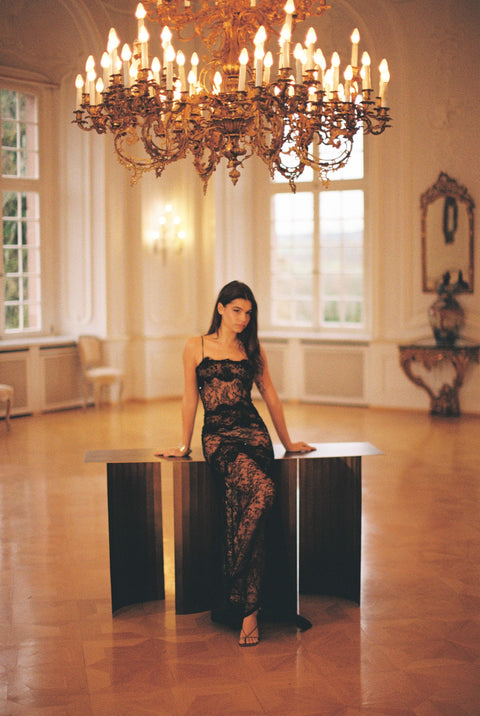
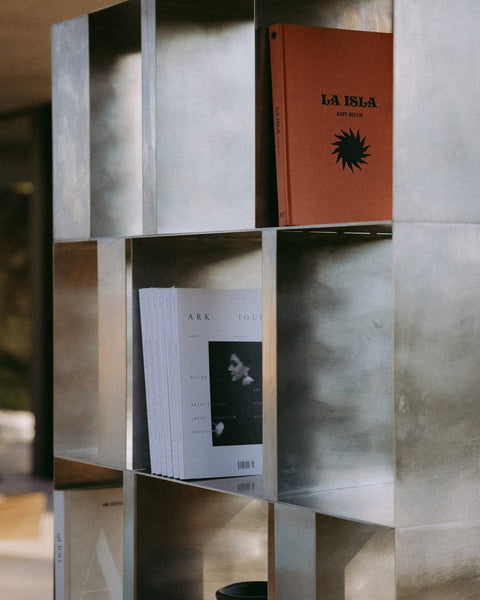
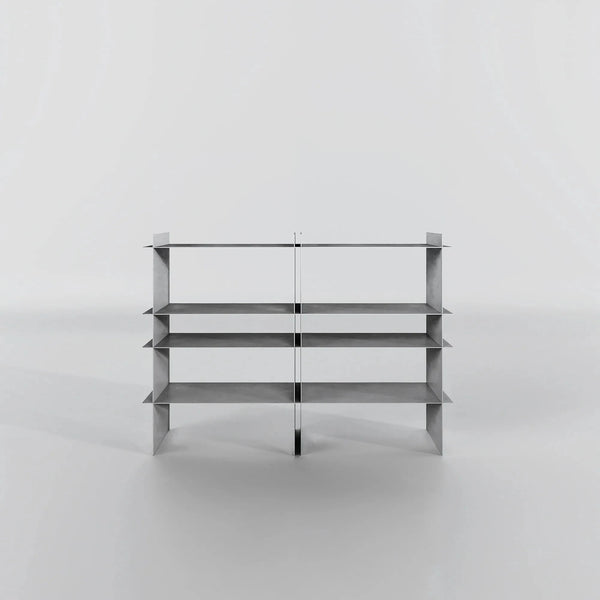
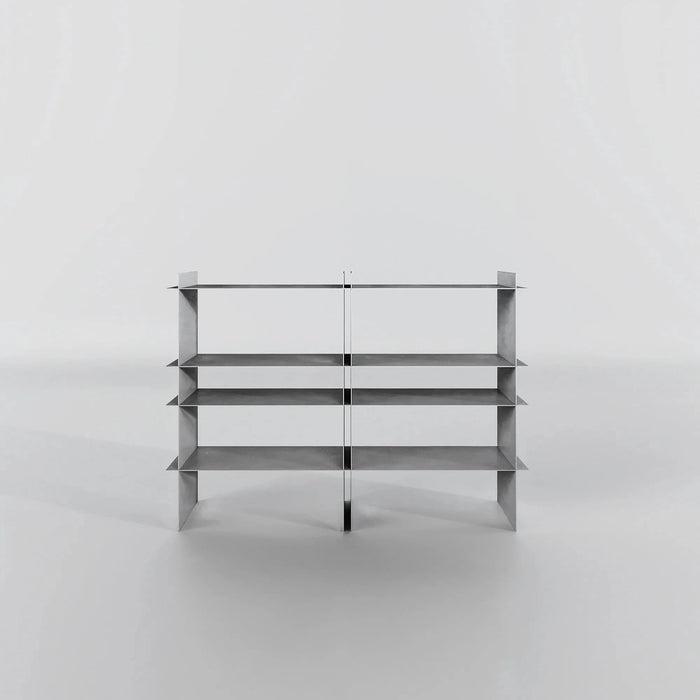
The classic place for such a room divider is the back of the sofa. Where a sofa stands freely in the space, it shows its back to the rest of the room, and a shelf behind it turns this back into a view. TAISHO in brushed stainless steel, 140 × 32 × 100 cm, with open levels, suits this spot: it rises above the backrest but stays below the eye level of someone standing, and its levels have room for books, a lamp and a few objects [1].
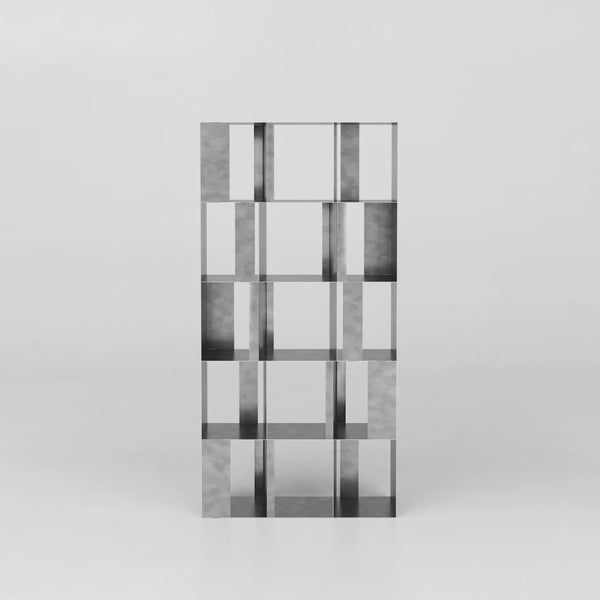
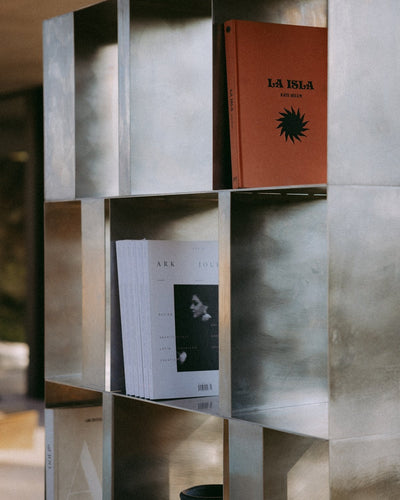
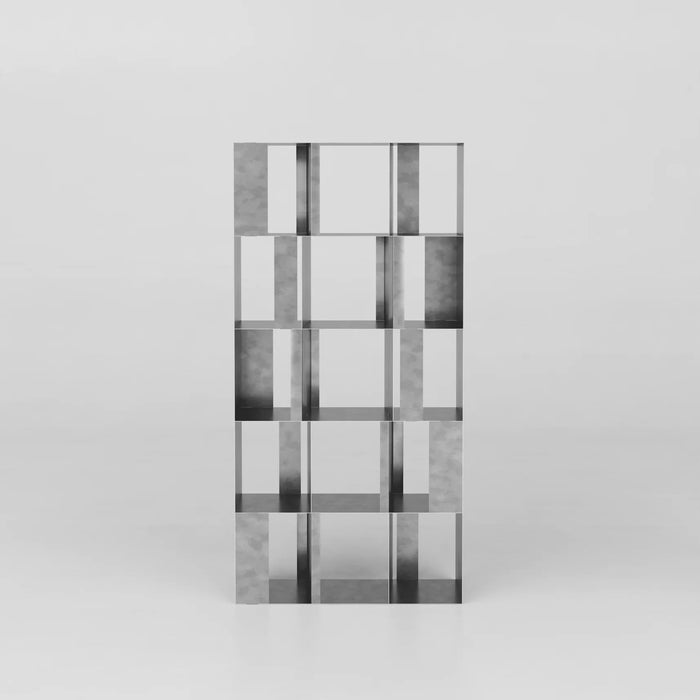
The second place is the reading spot. INFINITY BOOKSHELF is a system of modules of equal size, each 99.5 × 32 × 40.5 cm, that grows upwards or outwards depending on how you assemble it; the product page explicitly mentions its use as a room divider as well [1]. Set up behind a reading chair, it creates a backdrop of books that screens the spot from the rest of the room. Its stainless steel is RAW, so each module tells, through fine traces of sanding, how it was made in the workshop [1].
If you want to divide a large living room, there are other means besides shelves: a rug for each zone, a lamp that marks an area from above, a step in the floor where the floor plan already has one. How a living area can be set apart from the kitchen is shown in the article Separating an open kitchen.
Long and rectangular living rooms
A large, long living room has a difficulty of its own: it draws the eye to its far end. If all the furniture stands along the two long walls, a corridor is created that you look through instead of arriving. The answer is an arrangement across the length that divides the room into sections.
- Axis: sofa and rug across the length
- Sequence: zones one behind the other, not side by side
- Windows: low pieces in front, a clear view
A sofa placed across the long axis divides the room into a front and a back. In front of it lies the seating group, behind it the reading spot or the dining area. Rugs that also lie crosswise reinforce this order, and a lamp above each zone sets the sections apart in the evening too. In this way, a large rectangular living room becomes a sequence of rooms that you enter one after the other.
A large living room with many windows calls for a different consideration. Where windows replace walls, there is little space to place furniture, and tall furniture would take away light. What helps here are low pieces that stay below the sill and furniture that stands freely in the room instead of needing a wall. A low coffee table and a half-height shelf behind the sofa leave the view outside unobstructed.
The wall at the end of a long room also deserves attention. It is the vanishing point towards which the eye runs from the door, and so it needs a counterpart: a large object, a mirror or a shelf with a few things. Whatever stands there brings the end of the room closer and gives the way there a destination. A large rectangular living room that is arranged crosswise and has a counterpart at its end loses the character of a corridor.
Making a large living room cosy
Large rooms quickly look formal and are seldom snug. If you want to make a large living room cosy, you therefore do not make it cosy as a whole, but zone by zone. Each area gets its own rug, its own light and something soft, so that sitting in it feels like being in a small room within a large one.
- Light: a source of its own for each zone, dimmable
- Reading spot: swivelling lamp, plenty of light
- Sound: rugs, curtains, filled shelves
The reading spot shows most clearly how this works. TUKKON CHAIR is a lounge chair made entirely of metal whose seat surface, set at a precisely measured angle, rests on a base of curved sheet metal legs [1]. Beside it belongs a dimmable lamp that rotates and swivels, as licht.de recommends for reading; according to licht.de, a sixty-year-old needs about twice as much light for this as a twenty-year-old [2].
The same things that bring cosiness help against the echo of large rooms. Rugs under each zone, heavy curtains at the windows and filled shelves take away the reverberation that empty surfaces and high ceilings produce. A shelf full of books is more than storage: it is a wall of paper that absorbs sound.
In the evening, light draws the zones together. Instead of one bright ceiling light for the whole room, each zone is lit on its own: the seating group dimmed, the reading spot with directed light, the dining area from above. Between these islands it may be dark, and it is precisely this darkness that makes a large living room seem smaller and warmer in the evening.
A large living room is finished when you no longer notice the space in it, but the places. You do not sit down in a room, but at a spot: on the sofa in front of the low table, in the armchair by the window, at the table under the lamp.
Between these places lies floor that was allowed to remain free, and above it a room that has stayed large because it no longer feels empty.
Frequently asked questions
Where do you start when furnishing a large living room?
First define the zones, that is, areas for sitting, reading and, if applicable, dining. Then place the seating group in the best spot, preferably freely in the room rather than against the wall. Next, give each zone its own rug and its own lamp and leave clear paths between the zones. Finally, choose pieces whose scale suits the space.
How can you divide a large living room without putting up walls?
With freestanding shelves, with one rug per area, with lamps that mark a zone from above and with the placement of the furniture itself. A sofa that stands freely in the room already separates a front from a back. A half-height shelf behind the sofa gives the seating group a back without closing off the room.
Which shelf structures a large living room without closing it off?
A freestanding shelf with open levels that looks good from both sides and is no taller than necessary. TAISHO in brushed stainless steel measures 140 × 32 × 100 cm and works as a half-height back for a seating group. For a reading spot, INFINITY BOOKSHELF is a good fit: modules of equal size in stainless steel left RAW, each 99.5 × 32 × 40.5 cm, which, stacked and turned, form a backdrop at the desired height.
What helps in a long, rectangular living room?
Arranging it across the length. A sofa placed across the long axis divides the room into sections; rugs also lie crosswise, and each zone gets its own lamp. The areas lie one behind the other rather than side by side along the long walls, so that no corridor is created that you only look through.
How can a large living room feel cosier?
By making each zone cosy in its own right: with its own rug, its own dimmable light and soft materials such as wool, linen and heavy curtains. Filled bookshelves and textiles soften the echo that large surfaces and high ceilings produce. In the evening each zone is lit on its own, instead of one ceiling light illuminating the whole room.
How large can the sofa be in a large living room?
Large enough not to look lost in relation to the room, but not so large that conversations have to be held across great distances. A corner sofa or two sofas facing each other often work well, with a long, low coffee table between them. What matters is that the seating group stands as one unit on a shared rug.
Sources & references
- [1]ZinCuTec GmbH: Produktangaben KANJI, TAISHO, INFINITY BOOKSHELF, TUKKON CHAIR, TUKKON CONSOLE und REFLEXION (Maße, Material, Oberfläche, Konstruktion, Einsatz als Raumtrenner), zincutec.eu, abgerufen am 12.10.2026
- [2]licht.de (Brancheninitiative für Beleuchtung): Wohnzimmer, Lichtanwendungen Wohnen, abgerufen am 12.10.2026 licht.de/de/lichtanwendungen/bereich/5-wohnen/68-wohnzimmer
How we work: journal articles are written in the workshop, checked by a specialist before publication and updated when something changes. Editorial principles
Read on
You might also like.

Setting a festive Christmas table: brass instead of gold, calm instead of abundance
A Christmas table feels festive when the tabletop stays visible and a few things are given weight. How place settings, centrepiece, colour and candlelight come together without overloading the table.Read article
Setting the table: the rules of the place setting and why the tabletop has a say
Where cutlery, glasses, napkin and bread plate go follows a simple logic. How it can be applied on a metal table and what the tabletop itself dictates.Read article