




Structures: Japan
How a quiet connection to Japan became a journey: our Structures campaign between a tea ceremony, Mount Fuji and the forest.
 zincutecInstagram Feed

In brief
- Structures is a ZinCuTec campaign filmed in Japan with a small crew.
- The name refers both to the living surfaces of brass and to the order that shapes architecture, landscape and culture in Japan.
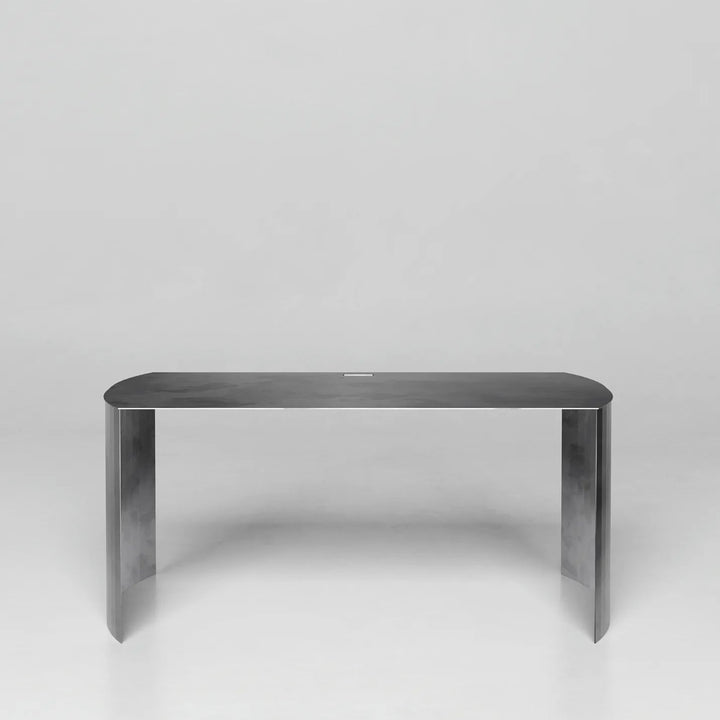
- A piece of furniture was designed to travel on the plane for the journey.
- A samurai and a geisha represent precision and lightness, the two poles of our design.
- Filming took place in a Japanese villa, at Mount Fuji and in a forest.
Contents
Sometimes the strongest ideas do not begin with a clear plan, but with a feeling. That was the case here. For years, we have worked with shapes, surfaces and metals that change and live. Many of our pieces of furniture have Japanese names, even though we had never actually been there. It was always more of a quiet connection, a certain closeness to the aesthetics, the calm and that clarity you understand intuitively without being able to explain it.
At some point, that quiet connection became a question. If our work is so strongly shaped by it, why not go there and experience it for ourselves? Why remain with an idea when we could turn it into reality? That was the moment a thought became a decision.
A piece of furniture that fits on a plane
We developed a piece of furniture deliberately designed to fit on a plane. No conventional shipping, no distance between idea and place, but a direct transfer. The object travels with us and becomes part of the story, not just part of the staging. We flew to Japan with a small crew, reduced to the essentials, without a large production, more like a creative process unfolding on location.
The campaign is called Structures, and the name is more than a title. It refers to the structures of brass: those fine, living surfaces that never repeat themselves exactly, with depth, character and a certain restlessness. It also refers to the structures of Japan. Architecture, landscape and culture all feel considered and follow an order, yet nothing feels rigid. That is where the connection we wanted to make visible emerges.
Samurai and geisha: two forces
We deliberately chose not to create a conventional campaign. No loud product video, no direct staging. Instead, we wanted to tell a story that unfolds slowly, leaves space and does not explain everything. At its heart is a relationship between two figures, a samurai and a geisha. They are less conventional characters than symbols of two forces reflected in our work.
The samurai represents discipline, clarity, control and precision. Craftsmanship and the determination to think through every detail. The geisha, by contrast, represents lightness, intuition, movement and closeness to nature. Feeling and letting go. Our design moves between these two poles, and that is what we wanted to translate into images.
A tea ceremony in a Japanese villa
The first part of the campaign takes place in a Japanese villa we rented for the production. A place with a particular calm that is hard to describe. Everything feels pared back, almost self-evident, yet every line has been deliberately placed. We assembled the table there without staging it, almost as if it had always belonged in the room. At that moment, something interesting happens: the object no longer feels foreign, but fits in.
The two figures sit opposite each other and begin a tea ceremony. A very high-quality sencha, carefully prepared, every movement calm, deliberate and almost meditative. Not much happens in the conventional sense, and that is precisely where the tension lies. The camera observes rather than stages. You feel the connection, the distance and the calm between them. The moment symbolises what we want to achieve with our furniture: presence without loudness, impact without exaggeration.

At Mount Fuji: 45 minutes of light
After those quiet, almost introverted scenes, we moved outside into a completely different energy. The journey took us to Mount Fuji, a place with a presence of its own. Even approaching it changes something, because the mountain is not simply a landscape, but a kind of still point that influences everything around it.
We had arranged a horse for these scenes, which turned out to be one of our biggest challenges. Animals cannot be planned, and that is exactly what happened. The horse arrived later than expected, the sun was already low, and suddenly we had a very short window of perhaps 45 minutes. We had to rethink everything. No perfect setup, no retakes, just instinct.
We drove alongside the horse, the camera out of the car window, everything in motion. Dust, light and speed, together with an unpredictability that gave the images their own energy. The horse did not always react as we wanted, but that was what made the scenes authentic. Raw, imperfect and therefore stronger than any planned shot.

Alongside this, we kept filming scenes with the samurai, both in the open landscape around Fuji and later in the forest. These scenes alternate between movement and stillness, between combat and calm. It is less about action in the conventional sense than inner tension, control and the moment before and after movement. That energy is repeatedly interrupted by quiet, almost meditative sequences of the geisha in nature, creating a balance.
The next day, we went deeper into the forest. The atmosphere there is entirely different: denser, quieter, almost cut off from everything. Here it was less about sweeping images and more about details, small movements and light falling through the trees. The figures feel more isolated, yet more connected on another level. Again, stillness was central, not as emptiness, but as deliberate space.

What we take home from Japan
Between all these planned moments, there were many situations that were not part of the concept but proved just as important: drives, conversations and moments when we simply observed. Japan has a way of slowing you down without you noticing. You automatically begin to look more closely, to see transitions and to notice details that would otherwise pass you by.
That is probably what I take most from this journey. In Japan, everything has its place; nothing feels accidental. Even the smallest elements are considered, and you sense that attitude everywhere. It is not about being loud or standing out, but about working on a deeper level.
That is also where our connection lies. Our furniture is minimalist, but not simple. Every surface is worked, changed and refined several times. Brass is not a static material. It lives, develops and carries traces. It can never be controlled completely, and that is precisely its quality.
This tension between control and chance, between clarity and vitality, is what we wanted to capture with Structures. Japan showed us that reduction does not mean going without, but focusing. That calm is not stagnation, but a form of presence.
In the end, this campaign was less a shoot than a search. For connection, for meaning and for a state in which design is not only seen but felt. And perhaps that is exactly where something new begins.
Frequently asked questions
What does the name Structures mean?
Structures refers to two things: the structures of brass, living surfaces that never repeat themselves exactly, and the structures of Japan, where architecture, landscape and culture follow an order without feeling rigid.
Where was the Structures campaign filmed?
In a rented Japanese villa, in the landscape around Mount Fuji and in a forest. The crew was deliberately small, without a large production.
What do the samurai and the geisha represent?
The samurai represents discipline, clarity, control and precision, in other words craftsmanship. The geisha represents lightness, intuition, movement and closeness to nature. ZinCuTec's design moves between these two poles.
Why do many ZinCuTec pieces have Japanese names?
They come from a long, quiet connection to Japanese aesthetics. Calm, clarity and reduction shaped the workshop's work even before the team travelled to Japan.
How we work: journal articles are written in the workshop, checked by a specialist before publication and updated when something changes. Editorial principles
Read on
You might also like.

Designing an entrance area without filling it up
What the first two metres behind your front door need to do, which furniture fits there and why lighting changes the space more than decoration.Read article
Alpine Trip
In August 2025, we took the team to the Austrian Alps. Not to a sterile meeting room, but to a cabin above the lake.Read article


