



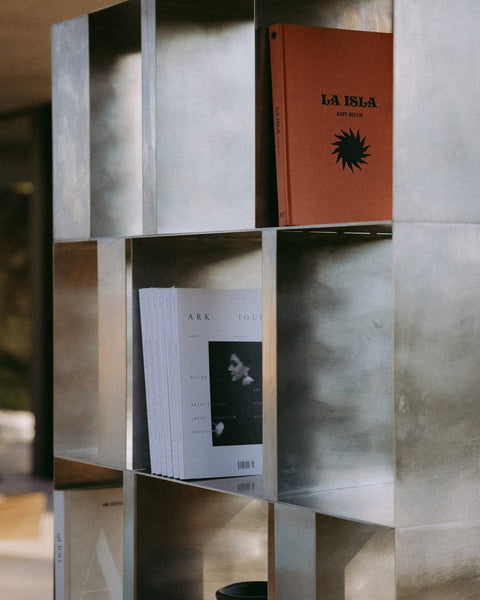
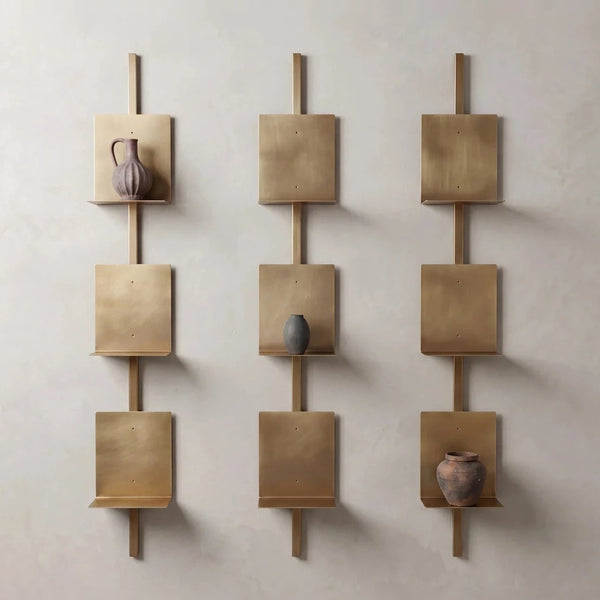
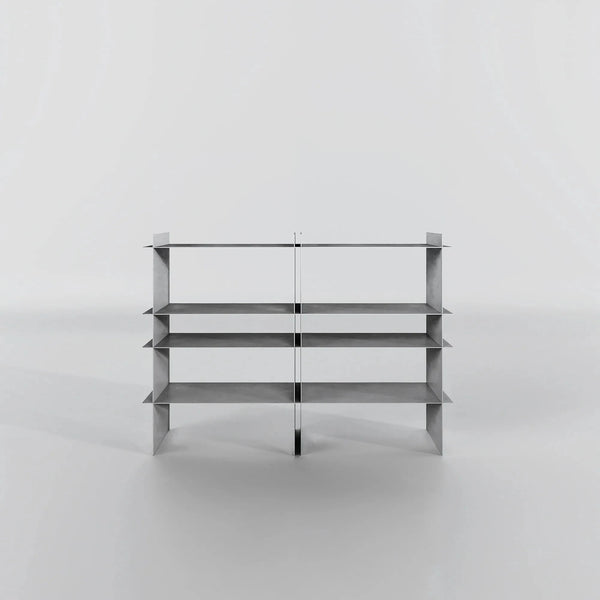


Interior design styles at a glance: how much metal each style can take
Four families instead of twenty names: which interior styles are built on metal, which take it in as a single accent and how to find your own style from there.

In brief
- The many interior design styles can be sorted into four families: clean lines, ornament and gleam, calm from Asia, grown and soft.
- In Bauhaus, mid-century and the Japanese style, metal is at home; Art Deco loves it as a gleam with a warm tone.
- Country, boho, Mediterranean and Scandinavian take in metal as a single accent, which has its effect precisely because it is rare.
- You find your own style through what you want to keep and through repetitions in collected room images.
- Mixing styles needs something to hold them together; a recurring material such as metal unites different sources.
Contents
- 01Which interior design styles exist: four families
- 02Clean lines: Bauhaus, mid-century and the urban style
- 03Gleam and geometry: Art Deco and the twenties
- 04Calm from Asia: the Japanese interior style
- 05Grown and soft: Scandinavian, country, Mediterranean and boho
- 06Retro and vintage: the decades as style
- 07Modern interior style: what modern means
- 08Finding your own style and mixing styles
- 09Frequently asked questions
Interior design styles are agreements about material, form and colour. Say Bauhaus and you mean clean lines and tubular steel; say country style and you think of ceramics and checked fabrics. This overview sorts the well-known interior styles by one question that is decisive when choosing furniture: how much metal a style carries. Some styles are built on it, others take it in as a single accent, and precisely this difference helps you recognise your own style.
This overview only touches briefly on five styles, because they deserve a closer look of their own: industrial, Japandi, Scandinavian, minimalist and wabi-sabi. The remaining styles are described in more detail, along with the path to your own style and the question of how styles can be combined.
Which interior design styles exist: four families
Lists of interior design styles name twelve, twenty or more. It becomes clearer if you sort the styles by their origins. Four families then remain, and almost every name can be assigned to one of them.
- Clean lines: Bauhaus, mid-century, industrial, minimalism
- Ornament and gleam: Art Deco
- Calm from Asia: Japanese, Japandi, wabi-sabi
- Grown and soft: Scandinavian, country, Mediterranean, boho, vintage
The first family emerged from twentieth-century modernism and thinks in terms of material and construction. The second loves ornament, gleam and the grand gesture. The third comes from Japanese living culture and seeks calm through emptiness. The fourth has grown over time: it collects, mixes and tells of landscapes, journeys and decades.
For metal furniture, this order is revealing. In the first and third families metal is at home, in the second it appears as a gleam with a warm tone, in the fourth as a single accent that has all the more effect the more rarely it appears. The names of the styles change over the years; these four attitudes remain.
Many familiar names can be placed quickly this way. Industrial and minimalism belong to the clean lines, hygge and lagom to the Nordic, grown side, and Japandi stands between Asia and Scandinavia. Eclectic describes not so much a style of its own as the art of combining several families in one room.
Clean lines: Bauhaus, mid-century and the urban style
At the Bauhaus, founded in 1919, Marcel Breuer used tubular steel for home furniture for the first time; in 1927 this furniture was presented to a wide public [2]. Since then, metal has been part of the vocabulary of modernism. The Bauhaus interior style shows the construction instead of concealing it, works with basic forms and few colours, and gives every piece of furniture room to breathe.
- Bauhaus: basic form, visible construction
- Mid-century: organic line, upholstery on metal
- Urban and clean: few objects, calm surfaces
- Objects: SAMURAI, TUKKON CHAIR
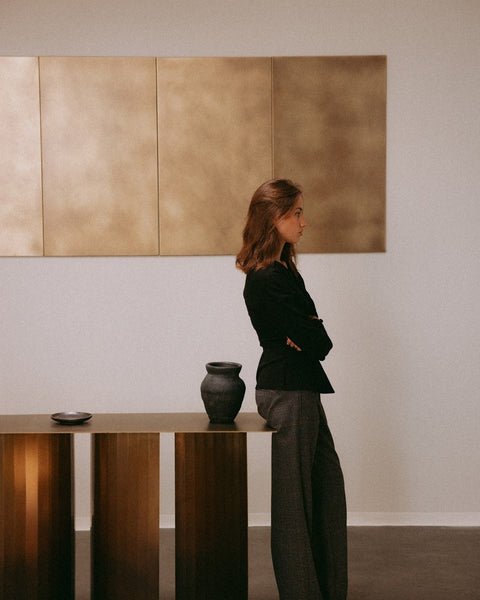
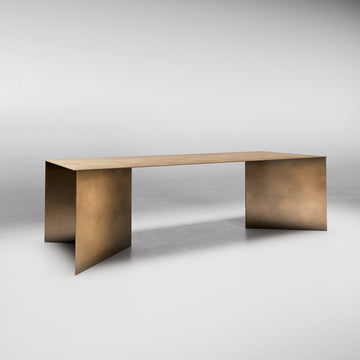
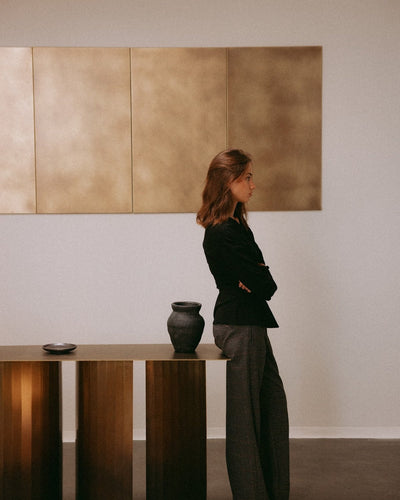
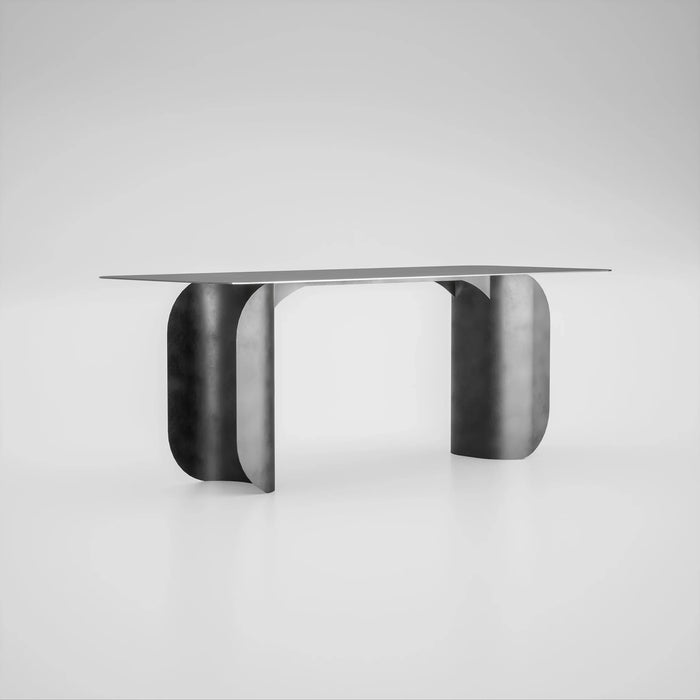
A dining table such as SAMURAI follows this idea: a top of brushed stainless steel on two sculptural legs, nothing else [1]. The mid-century interior style, named after the design of the middle of the twentieth century, softens this rigour. It likes organic lines, upholstered seats on slender frames and warm tones. TUKKON CHAIR combines both: the lounge chair is made entirely of brass or stainless steel, and its seat rests on a base of curved sheet metal [1].
The urban, “clean” interior style continues this family in the present. It needs few, well-placed objects and plenty of calm surface. Two related styles also belong to this family. The industrial style takes the exposed material of factory and workshop and makes metal the load-bearing material of the room. Minimalist living shows how much a room can achieve with very few things.
In everyday life, clean lines above all mean discipline when adding things. Every new object has to measure up to the table and chair that already define the room. What merely decorates rarely finds a permanent place here, and it is precisely this selection that gives the rooms their calm.
Mentioned in this article
Pieces from this article.


Gleam and geometry: Art Deco and the twenties
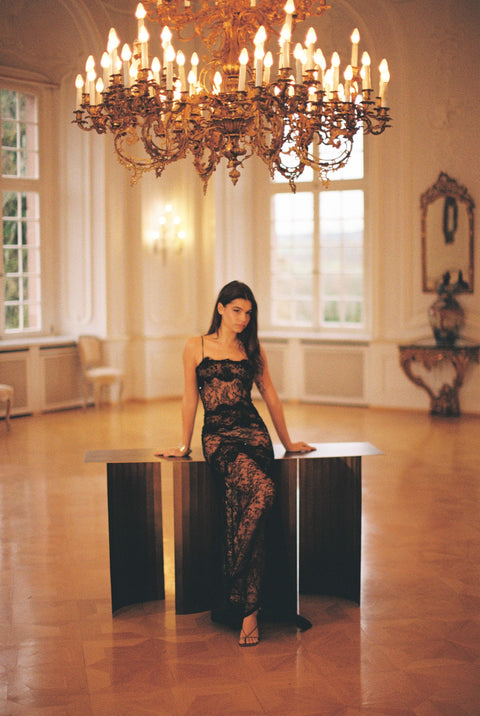
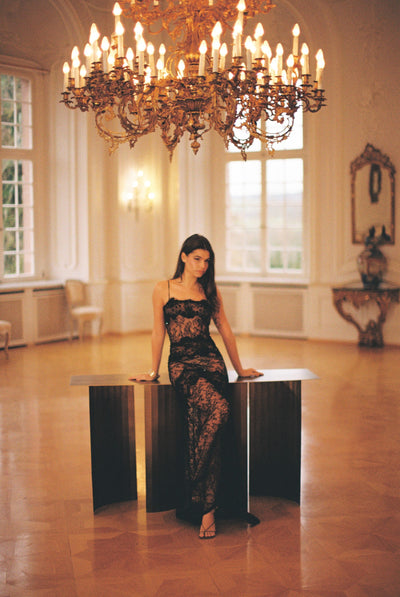
The Art Deco interior style takes its name from an exhibition, the “Exposition internationale des Arts décoratifs et industriels modernes”, which opened in Paris in 1925 [3]. Typical features are fine materials, cubic forms and ornamentation that delights in effect [3]. If you are looking for the living style of the 1920s, you will find it in mirrors with wide frames, in velvet, fan motifs and metal with a warm tone.
- Origin: Paris, 1925
- Forms: cubic, fan-shaped, symmetrical
- Metal: warm, dark, with a gleam
- Objects: REFLEXION, ELYSIAN
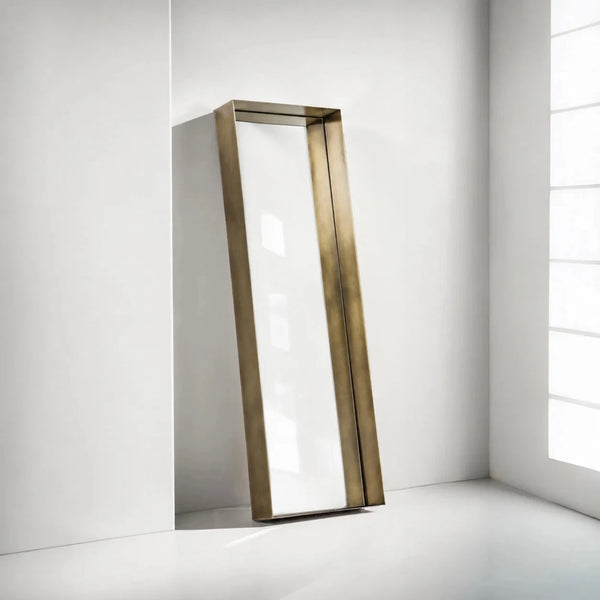
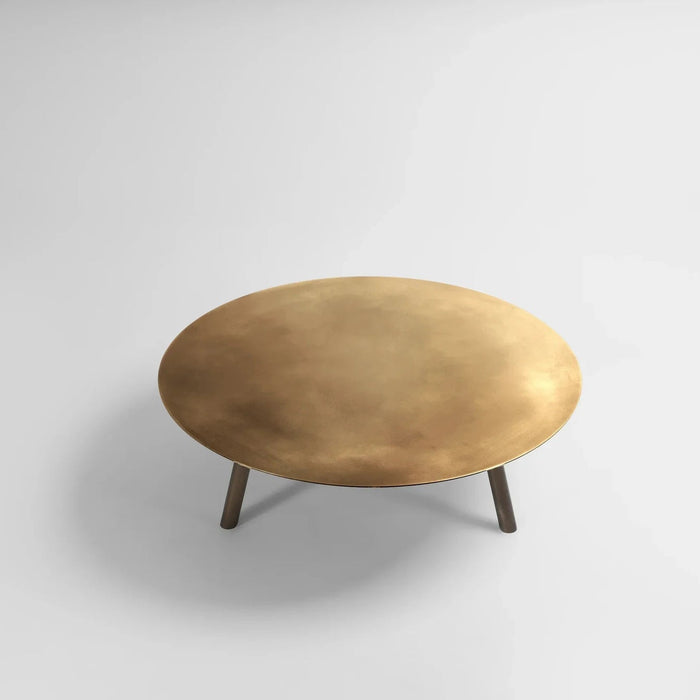
Burnished brass fits into this world because it has gleam and depth at the same time. Only burnishing gives the metal its dark, rich tone, which the sealing then preserves; beside it, bare brass looks flat. REFLEXION frames a mirror in burnished brass or brushed stainless steel and becomes the centre of the wall in an Art Deco room [1]. ELYSIAN sets a round brass top on three cylindrical legs, a geometry that recalls the twenties without copying them [1].
Art Deco takes in more metal than most styles, but it demands balance. Velvet in dark green or petrol blue takes the hardness out of the gleam, and a single large form carries the room. Many small golden things side by side, on the other hand, blur the picture that the style wants to draw so clearly.
Calm from Asia: the Japanese interior style
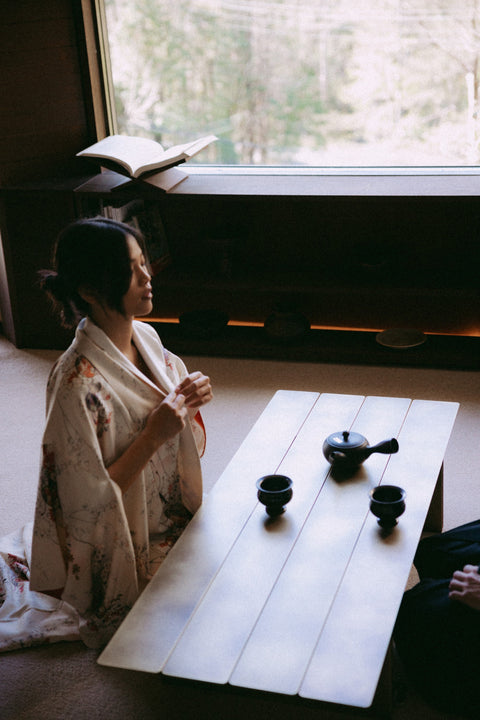
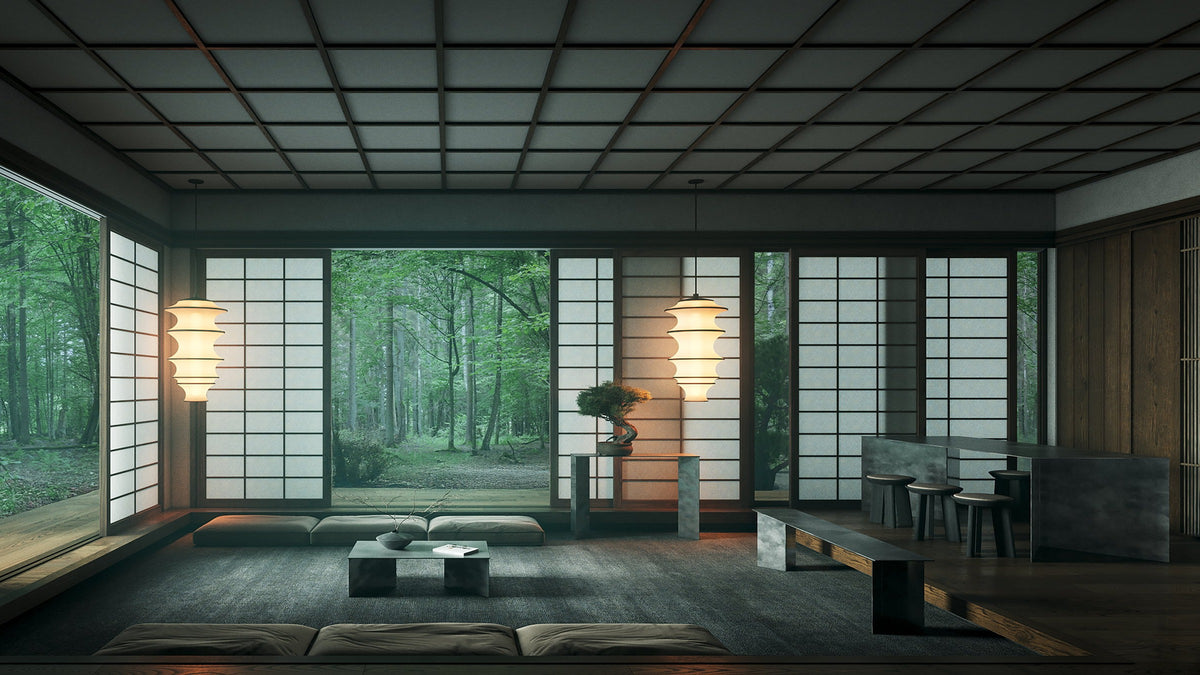
Japanese living starts from empty space. Furniture sits low, surfaces stay free, and every object is given distance from its neighbour. Paper, stone, natural fibres and muted colours set the mood. Asian interior styles in the broader sense share this restraint, often complemented by dark lacquers and stronger accents.
- Principle: emptiness as design
- Height: low, close to the floor
- Material: stone, paper, metal with a calm surface
- Objects: ZEN COFFEE TABLE, KANJI
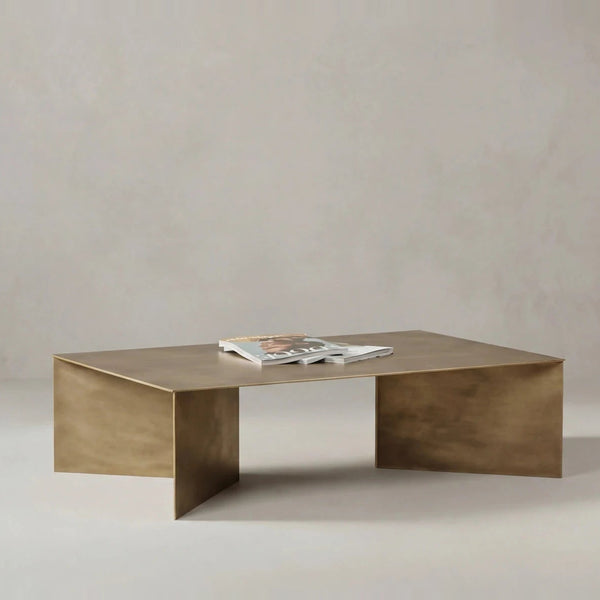
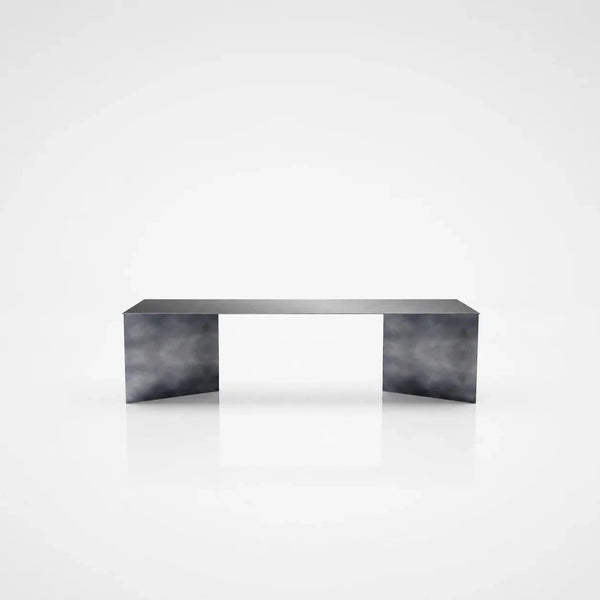
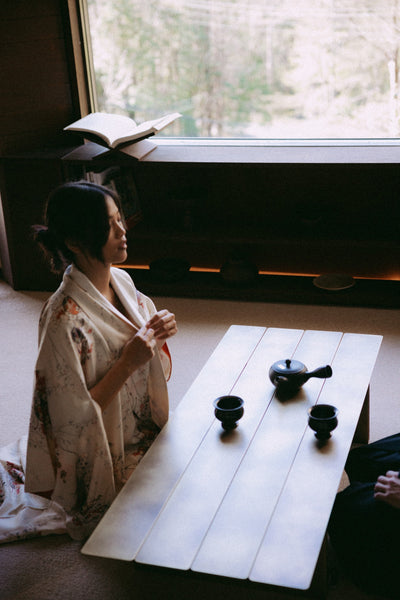
Metal fits in here when its surface stays calm. At 27.5 cm high, the ZEN COFFEE TABLE is a low table: a matt top on two precisely curved legs, in burnished brass or brushed stainless steel [1]. KANJI is a coffee table on an architectural scale, as if written in metal [1]. Both names come from Japanese, and both objects work with what this style values most: a form that needs little.
Two further styles connect to this family. Japandi combines Japanese calm with the warmth of Nordic living culture and is a hybrid style between two families. Wabi-sabi values the irregular and the marked; burnished brass brings this quality with it, because every surface receives its own tone in the workshop.
Grown and soft: Scandinavian, country, Mediterranean and boho
The fourth family is built on natural materials, textiles and collected things. The Scandinavian style works with light floors, white and linen; its Danish relative, the hygge interior style, puts the emphasis on cosiness, candlelight and wool. Brushed stainless steel easily finds its place in these light rooms, its grain picking up the daylight.
- Scandinavian and hygge: light, linen, wool
- Country: ceramics, checked fabrics, limewashed surfaces
- Mediterranean and coastal: lime plaster, terracotta, blue
- Boho: patterns, rattan, plants
- Metal: one object as an accent
Country style is shaped by ceramics, checked fabrics and limewashed surfaces. The Mediterranean style lives from lime plaster, terracotta and the light of the south, the coastal style from blue, white and coarse linen. The boho style mixes patterns, rattan, plants and finds from many countries. In all these styles, metal remains an accent, and it is precisely as an accent that it unfolds its effect.
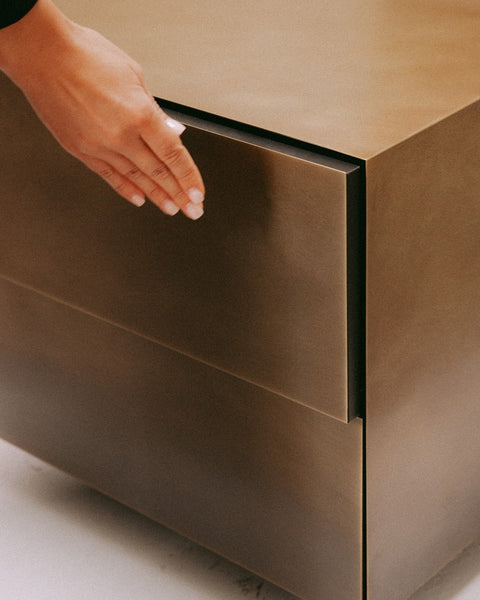
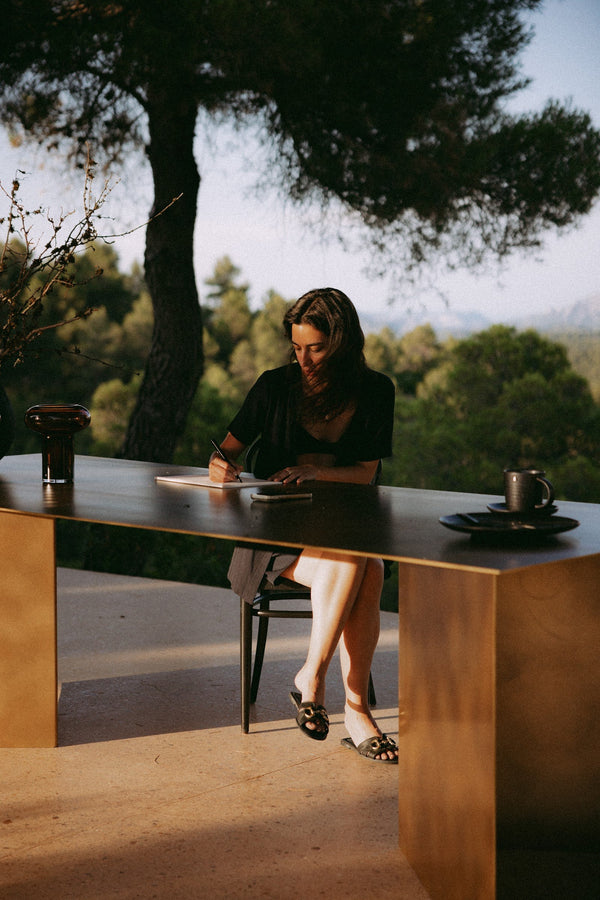
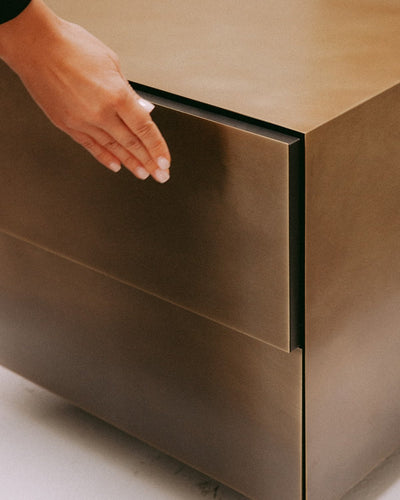
A single object in burnished brass, such as the YORU chest of drawers with its gradient from light to dark, becomes a fixed point in a country or boho room around which everything else is arranged [1]. A large brass mirror hangs just as naturally above a limestone console as above a painted cupboard. What matters is measure: one object per room, not a whole programme.
Retro and vintage: the decades as style
Retro and vintage are often confused. Vintage refers to furniture and objects that actually date from an earlier period; retro means new designs that quote an earlier period. Both styles use the decades of the twentieth century as a stock of images from which every home takes something different.
- 1960s: organic forms, teak, strong colours
- 1970s: brown, mustard, orange, curves
- 1980s: black, glass, pastel, graphics
- Metal: gleam as a quotation
The interior style of the 1960s loves organic forms, teak and strong colours. The 1970s add brown, mustard and orange, along with rounded lines and chrome-plated frames. In the 1980s things become more graphic: black, glass, chrome and pastel. In these styles metal likes to shine and reflects much of its surroundings.
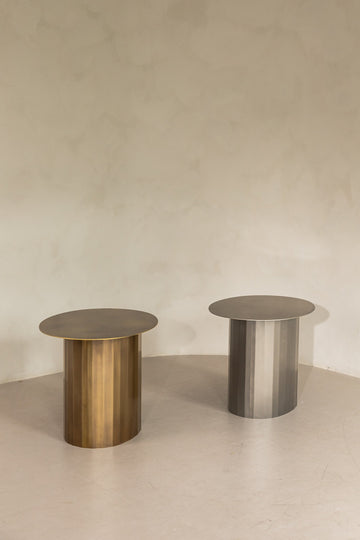
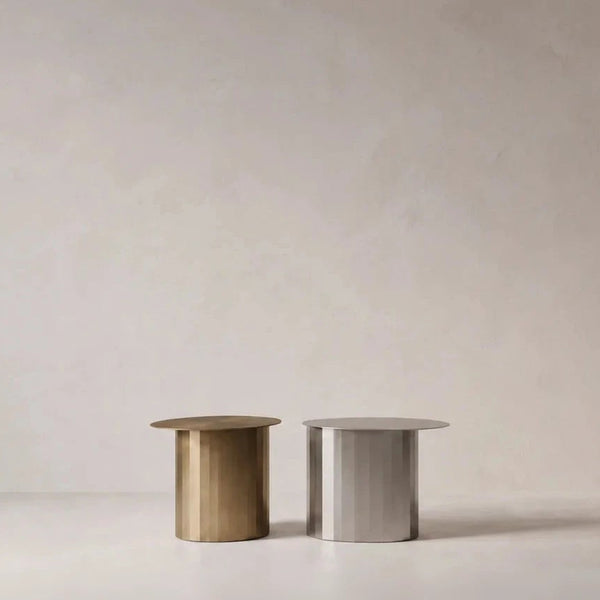
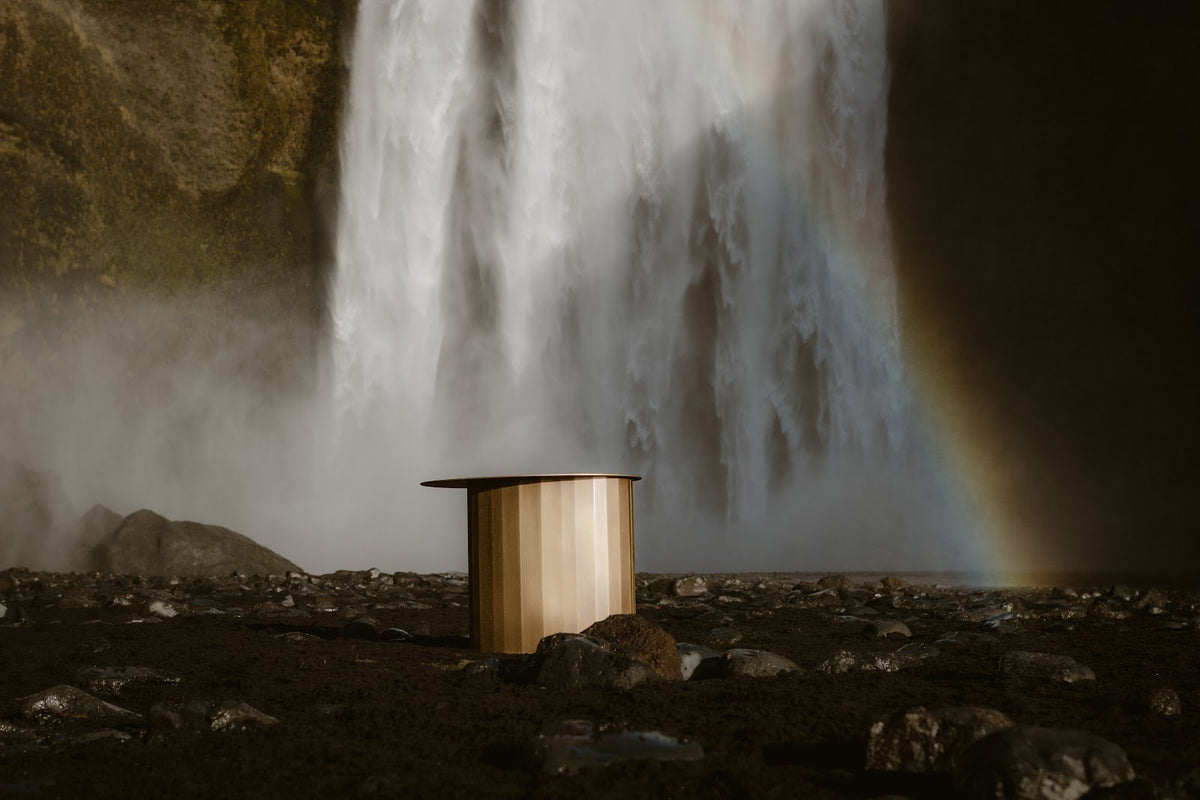
A retro-style room has the strongest effect when a single piece of furniture from the desired decade meets calm contemporary pieces. The TUKKON SIDE TABLE, a cylindrical body of brass or stainless steel with fine vertical lines, takes up the curves of the seventies while keeping the room in the present [1].
Vintage calls for a care of its own. An original bears the marks of its years, and it is precisely these that make up its charm. Next to such a piece, new objects may appear clear and precise. Then the old piece of furniture tells its story, and the new one leaves it room.
Modern interior style: what modern means
A modern interior style means two things. In art history, modernism is the movement from which Bauhaus and mid-century emerged. In interior magazines, on the other hand, modern usually means contemporary: clear forms, calm colours, little decoration, open floor plans.
- Forms: clear, reduced
- Colours: white, grey, black, natural tones
- Material: metal, stone, glass, textile
- In the living room: a few large objects
Modern interior styles like to combine materials that used to be kept apart: metal with wool, stone with linen, glass with leather. The room draws its depth from the tension between cool and warm surfaces. A home in a modern style therefore rarely feels severe, as long as textiles and light play their part.
A modern interior style shows most clearly in the living room, because that is where most objects come together: sofa, coffee table, shelf, lamp. What role metal can take on in this room is shown in the article Furnishing the living room.
What looks modern changes more slowly than trend lists suggest. Clear proportions, honest materials and good light still look contemporary after decades, whereas a fashionable colour or the pattern of a season rarely does. If you want to furnish in a modern way, put the care into the form of the large objects and let the season speak through cushions, flowers and books.
Finding your own style and mixing styles
An online interior style quiz delivers a label, rarely a home. A more reliable guide is to look at what you already own and do not want to give up. An inherited armchair, a piece of ceramics, a picture: your own taste is already in these things. If you collect ten room images that appeal to you and lay them side by side, you will soon see what repeats itself: a colour, a material, a height.
- Starting point: what you want to keep
- Method: collect images, look for repetitions
- Mixing: one material as a common thread
- Measure: one style leads, one complements
Most homes mix interior styles, and this works when one style leads and a second complements it. An eclectic style that deliberately combines many sources needs something to hold it together: a material, a colour or a line that recurs everywhere. Metal is well suited to this role, because it appears in each of the four families.
In this way, a table of brushed stainless steel connects a Bauhaus room with Scandinavian chairs, and a mirror in burnished brass connects a boho room with an armchair from the twenties. The style then does not come from a list, but from the decisions you make in your own room.
It also helps to look at the architecture. A period building with stucco and floorboards takes in different styles from a new building with exposed concrete and large windows. If you read the house as the first clue, you choose a style that speaks with it. Metal often bridges the gap, because it looks natural in old and new rooms alike.
In the evening, the light of the floor lamp falls on a brass top. Beside it stands an armchair from the sixties, a rug from Morocco lies on the floor, and a stack of illustrated books sits on the shelf. Under a single name this room would appear on no list, and yet you recognise its style at once.
Frequently asked questions
What interior design styles are there?
The best-known interior design styles include Bauhaus, mid-century, industrial, minimalism, Art Deco, Japanese style, Japandi, wabi-sabi, Scandinavian and hygge, country, Mediterranean, coastal, boho, vintage and retro. The list becomes clearer in four families: clean lines, ornament and gleam, calm from Asia, and grown, soft styles.
How do you find your own interior style?
Most reliably through the things you already own and want to keep, and through a collection of around ten room images you like. What repeats itself in them, such as a colour, a material or a furniture height, describes your own style more precisely than an online quiz.
Can you mix interior design styles?
Yes. A mix works well when one style leads and a second complements it, for example Japandi, which combines Japanese and Scandinavian living culture. An eclectic style with many sources needs something to hold it together: a material, a colour or a form that recurs throughout the room.
What is a modern interior style?
In general usage, a contemporary style with clear forms, calm colours, little decoration and a mix of metal, stone, glass and textiles. In art history, on the other hand, modernism refers to the twentieth-century movement from which Bauhaus and mid-century emerged.
Which interior styles suit metal furniture?
As a load-bearing material, metal suits Bauhaus, mid-century, industrial, minimalism and the Japanese style, and as a warm gleam it suits Art Deco. In country, boho, Mediterranean and Scandinavian interiors, a single metal object works as an accent, such as a mirror or a chest of drawers in burnished brass.
What is the difference between Bauhaus and mid-century?
The Bauhaus style goes back to the design school founded in 1919 and works with basic forms, visible construction and tubular steel. Mid-century refers to the design of the middle of the twentieth century, which softens this rigour with organic lines, upholstery and warm tones.
How do vintage and retro differ?
Vintage means furniture and objects that actually date from an earlier period. Retro refers to new designs that take up the style of an earlier period, such as the 1960s, 1970s or 1980s.
Sources & references
- [1]ZinCuTec GmbH: Produktangaben SAMURAI, TUKKON CHAIR, REFLEXION, ELYSIAN, ZEN COFFEE TABLE, KANJI, YORU und TUKKON SIDE TABLE (Material, Oberfläche, Form, Maße), zincutec.eu, abgerufen am 12.10.2026
- [2]Thonet GmbH: Moderne Linien aus Stahl. Wie Ideen des Bauhauses das Möbeldesign prägten, Pressemitteilung, Frankenberg, August 2025, abgerufen am 12.10.2026 thonet.de/fileadmin/media/08-company/Press_releases/1_PM_Thonet_100_Jahre_Bauhaus_Dessau_Stahlrohrmoebel_DE.pdf
- [3]Andreas Kläui: Das Überflüssige ist das Notwendige. Art déco wird 90, Schweizer Radio und Fernsehen (SRF), 29.04.2015, abgerufen am 12.10.2026 srf.ch/kultur/kunst/kunst-das-ueberfluessige-ist-das-notwendige-art-deco-wird-90
How we work: journal articles are written in the workshop, checked by a specialist before publication and updated when something changes. Editorial principles
Read on
You might also like.

Industrial style without the cliché: metal in the leading role
Industrial style lives on material, not on props. Which colours, which light and which objects carry it, from the living room to the small flat.Read article
Zen interiors in metal: the ZEN series in five details
Anatomy of a design: how a folded sheet, a concealed support and a solid edge translate the calm of the Zen style into four pieces of furniture.Read article