




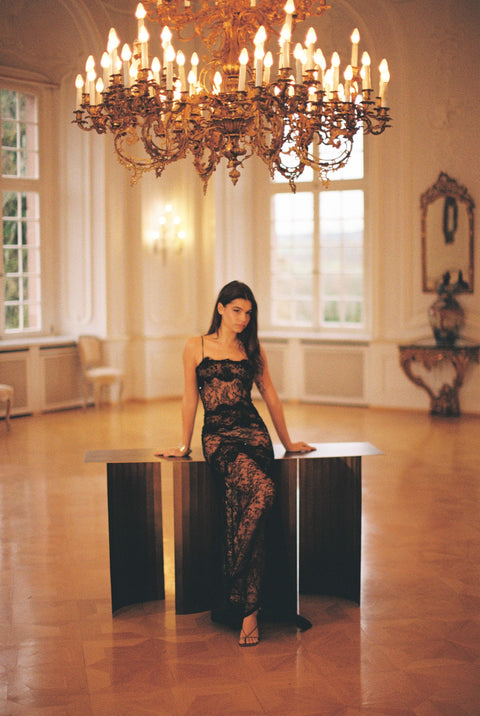
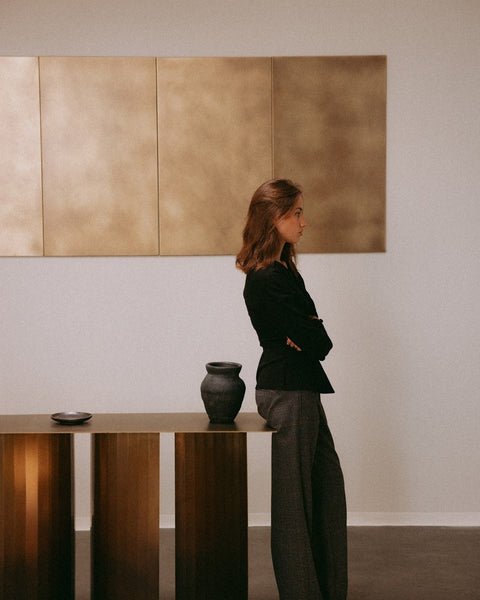
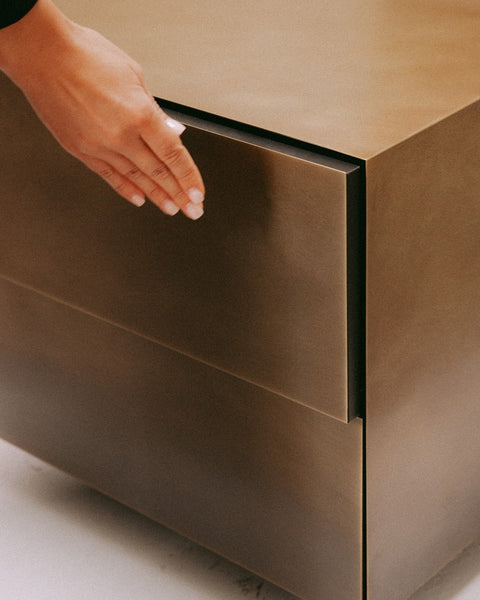
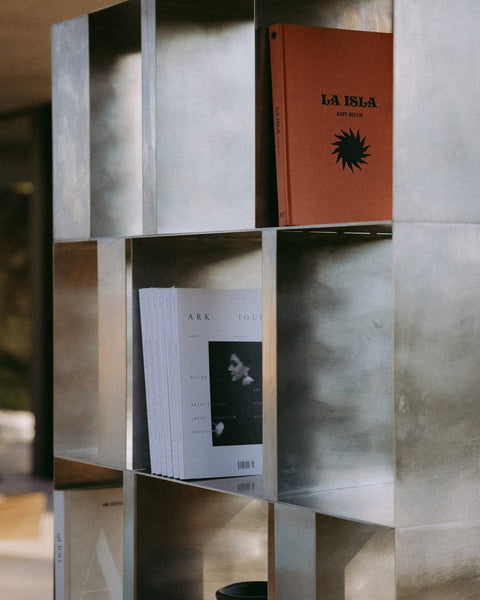



Industrial style without the cliché: metal in the leading role
Industrial style lives on material, not on props. Which colours, which light and which objects carry it, from the living room to the small flat.

In brief
- What defines the industrial style is not a factory backdrop but material that shows what it is made of: metal, stone, concrete and glass.
- The colours stay calm: grey, off-white, black as a line and warm earth tones as a counterweight.
- Light comes from several sources rather than a single ceiling light; licht.de recommends at least three lights for a living room of around 20 m².
- Every room needs a lead piece made of metal: the coffee table in the living room, the table in the dining room, the shelf along the long wall.
- Even a small flat can carry the style if one object leads and everything else steps back.
Contents
- 01What defines the industrial style
- 02Modern or vintage: two readings of the industrial look
- 03Colours, walls and pictures in the industrial style
- 04The living room in the industrial style
- 05Dining room, bedroom, hallway and small flat
- 06Industrial-style furniture: one lead piece per room
- 07Frequently asked questions
Anyone setting out to furnish in the industrial style usually thinks of images first: brick walls, steel girders, windows with narrow glazing bars. These images come from spaces where work was once done, and they can rarely be recreated in a flat. What can be carried over is something else, namely the way material was treated there. Metal was allowed to be metal, stone was allowed to be stone.
This article describes the style from its material outwards: which colours carry it, what light it needs and how it finds its way into living rooms, dining rooms, bedrooms, hallways and small flats. How it works in a large, open space is shown in the article on the industrial loft; an overview of all styles is given in the article on interior styles.
What defines the industrial style
The industrial style is an interior style that has taken its forms from factory halls and warehouses. From the 1940s onwards, vacant industrial spaces in New York and London with large floor areas and high ceilings were converted into homes without much change to their building fabric [2]. This way of living has become a style that is found today in a period flat as readily as in a new build.
- Material: metal, stone, concrete, glass
- Colour: grey, white, black, earth tones
- Line: straight, graphic, open
To this day, the industrial look is recognisable by its palette of materials, a calm colour scheme and a clear, often graphic line. Metal is more than a detail here. It forms the framework of a room, whether as a tabletop, a shelf or the narrow edge of a mirror, and gives the softer things around it something to hold on to: linen, wool, leather, paper. Concrete and stone provide calm, glass provides light, leather and wool the warmth that metal needs in order to feel homely.
Industrial chic is the name for the more refined variant, less workshop, more studio. It takes the materials seriously but uses them more sparingly and combines them with velvet, ceramics and large-format art. This shows why the style is so adaptable: it does not prescribe furniture but an attitude towards material, and this attitude can be taken into almost any floor plan.
Modern or vintage: two readings of the industrial look
Vintage industrial style tells of origins. It collects things that have a past: workbenches, lockers, lamps from disused halls, leather armchairs with deep creases. The result can be very beautiful, but it calls for patience in the search and a room that can bear many voices at once. If you take this route, it is best to mix found pieces with a few new objects so that the room does not become a museum.
- Vintage: found pieces with signs of use
- Modern: new objects, calm surfaces
- Industrial chic: studio instead of workshop
The modern reading starts at the other end. It chooses new objects made of the same materials as the found pieces and places them in a room that is allowed to stay quiet. Instead of ten things with a history, there are two with presence. The language of the factory hall is preserved, its noise disappears.
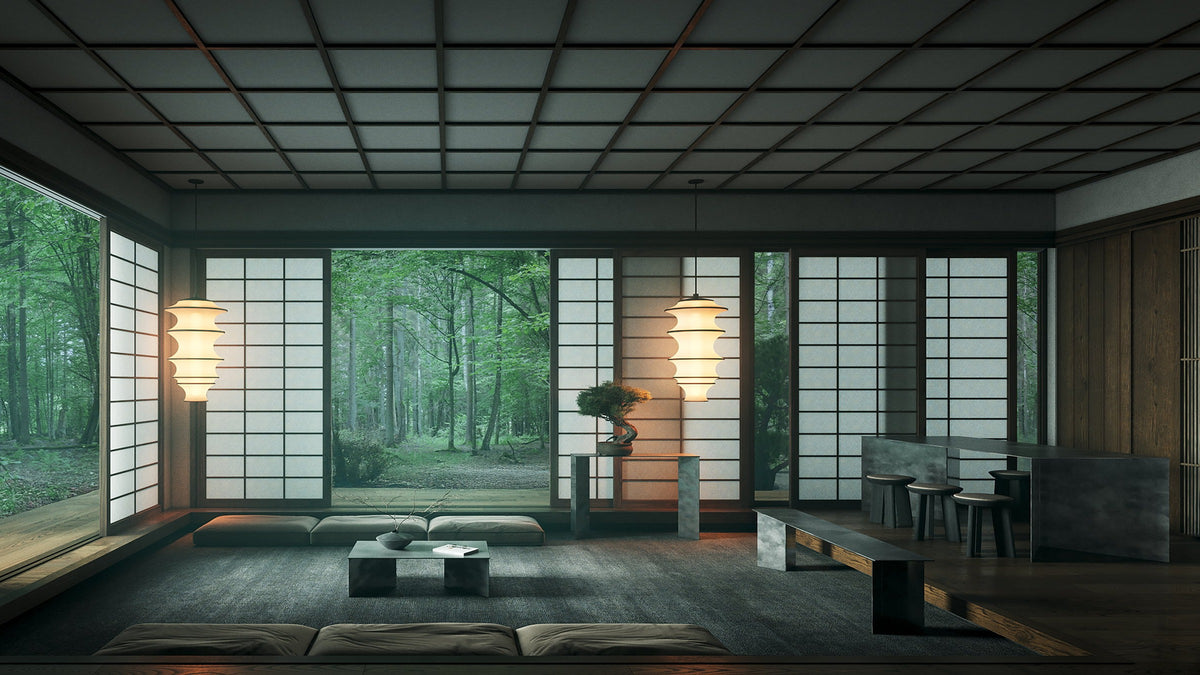
Whether the industrial style is still modern depends on this distinction. A backdrop of brick-effect wallpaper and pipe shelving can quickly be traced to a particular decade. Material that represents nothing but simply is escapes such dating: a table made of brushed stainless steel belongs to no season. That is why the modern form combines so easily with other styles, with the calm of Japandi as well as with the rigour of minimalism.
Colours, walls and pictures in the industrial style
The right wall colour for the industrial style is rarely a colour in the strict sense. It ranges between grey in many gradations, from light cement to dark slate, off-white and warm sand grey. Black appears as a line, on a window frame, a lamp, a picture frame, and only rarely as a surface. Set against the coolness of these shades are earth tones: cognac, ochre, a muted olive.
- Wall: grey, off-white, sand grey
- Line: black on frames and lamps
- Warmth: cognac, ochre, olive
There are two approaches to the walls that suit the style. One is a textured surface, such as lime plaster, clay plaster or a mineral skim coat, which catches the light irregularly. The other is a calm, matt surface against which metal unfolds its effect on its own. Concrete-effect wallpaper belongs more to the backdrop, because it only imitates a surface. If you do not want to plaster, a matt coat of paint in warm grey already gives a calm, refined surface.
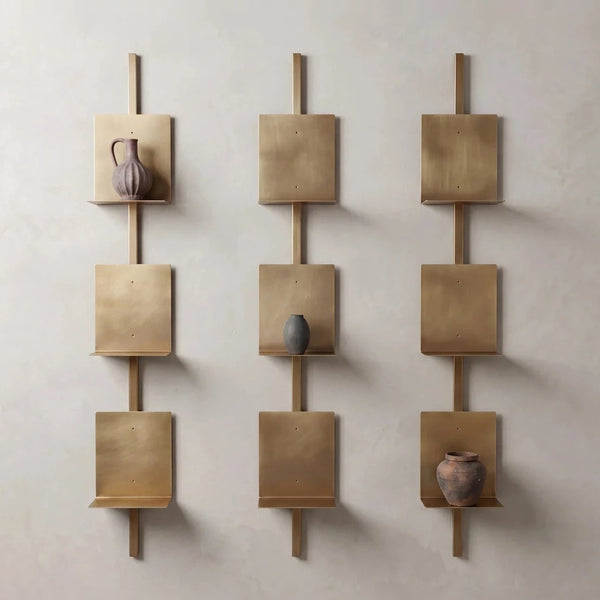
Which pictures suit the style follows the same logic. Large-format black-and-white photography, architectural drawings and graphic prints with plenty of white space continue the clarity of the walls. Two large formats carry further than ten small ones. A single wall object made of metal can replace a picture: COSMOS is a disc of burnished brass whose relief picks up the light of the room [1]. The burnishing is created in the workshop and gives the brass its depth; the sealing holds this tone in place.
The living room in the industrial style
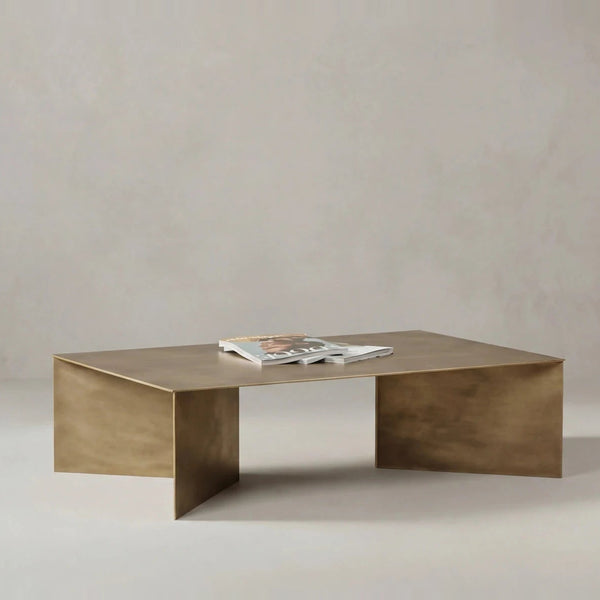
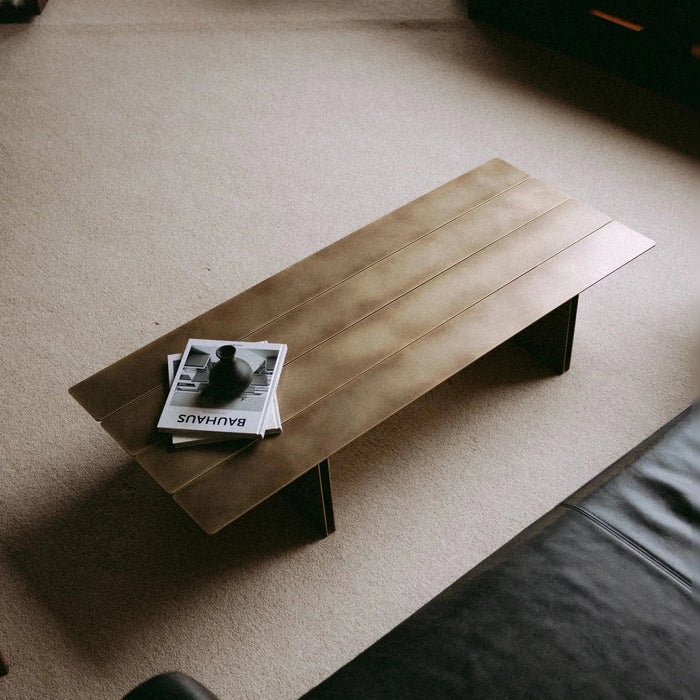
A living room in the industrial style needs a centre, and this centre is usually the coffee table. It stands where the eye comes to rest and may therefore be the most distinct piece of metal in the room. The sofa answers with softness: linen, bouclé, waxed leather in cognac or tobacco. A wool rug with a coarse weave creates an island on the floor where both come together.
- Centre: coffee table made of metal
- Counterweight: linen, wool, leather
- Light: three to five lights, warm white
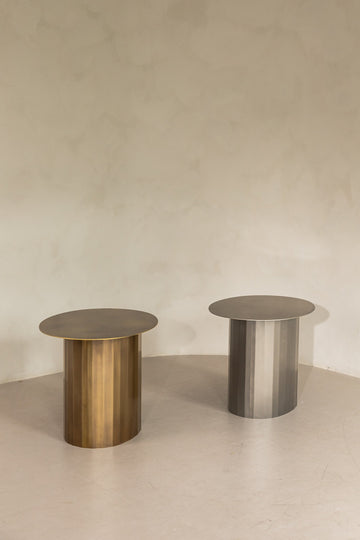
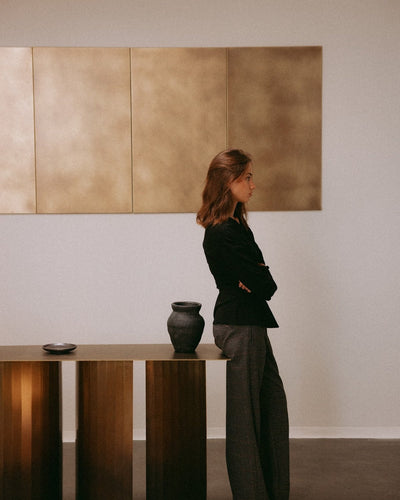
KANJI, 130 cm long and 23 cm high, stays close to the floor and leaves the height to the sofa [1]. Brushed stainless steel gives it a cool, graphic calm, burnished brass a warm, dark tone. This tone is created in the workshop before the sealing that preserves it, and it is this tone that makes the brass look refined.
Light decides whether an industrial living room becomes homely or looks like a factory hall. A single ceiling light is not enough: licht.de recommends at least three, preferably five, lights in a warm white colour for a living room of around 20 m², dimmable at the seating area, plus a mix of direct and indirect light [3]. A floor lamp with a black shade, a pendant light above the coffee table and an uplighter in the corner together create the warmth the style needs. Curtains of heavy linen and a large rug help against the echo of hard surfaces; they make the room quieter without taking away its character.
How metal carries a living room as a whole, from the sofa to the wall behind it, is described in the article Furnishing the living room.
Dining room, bedroom, hallway and small flat
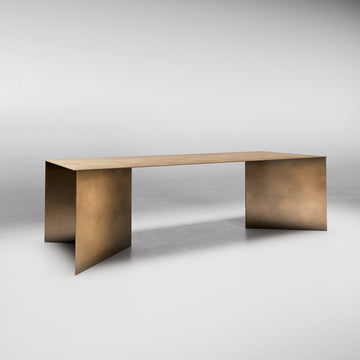
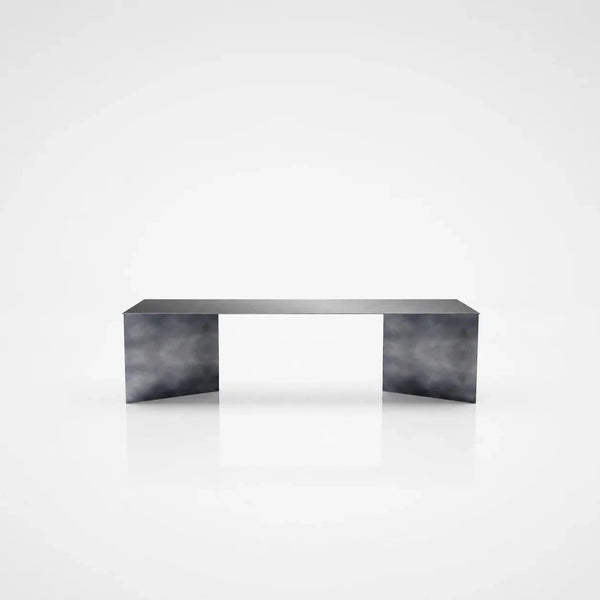
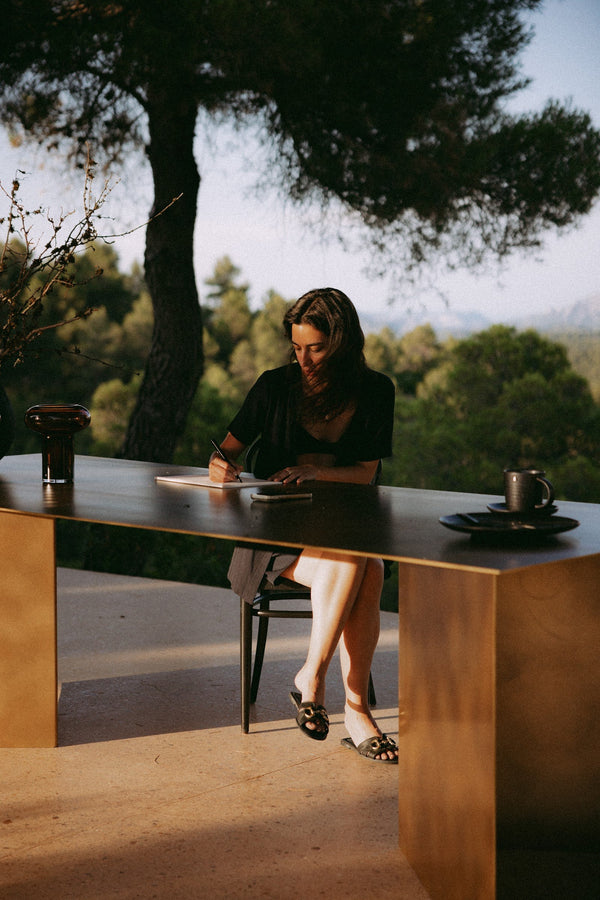
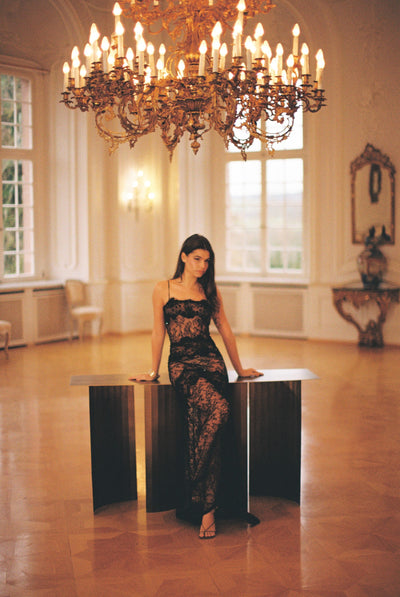
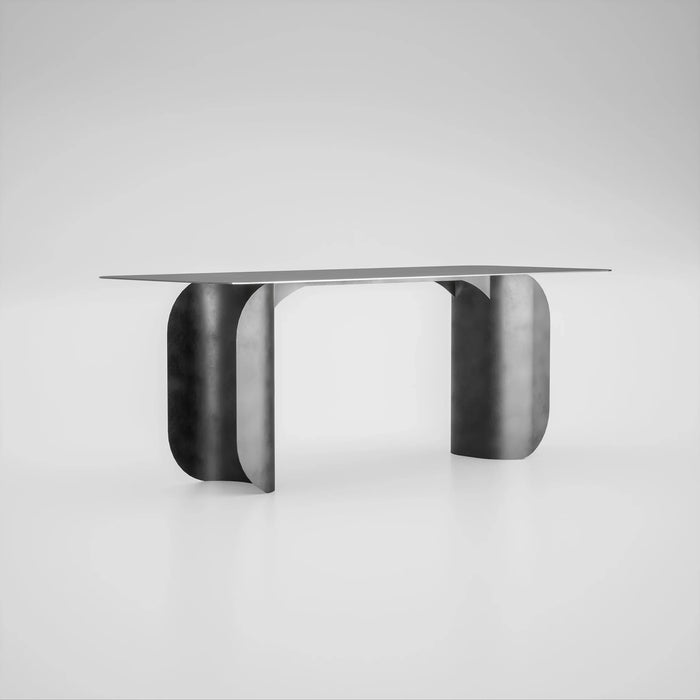
In the dining room, the table takes on the role that the coffee table plays in the living room. A top of brushed stainless steel is the natural choice in the industrial style, because it shows exactly the material the style is about. SAMURAI measures 200 × 80 × 75 cm, rests on two sculptural legs and seats up to eight people [1]; like all tables, it is sealed with 2K clear lacquer. How a dining room is arranged around such a table is shown in the article Furnishing the dining room.
- Dining room: table made of metal
- Bedroom: one accent, plenty of calm
- Hallway: wall and light
- Small flat: one object leads
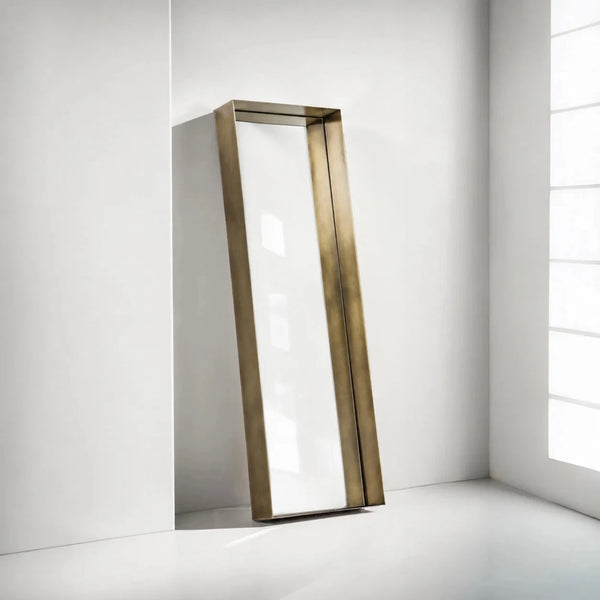
The bedroom is the quietest room in the home, and here a single accent is enough: a mirror with a metal frame, a lamp with a black arm, a narrow bedside table. REFLEXION in the size 200 × 80 cm brings the material into the room with its frame of burnished brass or brushed stainless steel, without any further piece of furniture being needed [1]. Linen bedding in grey or sand takes the chill out of the austerity.
In the hallway, the style works through wall and light. Lime plaster in light grey, two wall lights with metal shades, a slim object on the wall: a hallway in the industrial style needs nothing more. A mirror at the end of the hallway can be added, visually lengthening it and returning the light of the lamps a second time. What else makes a hallway calm and bright is covered in the article Designing the hallway.
Furnishing a small flat in this style means above all: choosing. Dark walls and many black lines make small rooms feel narrower; light, matt walls and a single object whose metal returns the light make them feel more spacious. Low pieces close to the wall keep the floor clear. If a larger area needs separate zones, an open shelf divides the space without closing it off, much like separating an open kitchen.
Mentioned in this article
Pieces from this article.
Industrial-style furniture: one lead piece per room
Anyone looking for industrial-style furniture will find a wide selection. More helpful than asking what fits is asking which piece should lead a room. In the living room it is the coffee table, in the dining room the table, in the study and along long walls the shelf. Everything else can then be quieter: upholstery, textiles, ceramics, paper. A sideboard, a side table or a console comes afterwards and follows the material of the lead piece instead of competing with it.
- Living room: coffee table
- Dining room: dining table
- Wall and workspace: shelf
- Open space: modular shelf
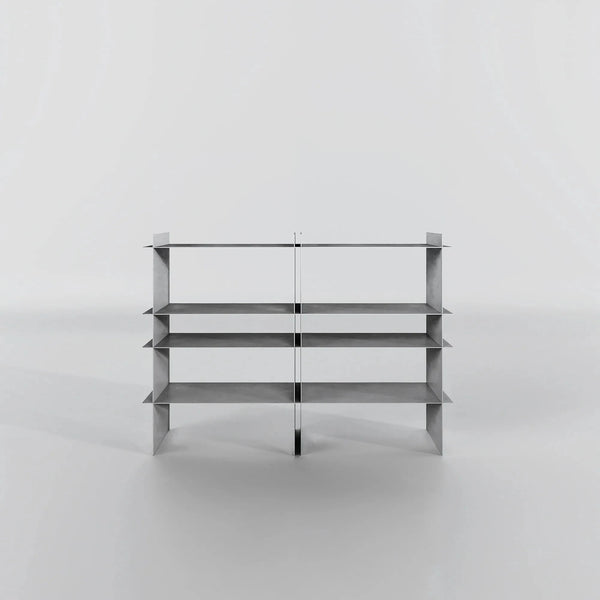
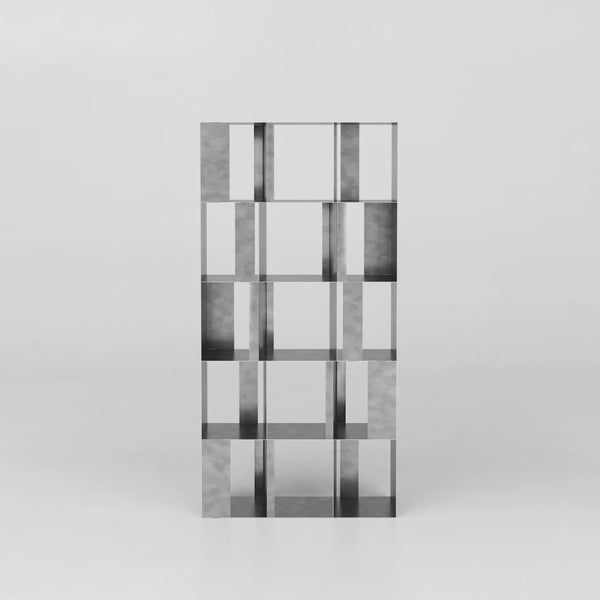
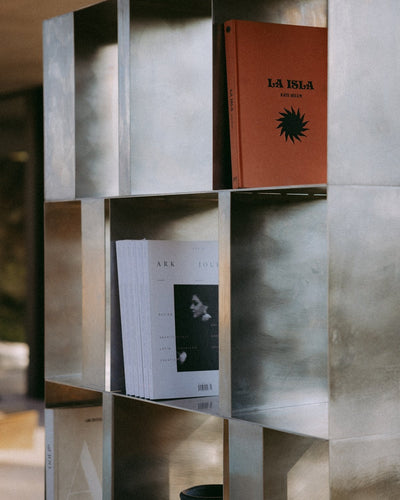
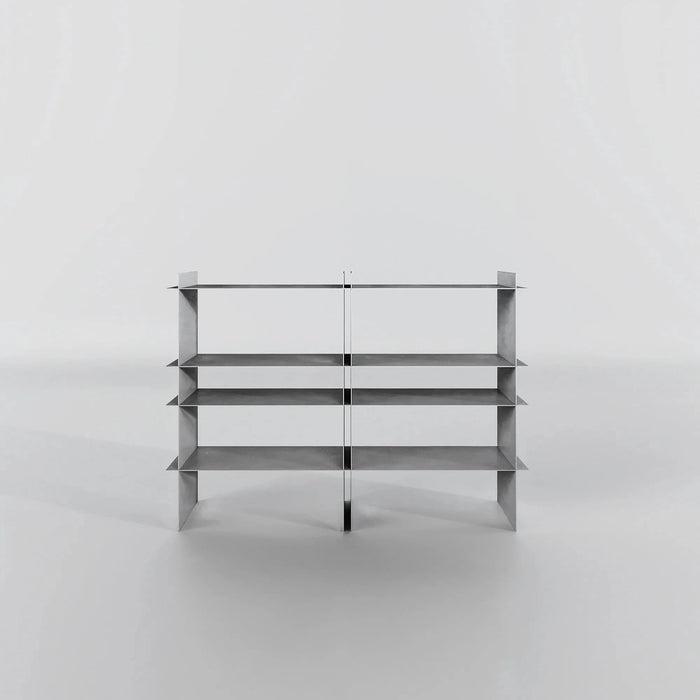
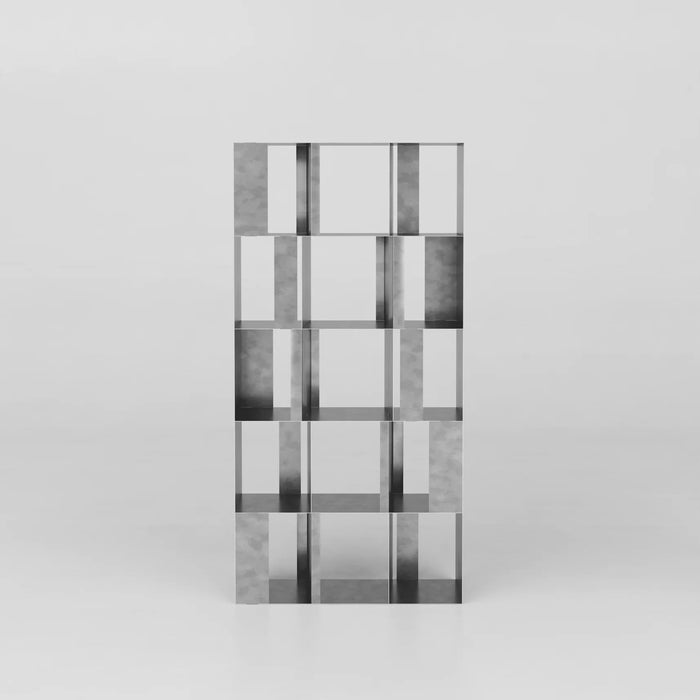
The style shows most clearly in the shelf, because a shelf cannot hide anything. TAISHO in brushed stainless steel offers open levels for books and objects alike and stands freely, whether against the wall or in the middle of the room [1]. INFINITY BOOKSHELF grows from a single component that can be stacked, rotated and extended [1]. It is the only object in the range that stays RAW: you can see in the stainless steel how it was worked. How a shelf organises a workspace is shown in the article An office in the industrial style.
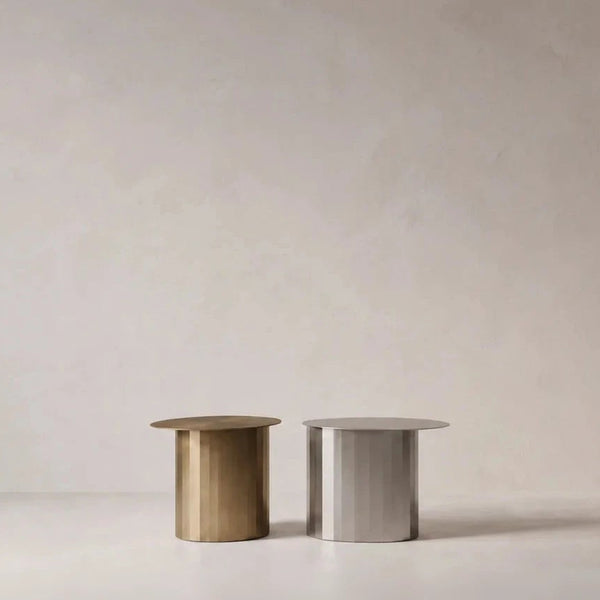
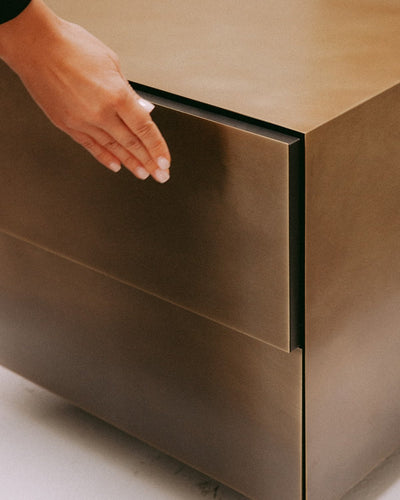
All objects are made in our own workshop from two materials, stainless steel 1.4404 (V4A) and brass CuZn37, in three finishes. Brushed stainless steel spreads light softly across its cloudy grain, burnished brass gives a room depth and warmth, RAW shows the stainless steel as manufacturing leaves it. All objects except INFINITY BOOKSHELF are sealed. A selection arranged by type can be found on the Industrial furniture page.
The industrial style has moved far from the halls it came from. What remains is a simple rule: a material may show what it is. Where this rule applies, a room needs neither brick nor steel girders.
You can see it on an autumn evening, when the floor lamp is lit, the leather of the armchair has a dark sheen and the stainless steel of the table softly returns its light.
Frequently asked questions
What defines the industrial style?
Material that is recognisable as such, above all metal, stone, concrete and glass, together with a calm colour scheme of grey, off-white, black and earth tones and clear, straight lines. The style comes from converted industrial spaces that became homes in New York and London from the 1940s onwards. The modern form uses a few genuine materials instead of a factory backdrop.
Which wall colour suits the industrial style?
Grey in light to dark gradations, off-white and warm sand grey. Black is suitable for lines such as window and picture frames or lamps, less often for entire walls. Earth tones such as cognac, ochre or olive bring warmth. Matt paints and mineral plasters such as lime or clay plaster support the style more than concrete-effect wallpaper.
Is the industrial style still modern?
In its reduced form, yes. A backdrop of brick-effect wallpaper, pipe shelving and many found pieces quickly looks dated, whereas a few objects made of real metal in a calm room do not. The modern variant combines metal with textiles, ceramics and art and blends well with other styles such as Japandi or minimalism.
Which pictures suit the industrial style?
Large-format black-and-white photography, architectural photography, drawings and graphic prints with plenty of white space, in slim black or metallic frames. A few large formats look calmer than a dense gallery wall. A wall object made of metal, for example of burnished brass, can replace a picture.
How do you furnish a living room in the industrial style?
With a metal coffee table as the centre, a sofa in linen, bouclé or leather, a wool rug and several light sources. The lighting industry initiative licht.de recommends at least three, preferably five, lights in a warm white colour for a living room of around 20 m². Walls in grey or off-white, black accents on lamps and frames and one or two large pictures complete the room.
Can a small flat be furnished in the industrial style?
Yes, with light, matt walls, few dark lines and a single metal object as the focal point. Low furniture close to the wall keeps the floor clear; brushed stainless steel and mirrors return light and make the room feel more spacious. An open shelf divides zones without closing off the room.
Which dining table suits the industrial style?
A table whose material is visible, for example a top of brushed stainless steel on a clear construction. SAMURAI measures 200 × 80 × 75 cm, is made of brushed stainless steel, sealed with 2K clear lacquer and seats up to eight people. Chairs with leather or woven seats and a pendant light whose shade picks up the metal of the top go well with it.
Sources & references
- [1]ZinCuTec GmbH: Produktangaben KANJI, SAMURAI, REFLEXION, COSMOS, TAISHO und INFINITY BOOKSHELF (Maße, Material, Oberfläche, Versiegelung), zincutec.eu, abgerufen am 11.10.2026
- [2]Wikipedia: Loftwohnung, abgerufen am 11.10.2026 de.wikipedia.org/wiki/Loftwohnung
- [3]licht.de (Brancheninitiative für Beleuchtung): Wohnzimmer, Lichtanwendungen Wohnen, abgerufen am 11.10.2026 licht.de/de/lichtanwendungen/bereich/5-wohnen/68-wohnzimmer
How we work: journal articles are written in the workshop, checked by a specialist before publication and updated when something changes. Editorial principles
Read on
You might also like.

Interior design styles at a glance: how much metal each style can take
Four families instead of twenty names: which interior styles are built on metal, which take it in as a single accent and how to find your own style from there.Read article
Zen interiors in metal: the ZEN series in five details
Anatomy of a design: how a folded sheet, a concealed support and a solid edge translate the calm of the Zen style into four pieces of furniture.Read article