










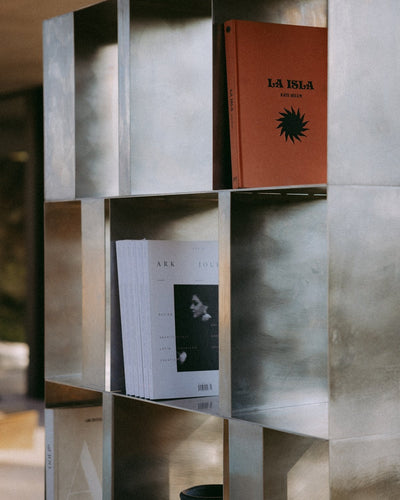
How to recognise high-quality furniture: eight details you can touch
Weld seam, edge, surface, weight: how the quality of a metal piece of furniture can be checked by hand before you believe a description.

In brief
- High-quality metal furniture is recognised less by the photo than by details you can touch: seam, edge, surface, weight, sheet metal, construction, surface finish and the information provided by the manufacturer.
- A well-made weld seam is ground smooth, so that the transition between two sheets can neither be seen nor felt.
- Weight is an indication of material and construction, but only together with stable footing, without wobbling or flexing, does it become a mark of quality.
- What cannot be seen, such as sheet thickness, substructure and material, is something a manufacturer should be able to state precisely on request.
- A manufactory piece differs from mass-produced goods in that each piece is made individually and assessed by people before delivery.
Contents
- 01What makes furniture high-quality
- 02Weld seam and edge: where two parts meet
- 03Surface and weight: what the hand and the back can feel
- 04Sheet metal and construction: what lies beneath the surface
- 05Surface finish and information: how to recognise handmade furniture
- 06Finding high-quality modern furniture
- 07Frequently asked questions
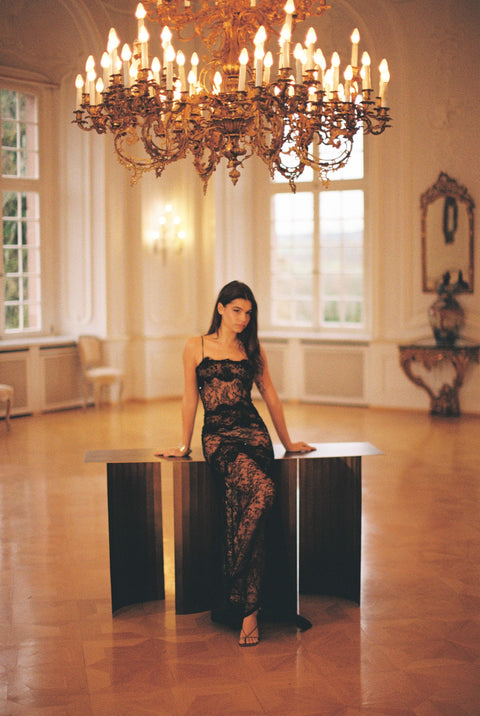
In photos, high-quality furniture often looks exactly like everything else. The lighting is set, the edges are retouched, the surface gleams evenly. What really distinguishes one piece of furniture from another lies in places that a picture does not show and the hand finds immediately: at the seam, at the edge, in the weight that makes itself felt when you lean against it.
This article describes eight such places, using metal furniture as an example. Each can be checked yourself in a shop, in a showroom or after delivery, and none requires specialist knowledge. Once you know them, you will also read a product description differently.
What makes furniture high-quality
Quality in furniture is not a style or a label but the sum of decisions made during manufacture. How precisely was it cut, how cleanly joined, how often was a surface examined before it was considered finished? These decisions leave traces. On a well-made piece they are inconspicuous; on a hastily made one they show after a short time in everyday use.
- Benchmark: decisions made during manufacture
- How to check: hand, eye, weight
- Cross-check: information from the manufacturer
On metal furniture these traces are particularly easy to read. Metal forgives little: a cut that is off is not hidden by veneer, a seam not by glue. The question of where to find high-quality furniture is therefore often answered in reverse: where a manufacturer shows these places instead of concealing them.
The eight features in the following sections move from the visible to the hidden. They apply to every piece of metal furniture, whatever the manufacturer, and only together do they add up to a judgement on quality: a single good detail does not make a high-quality piece of furniture. Most are checked with fingers and eyes, two with a little force, and the last in conversation.
Weld seam and edge: where two parts meet
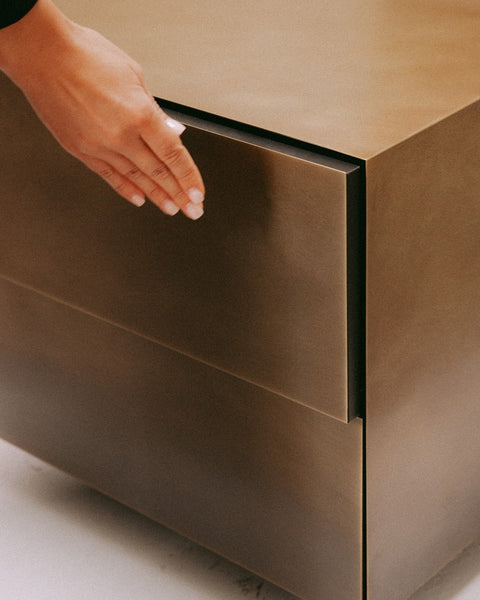
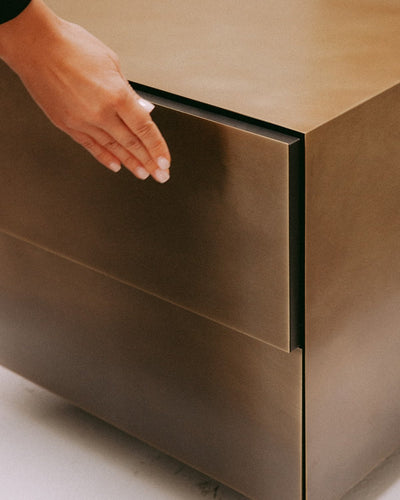
Feature 1, the weld seam. Where two metal sheets are joined, a seam is formed, and it shows how much work was invested after welding. A weld bead that has been left as it is can be seen and felt as a ridge; coloured margins beside it show that the spot was not reworked. On a high-quality piece of furniture the seam is ground down until the fingertip can no longer find the transition and the grain runs across the joint as if it were not there.
- Seam: ground smooth, cannot be felt
- Edge: deburred, even radius
- How to check: fingertip and raking light
Feature 2, the edge. Running a finger along the edge of a table is the quickest test there is. If the skin catches, a burr has been left; if the edge is rounder in one place than in another, it was reworked by hand without anyone comparing the result. Well-made edges have the same radius along their entire length, and light flows over them instead of breaking at a corner.
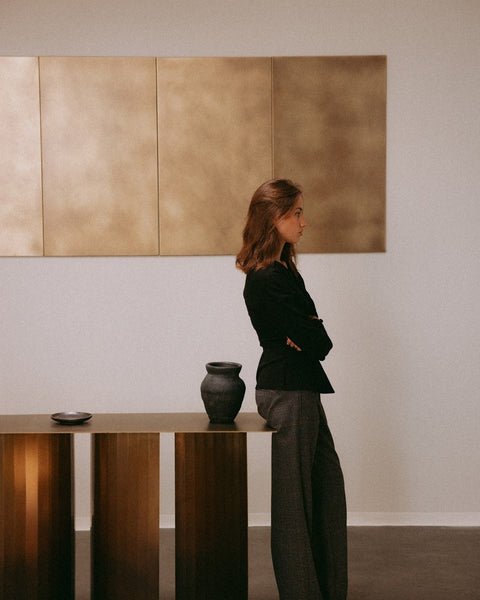
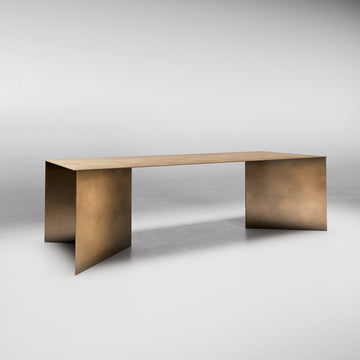
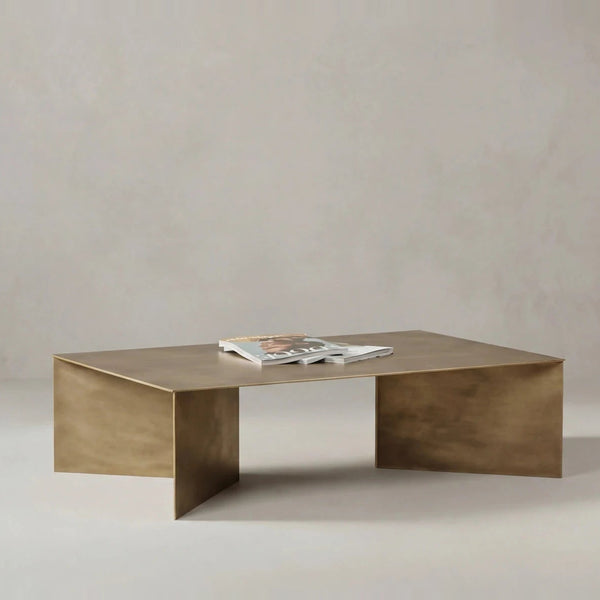
Folded sheet metal has a special feature here. An edge that has been bent rather than cut is closed and calm by nature. For the tabletops of the ZEN series, by contrast, ZinCuTec relies on a solid edge: the rim of the ZEN COFFEE TABLE is not folded, and the side view shows a closed line of solid material.
Surface and weight: what the hand and the back can feel
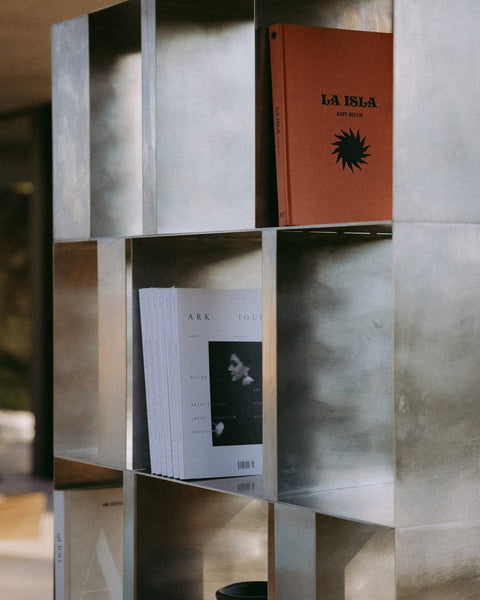
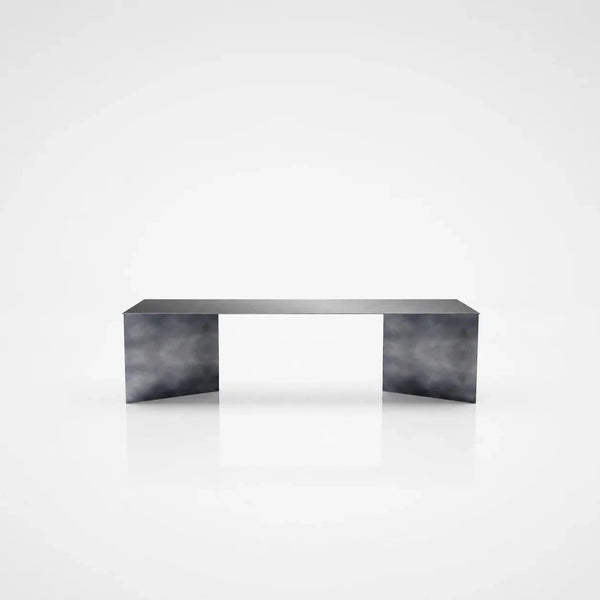
Feature 3, the surface. A torch held flat across a tabletop reveals dents, waves and pressure marks that remain hidden under ceiling light. With brushed stainless steel, the grain also comes into play: it should look even across the whole top, with no islands and no individual scratches that stand out from the pattern. At ZinCuTec it is deliberately made cloudy, with no fixed direction. A flat, evenly brushed surface on a top two metres long is not a given but the result of work.
- Surface: flat in raking light, even grain
- Weight: an indication of material and construction
- Stability: no wobbling, no flexing
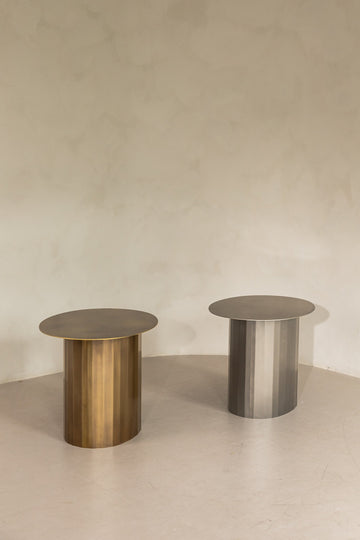
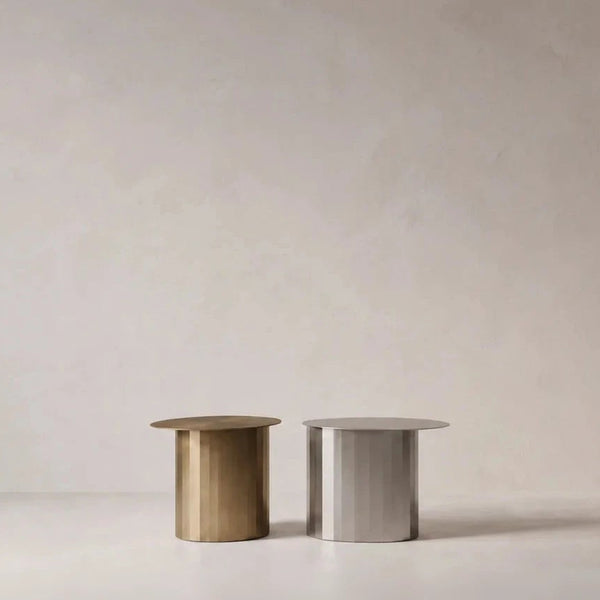
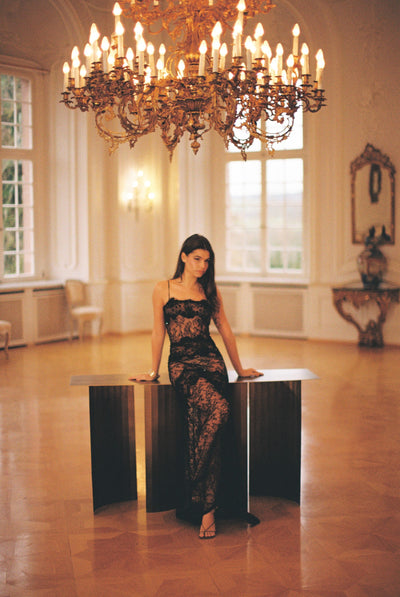
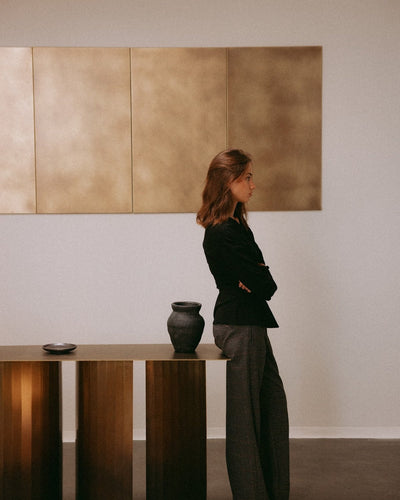
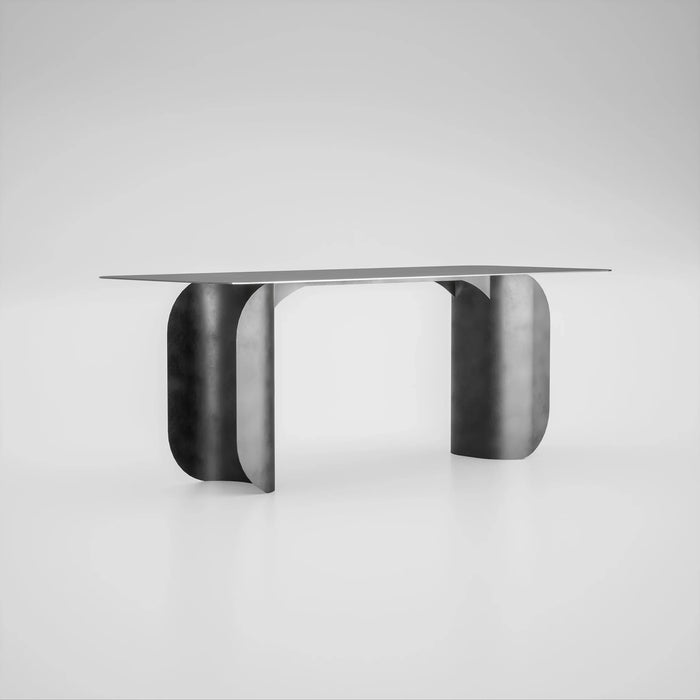
Feature 4, the weight. Lifting a piece of furniture by one corner or leaning against the edge of a table tells you more about its construction than any data sheet. The ZEN DINING TABLE weighs 122 kg, the SAMURAI dining table 87 kg, the TUKKON SIDE TABLE 20 kg [1]. Behind these figures are stainless steel or brass and, in the case of the dining tables, a stainless steel support screwed to the top from below.
Weight alone, however, is not yet quality. A heavy table that wobbles is less well built than a light one that stands still. What matters is what happens when you lean on it: if the top flexes, a joint creaks or a leg shifts, the weight is of no help. A high-quality piece of furniture stands firm once it has been put down and stays that way, even when two people lean on it with their forearms at the same time.
Mentioned in this article
Pieces from this article.



Sheet metal and construction: what lies beneath the surface
Feature 5, the sheet thickness. How thick a sheet is cannot be seen on a folded top, and that is intentional. It can still be checked: if a thumb presses into the middle of a surface, it should not give way, and a light knock sounds solid rather than tinny on a well-stiffened top. If you want to know exactly, ask for the thickness in millimetres; a manufacturer that processes its own material knows it.
- Sheet: does not give under the thumb
- Construction: support, joints, underside
- How to check: look under the top
Feature 6, the construction. A look under the top shows how a piece of furniture is built. Glued-on reinforcements, plastic caps on the legs or fittings made of a different material indicate a construction from prefabricated parts. With welded metal furniture, by contrast, legs and top form a single body. ZinCuTec dining tables are laser-cut, folded, welded and finished in the company’s own workshop; beneath the top sits a stainless steel support that is screwed on from below.
The underside also deserves attention. Cleanly ground edges where no one looks are one of the most reliable signs of care, because they were not made for the photo. How the design language of such constructions looks across different pieces of furniture is shown in the overview of designer furniture in metal.
Surface finish and information: how to recognise handmade furniture
Feature 7, the surface finish. A surface painted in a colour or with opaque paint looks the same on every piece; it covers the material and with it the traces of manufacture. With brushed stainless steel the grain remains visible, with burnished brass the gradient of the tone, and both lie under a clear sealing, which on ZinCuTec tables is a 2K clear lacquer. How this tone develops in the brass is explained in the article on burnished brass surfaces.
- Surface finish: material visible, clear sealing
- Information: material, location, custom size
- One-off: made individually, assessed individually
Feature 8, the information from the manufacturer. What cannot be touched must be possible to ask about: what material a piece of furniture is made of, where it is manufactured, whether a different size can be requested. Handmade furniture can often be recognised by the precision of these answers. ZinCuTec specifies material 1.4404 for stainless steel and CuZn37 for brass; custom sizes can be requested, and feasibility is clarified before the order is placed.
This is also where the difference lies between a one-off and a piece of manufactory furniture. A one-off exists only once. A manufactory piece follows a design but is made piece by piece and assessed by people before it leaves the workshop. With burnished brass, the same design gives rise to a piece of furniture with its own tone, because the burnishing is guided by hand.
Finding high-quality modern furniture
If you are looking for high-quality designer furniture, you will rarely find it through a brand name alone, but rather through manufacturers who are open about their production. A showroom, a workshop that can be visited, detailed photos of seams and edges rather than just room shots: these are good signs. With modern metal furniture it is also worth asking whether design and production are in one place. Where both remain in one hand, a question about quality reaches the people who built the piece and not an intermediary who merely passes it on.
- Search: manufacturers with open production
- Signs: detailed photos, workshop, showroom
- Cross-check: the same eight features
For tables there is also a standard you can ask about: DIN EN 12521 sets requirements for the safety, strength and durability of domestic tables [2]. For furniture in general, the German furniture quality association Deutsche Gütegemeinschaft Möbel awards the RAL quality mark “Goldenes M” [3]. Neither replaces your own hand, but both give it a direction.
A piece of furniture can be described, photographed and rated. Whether it is well made, however, is decided where someone touches it: at the seam, at the edge, at the moment it bears a person’s weight and does not give way.
If you have doubts about any of these eight points, ask. A workshop that knows its work answers gladly and precisely, and the nature of that answer often reveals the quality of the furniture before it is even delivered.
Frequently asked questions
How can you recognise the quality of furniture?
By details that can be checked: ground-down weld seams that cannot be felt, deburred edges with an even radius, flat surfaces without dents, stable footing without wobbling, sheet metal that does not give under the thumb, a cleanly finished underside, a surface that shows the material, and a manufacturer who states the material and place of manufacture precisely.
Where can you find high-quality furniture?
With manufacturers who are open about their production: with detailed photos of seams and edges, precise material specifications, a workshop or a showroom, and the option of requesting custom sizes. Online, detail images and precise specifications help; in person, the features can be checked directly by hand.
What does craftsman-quality furniture mean?
That a piece of furniture was made individually and worked by hand at the decisive points, for example when grinding seams, deburring edges or finishing the surface. Machines often take over cutting and folding; the hand decides when a part is finished.
What is a one-off piece of furniture?
A one-off is a piece of furniture that exists only once, because it was made to its own design or to measure. Manufactory furniture, by contrast, follows a recurring design but is made individually. With burnished brass, each piece carries its own tone, because the burnishing is guided by hand.
What does manufactory mean for furniture?
A manufactory makes furniture piece by piece in its own workshop, with a high proportion of handwork and no assembly line. ZinCuTec has been working in architectural metalwork since 2000 and since 2025 has been making furniture from stainless steel 1.4404 and CuZn37 brass in its own workshop in Germany.
Is there a seal for furniture quality?
For furniture in general, the Deutsche Gütegemeinschaft Möbel e. V. awards the RAL quality mark “Goldenes M”. For domestic tables, the standard DIN EN 12521 describes requirements for safety, strength and durability. The manufacturer can tell you whether a piece of furniture has been tested accordingly.
How can you recognise a good weld seam on metal furniture?
A good weld seam on a piece of furniture is ground smooth: neither a ridge nor a depression can be felt, and the grain runs uninterrupted across the joint. Coloured margins next to the seam or a visible weld bead show that the spot was not reworked.
Sources & references
- [1]ZinCuTec GmbH: Produktangaben ZEN DINING TABLE, SAMURAI, TUKKON SIDE TABLE und ZEN COFFEE TABLE (Gewicht, Material, Oberfläche, Fertigung), zincutec.eu, abgerufen am 11.10.2026
- [2]DIN EN 12521:2023, Möbel, Sicherheit, Festigkeit und Dauerhaltbarkeit, Anforderungen an Tische für den Wohnbereich; Normeintrag DIN Media, abgerufen am 11.10.2026 dinmedia.de/en/standard/din-en-12521/374502387
- [3]Deutsche Gütegemeinschaft Möbel e. V.: Das Goldene M, RAL-Gütezeichen, abgerufen am 11.10.2026 das-goldene-m.de/de/
How we work: journal articles are written in the workshop, checked by a specialist before publication and updated when something changes. Editorial principles
Read on
You might also like.

Burnished brass: why it is the burnishing that makes the metal precious
What happens in the metal during burnishing, how the patina is created in the workshop and why the sealing keeps it exactly as it was when it left the workshop.Read article
Warm or cool: brass and stainless steel in a room
Two metals from the same workshop, sealed alike and cared for alike, with opposite effects: how burnished brass and brushed stainless steel set the tone of a room.Read article