


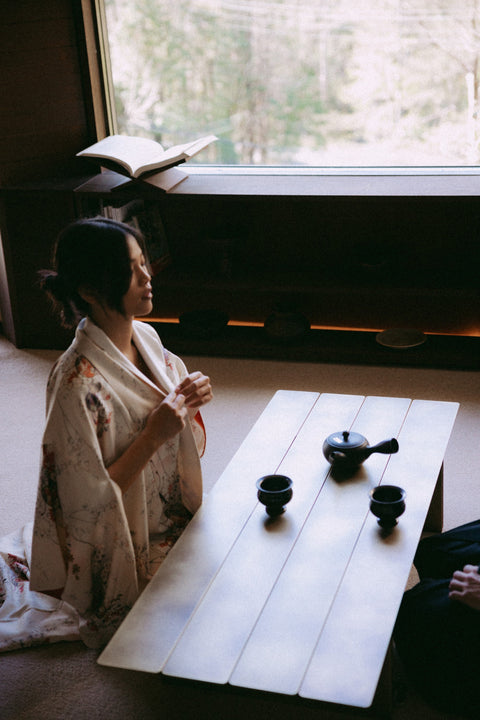
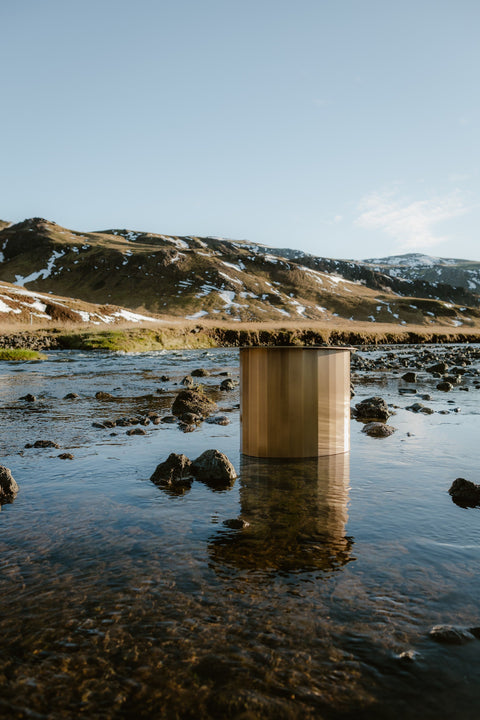
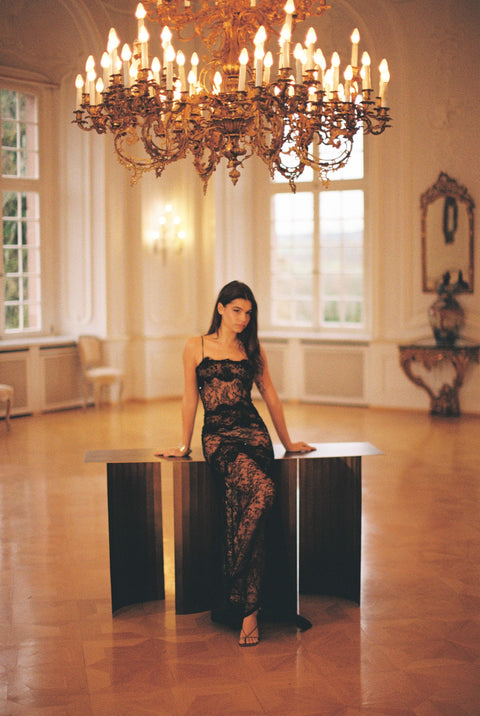
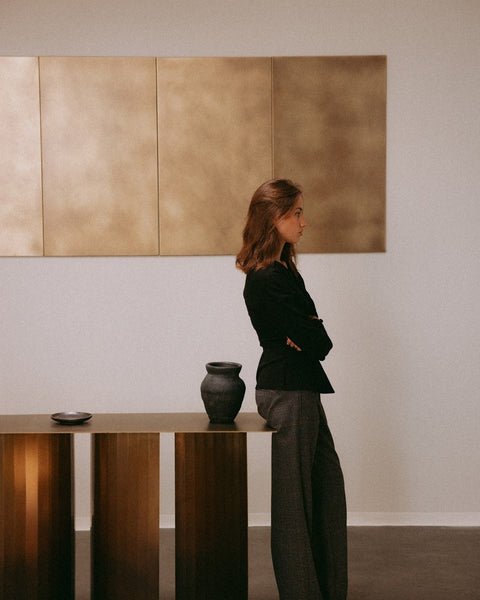

Warm or cool: brass and stainless steel in a room
Two metals from the same workshop, sealed alike and cared for alike, with opposite effects: how burnished brass and brushed stainless steel set the tone of a room.

In brief
- With ZinCuTec furniture, brass or stainless steel is not a question of quality but of effect: burnished brass gives a room warmth and density, brushed stainless steel brightness and openness.
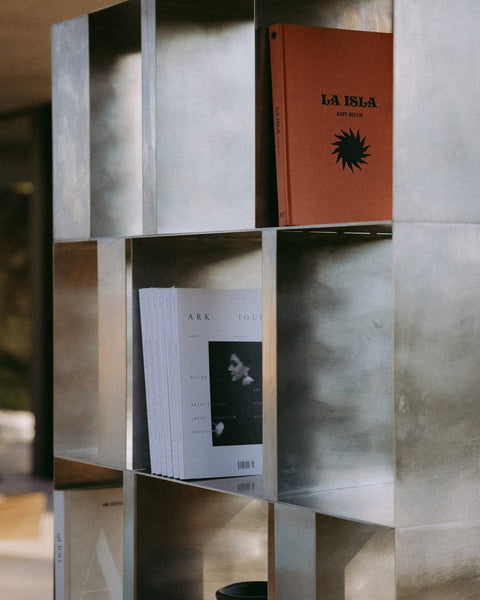
- The materials are brass CuZn37 and stainless steel 1.4404 (V4A); both surfaces are sealed, all tables with 2K clear lacquer, the only exception being the INFINITY BOOKSHELF, which is left RAW.
- Which metal a room calls for is shown by the direction its windows face, the light colour of the lamps and the colours of walls and floor.
- In the same room the two get along well if one leads and the other answers in a few objects, most easily through the same design in both versions.
- Both are cared for with the same restraint: with a soft, slightly damp cloth and, if needed, a little soapy water or alcohol-free glass cleaner.
Contents
Brass or stainless steel: almost everyone who decides on a piece of furniture from ZinCuTec faces this choice, because many designs are available in both metals. The question sounds like materials science, and it is usually answered that way too, with melting points, conductivity and corrosion classes. For a table in the living room, something else counts. Both metals come from the same workshop, both are sealed, both call for the same gentle care. What separates them is the mood they bring into a room.
This article describes how burnished brass and brushed stainless steel take up light, how to tell which metal a room calls for, and how the two can be combined in one room. The focus here is on their effect, not on how the surfaces are made.
Brass or stainless steel: two materials, one workshop
Chemically, brass and stainless steel have little in common. Brass is an alloy of copper and zinc; ZinCuTec works with the grade CuZn37, which contains around 37 per cent zinc [2]. Stainless steel is an iron alloy that becomes rust-resistant through at least 10.5 per cent chromium [3]. For the furniture, the workshop uses stainless steel 1.4404, known as “V4A”, a grade with chromium, nickel and around two per cent molybdenum [3]. What distinguishes this grade from V2A is explained in the article Stainless steel V2A and V4A in furniture.
- Brass: CuZn37, copper and zinc
- Stainless steel: 1.4404 (V4A), chromium, nickel, molybdenum
- Shared: workshop, sealing, care
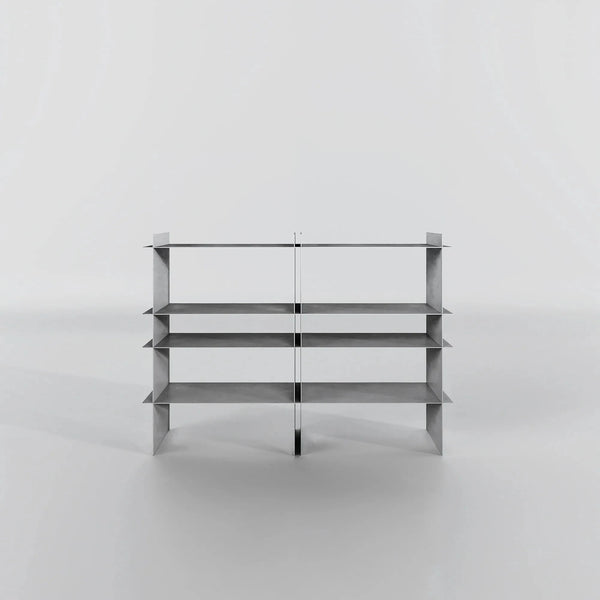
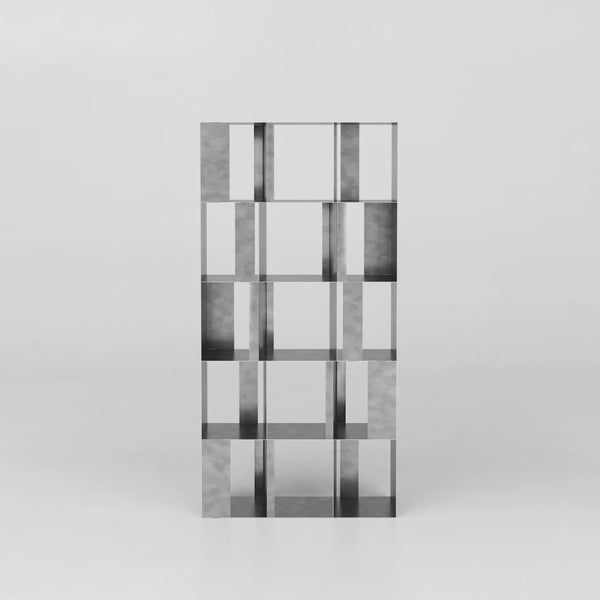
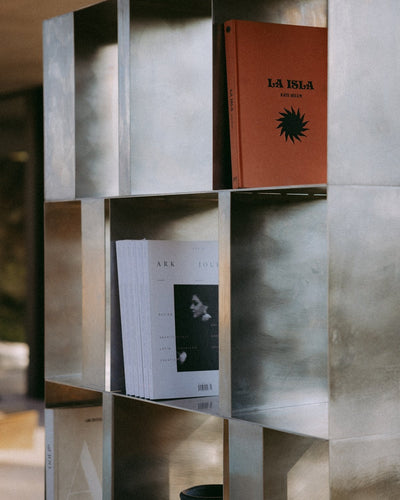
What connects brass and stainless steel is their shared path through the workshop. Both are cut from sheet metal, folded and welded before their surface is created: a fine grain on the stainless steel, the burnishing on the brass, its tone guided by hand. Afterwards both are sealed, the tables with a 2K clear lacquer, the other objects with a 1K clear lacquer [1]. The only exception in the range is the INFINITY BOOKSHELF, whose stainless steel is left RAW.
That is why choosing between brass and stainless steel for this furniture is not about the better material. Both carry the same form with the same precision, and both versions of the ZEN COFFEE TABLE weigh roughly the same, around 30 kg [1]. Whoever makes the choice is deciding the character of a room, not its fittings.
Warm and cool: how brass and stainless steel respond to light
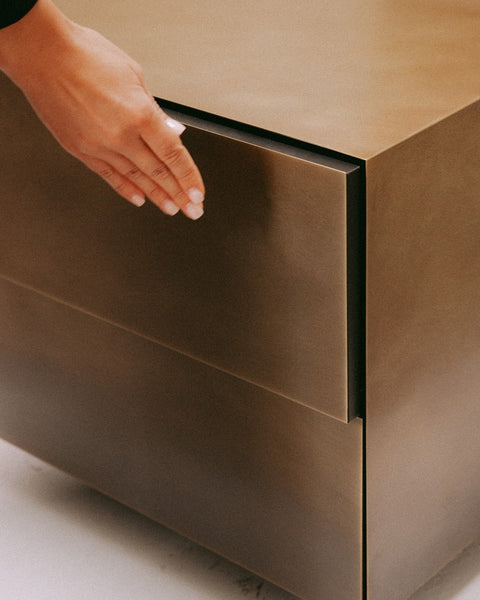
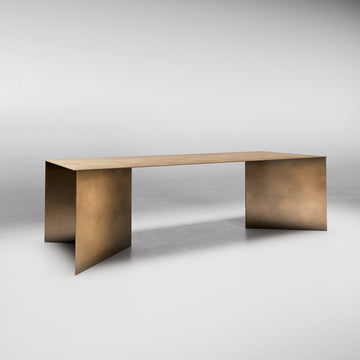
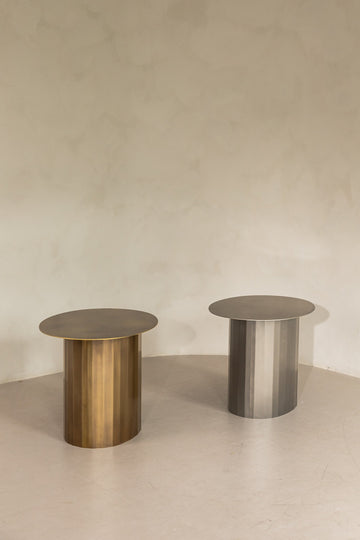
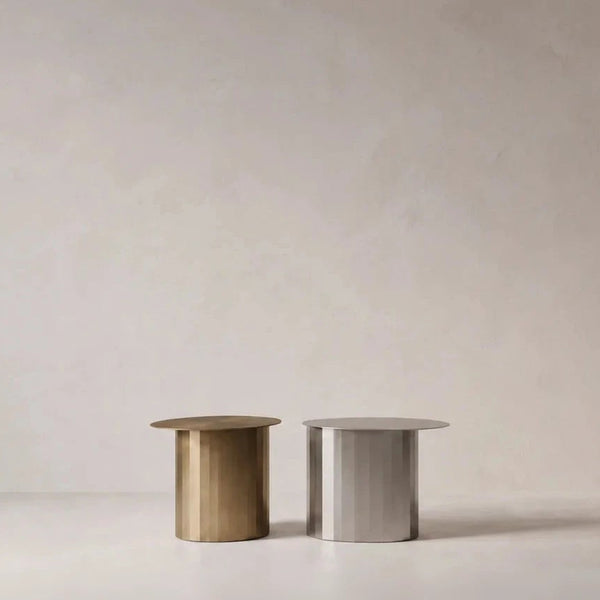
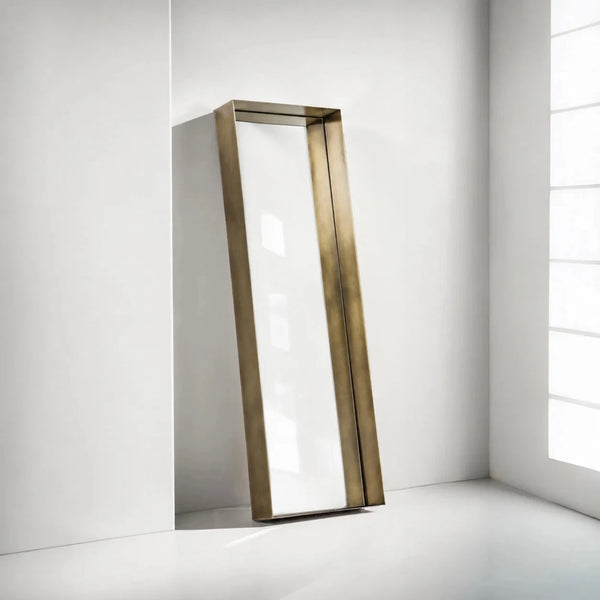
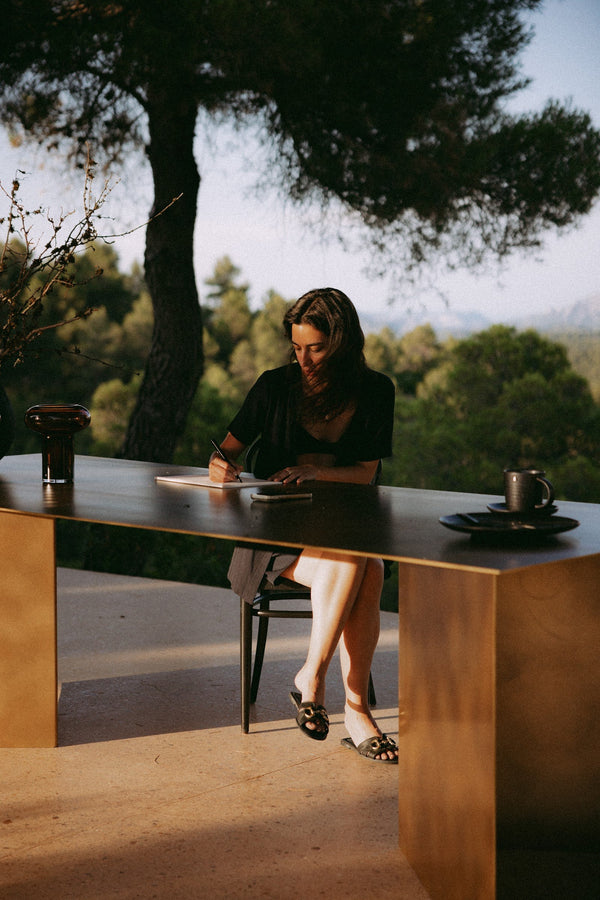
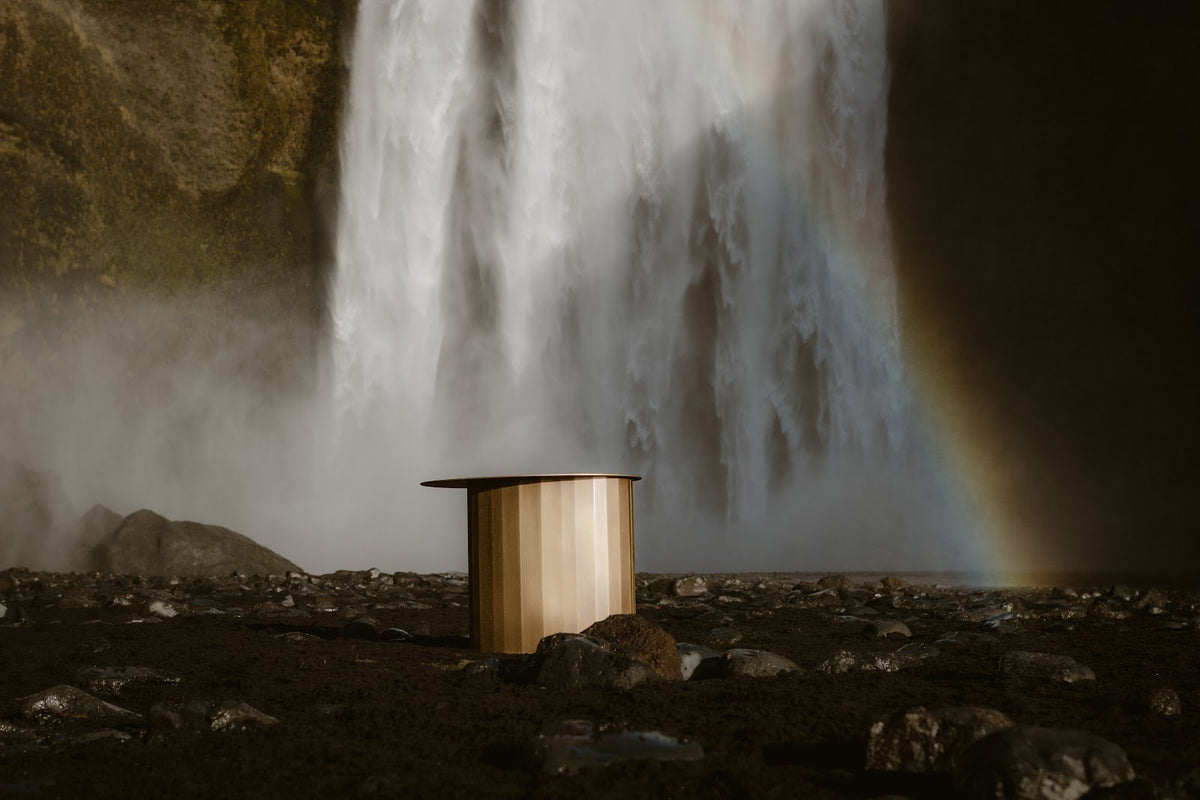
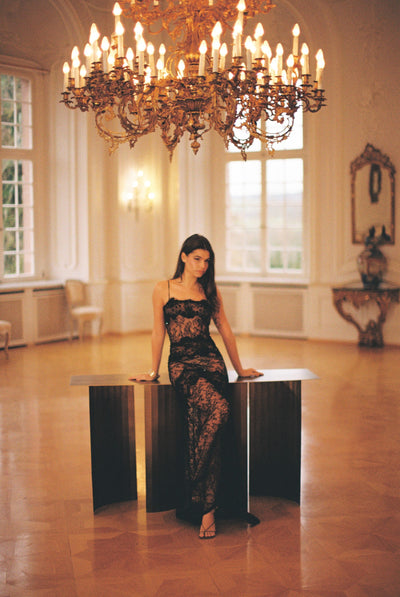
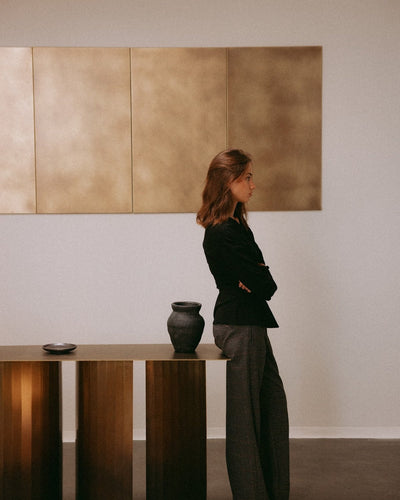
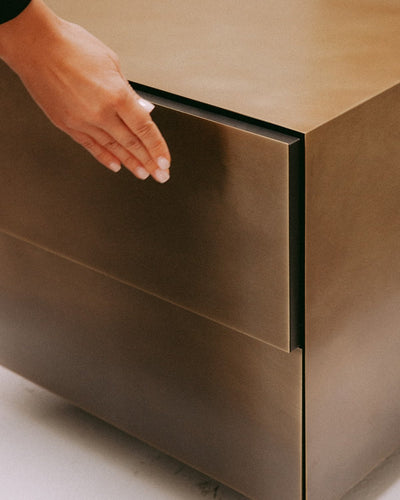
Burnished brass absorbs light. Its tone lies between warm gold and dark brown, the surface barely shines, and only at the edges does the bright metal come through. The eye rests on it, because it reflects nothing that would distract. A piece of furniture made of brass therefore seems closer than it stands, and it makes a room denser in the evening.
- Burnished brass: absorbs light, feels close
- Brushed stainless steel: diffuses light, feels open
- Light colour: warm white deepens brass, neutral white clarifies stainless steel
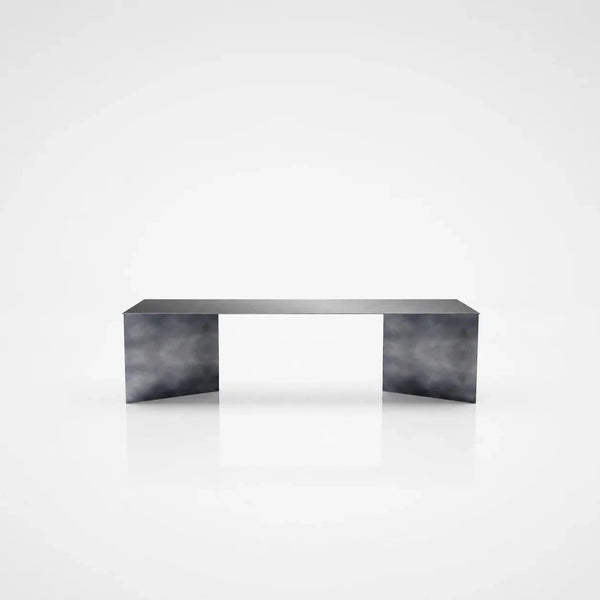
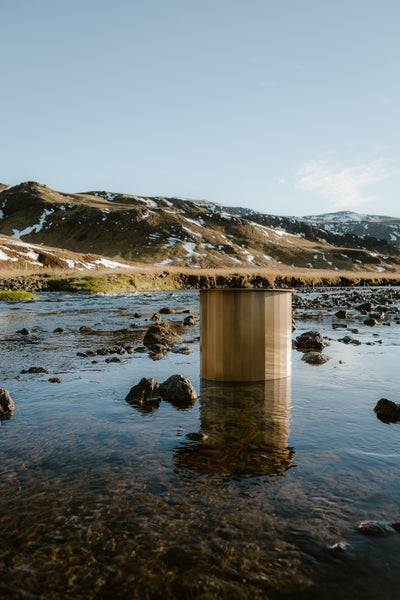
Brushed stainless steel behaves the other way round. Its surface is light, its grey looks silvery or cool depending on the time of day, and the grain diffuses light instead of mirroring it. A piece of stainless steel furniture opens up a room. It makes it look larger and more matter-of-fact, and it draws a clear line where brass sets down a surface.
How marked this difference is depends on the light from the lamps. Warm white light of 2,700 to 3,300 kelvin is perceived as cosy, neutral white above that as matter-of-fact [4]. According to licht.de, warm colour tones are best emphasised with warm white light, while shiny materials such as chrome and glass come into their own under cooler light colours [5]. For furniture made of brass and stainless steel, this means: under warm white lights, brass becomes deeper and more golden; under neutral white light, stainless steel looks clearer. Anyone who lights their rooms in warm white in the evening is thus giving brass a head start without noticing.
Which room calls for which metal
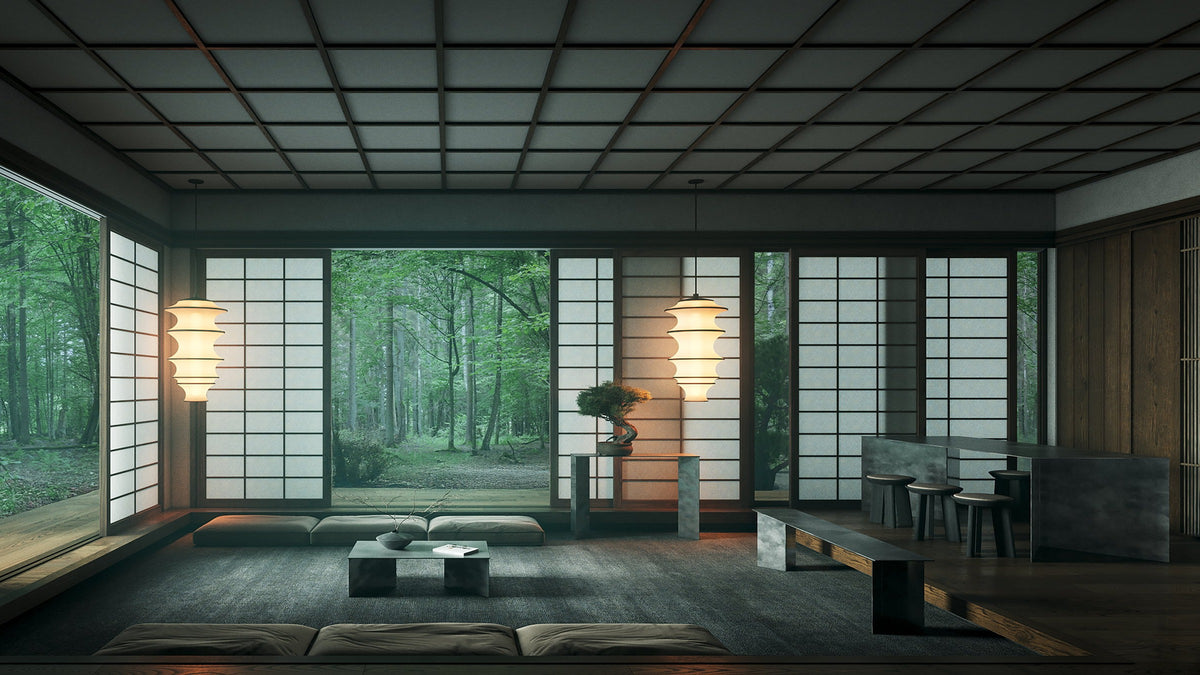
Whether a room calls for brass or stainless steel can usually be read before the first piece of furniture arrives, starting with the window. A north-facing room receives even, rather cool daylight; the warmth of brass does it good, because it adds what the window does not provide. A room facing south or west fills with golden light in the afternoon anyway, and brushed stainless steel then keeps it bright and serene.
- North light: brass adds warmth
- South and west light: stainless steel keeps the room bright
- Wall and floor: cool tones take up stainless steel, earthy tones brass
The second clue lies in the walls and floor. Lime-white and grey walls, concrete, slate and cool natural stones take up stainless steel as a matter of course; in front of them, brass sets a deliberate contrast. Earthy wall colours, linen and wool in sand and ochre, terracotta and warm stones, on the other hand, form surroundings in which brass is at home and stainless steel stands out as a cool line. Either can be right, as long as it is a clear decision.
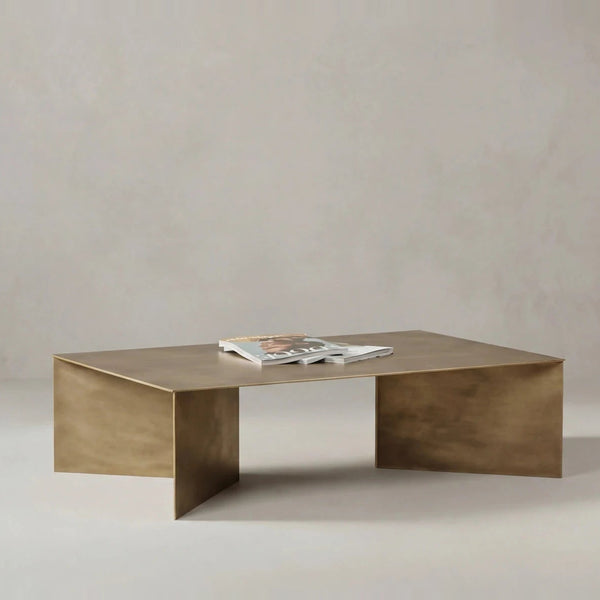
Scale plays a part too. In a small room, a large object made of stainless steel looks lighter than it is, because its bright surface keeps the light in the room; one of the same size in brass becomes the centre to which everything relates. The coffee table KANJI, 130 cm long and 23 cm high, shows this clearly: in stainless steel it lies like a bright plane above the floor, in brass like a dark block towards which the room converges.
Finally, it matters when a room is used. A study where reading and writing happen during the day takes the matter-of-factness of stainless steel well. A living room that is mainly used in the evening under warm white light gains depth through brass. The question of brass or stainless steel is then answered by the rhythm of the day, not by a rule from the catalogue.
Combining brass and stainless steel
Brass and stainless steel in the same room do not contradict each other, as long as it is clear which metal sets the tone. A room can take one leading metal and a second as an echo: the large table, the shelf or the mirror sets the direction, smaller objects pick up the other metal in a few deliberately chosen places. Distributed evenly half and half, the two cancel each other out.
- Rule: one metal leads, one answers
- Link: the same form in both tones
- Mediators: glass, light stone, linen, ceramics
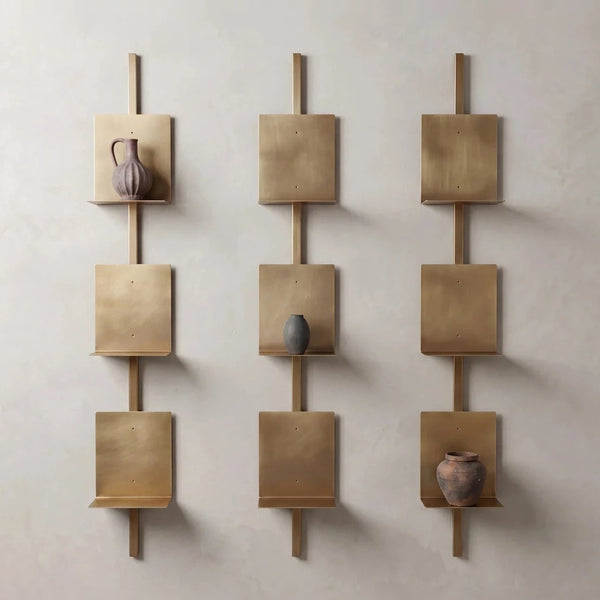
The connection succeeds most easily through form. Many ZinCuTec designs are available in both metals, and the same outline in two tones ties a room together without looking monotonous. Two RYU wall shelves one above the other, one in brass and one in stainless steel, read as a composition. The REFLEXION mirror with a stainless steel frame above the TUKKON CONSOLE in burnished brass shows the interplay of the two tones on a larger scale.
Materials that favour neither metal mediate between the two: glass, light stone, linen, ceramics in off-white. A transition also arises where both metals meet on a wall: the CHOWA wall shelf in brass, with its crescent-like shape, on a grey wall above the ZEN BENCH in stainless steel. Technically, placing the two metals next to each other in living spaces is harmless [6].
Across several rooms, the decision between brass and stainless steel can also be thought of as a sequence. A hallway in stainless steel, a living room in brass, a dining room in which the two meet: this creates a home in which each room has its own tone and which nevertheless holds together as a whole.
Mentioned in this article
Pieces from this article.

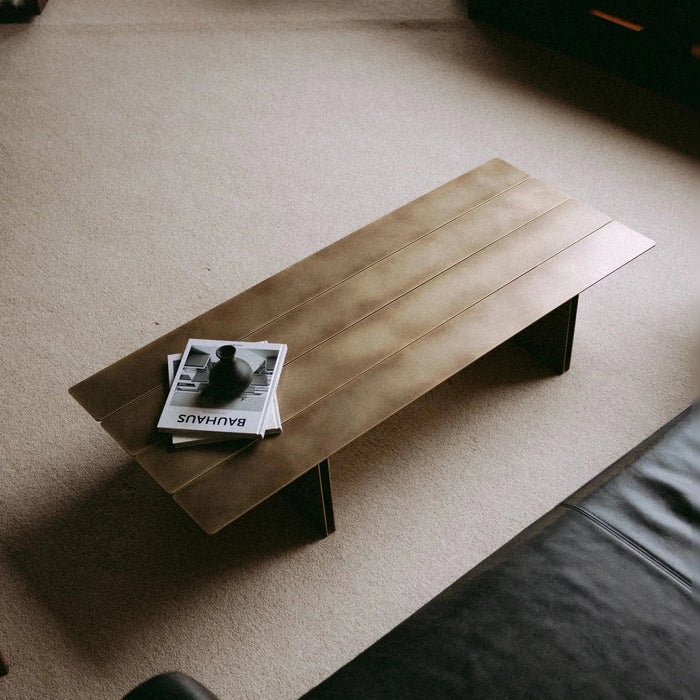

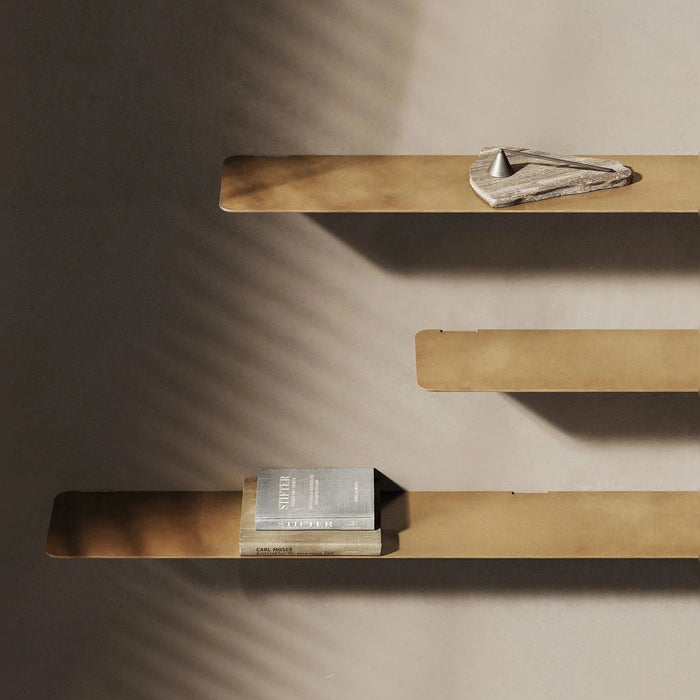
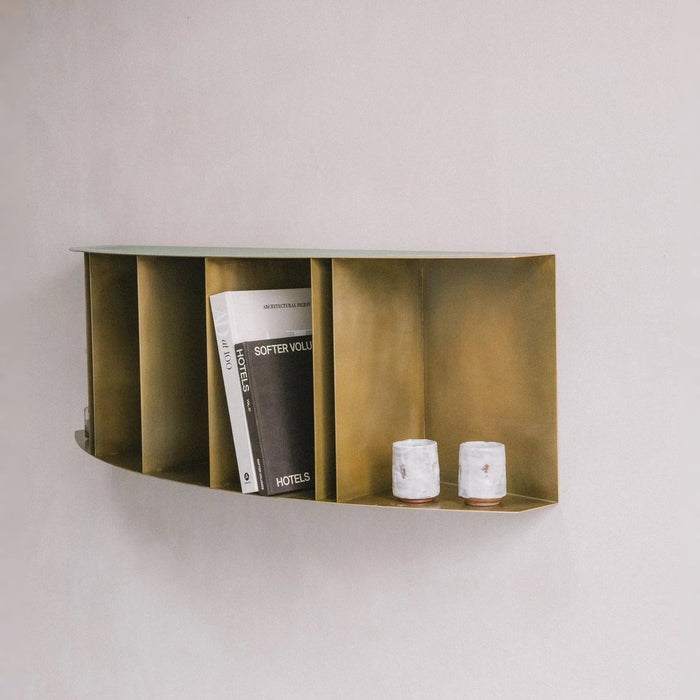
Brass and stainless steel furniture in everyday life
In everyday life, brass and stainless steel are closer together than their effect suggests. Because both surfaces are sealed, neither needs more attention than the other. They are cared for with a soft, slightly damp cloth, with a little soapy water or alcohol-free glass cleaner if needed, and then wiped dry [1]. Abrasive, acidic, alkaline or chlorine-based cleaners do not belong on either surface, and hot vessels go on a coaster [1].
- Care: soft, slightly damp cloth, then dry
- Cleaner: soapy water or alcohol-free glass cleaner
- Brass: patina from the workshop, preserved by the sealing
With brass, the patina is part of the design. It is burnished in the workshop and sealed afterwards, and beneath this protective layer the patina stays as it was created there [1]. Brushed stainless steel has no patina; its character lies in the evenly cloudy grain that covers a tabletop 200 cm long, as on SAMURAI, without interruption. If you are torn between the two, you are not choosing between more and less care, but between two ways of setting the tone of a room.
This is covered in detail in the articles Cleaning and caring for brass and Cleaning brushed stainless steel; the warranty and care instructions are binding. Which designs are available in brass and stainless steel is shown on the Designer furniture page, and a selection in burnished brass on the Brass furniture page.
Brass and stainless steel tell of the same workshop in two registers. One gathers light and makes a room denser, the other spreads it and keeps the room open. Which is right is decided by the room itself, with its window, its walls and its light in the evening.
How the three finishes (brushed, burnished and RAW) each look in detail is shown in the article Metal finishes compared. Why it is the burnishing that gives brass its value is described in the article on burnished brass surfaces.
Frequently asked questions
Which is better, brass or stainless steel?
For furniture, neither metal is fundamentally better. As a rust-resistant steel, stainless steel is highly corrosion-resistant, while brass can be coloured dark and warm by burnishing. At ZinCuTec, both carry a sealing, tables a 2K clear lacquer, and both need the same care. The decision is therefore mainly about the effect: burnished brass looks warm and dense, brushed stainless steel bright and clear.
Is brass stainless steel?
No. Brass is a copper-zinc alloy, at ZinCuTec the grade CuZn37 with around 37 per cent zinc. Stainless steel is an iron alloy that becomes rust-resistant through at least 10.5 per cent chromium; ZinCuTec uses the grade 1.4404 (V4A), which also contains nickel and molybdenum. The two metals differ in colour, composition and behaviour in air.
How can you tell brass from stainless steel?
Most reliably by colour: bare brass is yellowish to golden, burnished brass dark brown with lighter edges, stainless steel silver-grey. A magnet is of limited help. Brass is not magnetic; austenitic stainless steel such as 1.4404 is largely non-magnetic but can become slightly magnetic after cold forming. For ZinCuTec furniture, the version is stated on every product page.
Can brass and stainless steel be combined?
In terms of design, yes, most calmly when one metal defines the room and the other answers in a few objects. Technically, the combination is unproblematic in living spaces: contact corrosion between two metals requires a conductive film of moisture, and according to the Informationsstelle Edelstahl Rostfrei, practically all metal combinations are possible indoors where there is no condensation. In addition, all ZinCuTec furniture except the INFINITY BOOKSHELF is sealed.
Which metal is easier to care for, brass or stainless steel?
With sealed furniture, the effort is equally small. Both surfaces are cleaned with a soft, slightly damp cloth and wiped dry, with a little soapy water or alcohol-free glass cleaner if needed. Abrasive, acidic, alkaline, chlorine-based and solvent-based cleaners are unsuitable, and alcohol only with the manufacturer's written approval. Hot objects belong on a coaster.
What is the advantage of burnished brass?
Its advantage lies in its warmth. The dark, matt tone absorbs light instead of mirroring it and gives a room depth; the edges stand out in gold. Since every burnishing is done by hand, no piece of furniture is exactly like another in tone. At ZinCuTec, this tone is finished when the piece leaves the workshop: it is created during burnishing, and the subsequent sealing preserves it.
Which materials does ZinCuTec use for brass and stainless steel furniture?
ZinCuTec works with brass CuZn37 and stainless steel 1.4404 (V4A). In its own workshop, brass receives its burnishing and stainless steel its grain; afterwards both are sealed, tables with a 2K clear lacquer, the other objects with a 1K clear lacquer. The only exception is the INFINITY BOOKSHELF, whose stainless steel is left RAW.
Sources & references
- [1]ZinCuTec GmbH: Produktangaben ZEN COFFEE TABLE, KANJI, REFLEXION, RYU, CHOWA, SAMURAI und INFINITY BOOKSHELF sowie Gewährleistungs- und Pflegehinweise (Stand 10. Juli 2026), abgerufen am 11.10.2026 zincutec.eu/pages/pflege
- [2]Diehl Brass Solutions: Werkstoffdatenblatt 023, CuZn37 (CW508L), Zusammensetzung Cu 64 %, Zn Rest (Richtwerte), abgerufen am 11.10.2026 diehl.com/cms/files/Diehl_Brass_Solutions_Werkstoffdatenblatt_023.pdf
- [3]Informationsstelle Edelstahl Rostfrei: Merkblatt 821, Edelstahl Rostfrei: Eigenschaften, 5. Auflage 2014 (Mindestchromgehalt 10,5 %, Zusammensetzung 1.4404, Magnetisierbarkeit austenitischer Stähle), abgerufen am 11.10.2026 edelstahl-rostfrei.de/fileadmin/user_upload/ISER/downloads/MB_821.pdf
- [4]licht.de (Brancheninitiative für Beleuchtung): Lichtfarbe, abgerufen am 11.10.2026 licht.de/de/grundlagen/beleuchtungsqualitaet/lichtfarbe
- [5]licht.de (Brancheninitiative für Beleuchtung): Licht und Farbe, Tipps für die private Lichtplanung, abgerufen am 11.10.2026 licht.de/de/lichtplanung/tipps-fuer-die-private-lichtplanung/licht-und-farbe/page
- [6]Informationsstelle Edelstahl Rostfrei: Merkblatt 829, Edelstahl Rostfrei in Kontakt mit anderen Werkstoffen, 4. Auflage 2005, aktualisierter Nachdruck 2018, abgerufen am 11.10.2026 edelstahl-rostfrei.de/fileadmin/user_upload/ISER/downloads/MB_829.pdf
How we work: journal articles are written in the workshop, checked by a specialist before publication and updated when something changes. Editorial principles
Read on
You might also like.

Burnished brass: why it is the burnishing that makes the metal precious
What happens in the metal during burnishing, how the patina is created in the workshop and why the sealing keeps it exactly as it was when it left the workshop.Read article
How to recognise high-quality furniture: eight details you can touch
Weld seam, edge, surface, weight: how the quality of a metal piece of furniture can be checked by hand before you believe a description.Read article