



Burnished brass: why it is the burnishing that makes the metal precious
What happens in the metal during burnishing, how the patina is created in the workshop and why the sealing keeps it exactly as it was when it left the workshop.

In brief
- Burnished brass is brass whose surface has been deliberately oxidised, so that a dark, warm tone develops within the metal itself rather than lying on it as a layer of paint.
- ZinCuTec furniture is made from CuZn37 brass, an alloy of copper with around 37 percent zinc.
- The patina is created by burnishing in the workshop, before sealing; the sealing preserves it, and for the tables this is a 2K clear lacquer.
- Bare brass tarnishes unevenly in the air, whereas a burnished and sealed surface is neither polished nor stripped of its patina, only wiped with a soft, slightly damp cloth.
- Because burnishing is guided by hand, every piece carries its own tone, even with the same dimensions and form.
Contents
- 01Burnished brass: copper, zinc and a deliberate oxidation
- 02How brass is burnished: the path through the workshop
- 03Patina on brass: oxidised, tarnished, burnished
- 04Tarnishing, protecting, removing: bare and burnished brass
- 05Every piece its own: burnished brass in the room
- 06Frequently asked questions
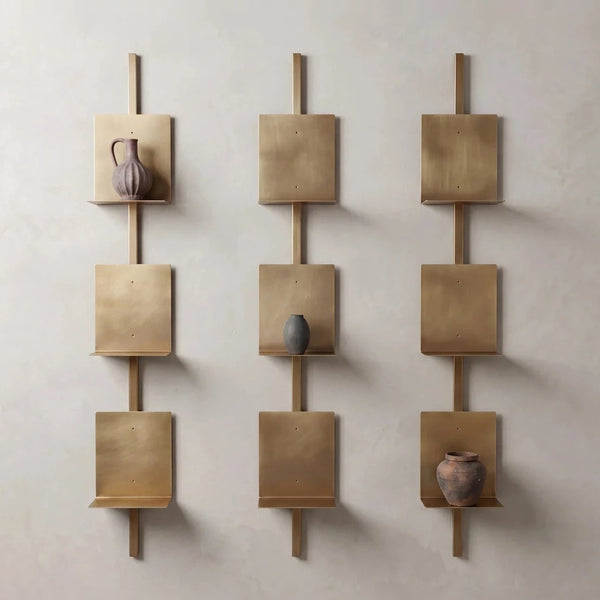
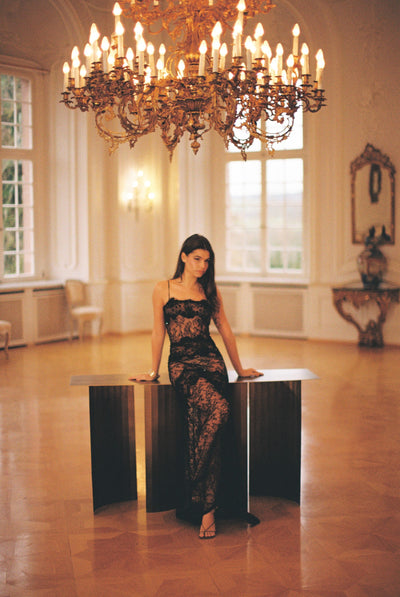
Burnished brass is recognised first by its tone. A deep brown that returns to gold at the edges and forms quiet clouds across the surface. Polished bright, the same metal looks smooth and generic, like a fitting you look straight past. Only burnishing gives brass the depth a piece of furniture needs to hold its own in a room. It does not sit on the metal as paint. It is the metal, in a different state.
This article describes what happens in the metal during burnishing, how the patina is created in the workshop and why the sealing preserves it. It explains why bare brass tarnishes, what distinguishes the words “oxidised”, “tarnished” and “burnished”, and why no two pieces are alike.
Burnished brass: copper, zinc and a deliberate oxidation
Brass is an alloy of copper and zinc. ZinCuTec uses CuZn37 brass for its furniture, and the designation already states the ratio: around 37 percent zinc, the rest copper [2]. The high copper content gives the metal its warm base tone. It is also the copper that reacts with oxygen at the surface, and everything that subsequently happens to the surface is based on this reaction.
- Material: CuZn37 brass
- Process: controlled oxidation of the surface
- Result: tone within the metal, no layer of paint
To burnish brass means to bring about this reaction deliberately. A solution causes the top layer of the metal to oxidise, creating a tone that, depending on how it is guided, lies between honey, bronze and deep brown [3]. Burnishing is therefore a deliberate oxidation, precisely controlled and stopped at a specific point.
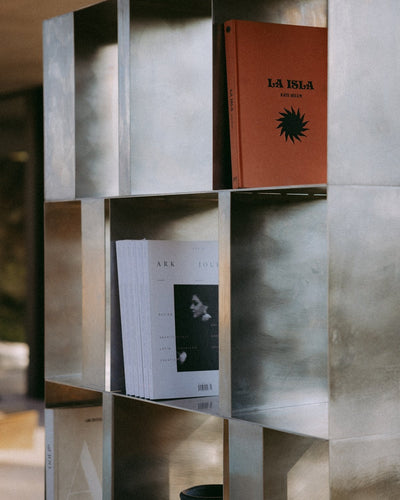
The difference from a surface with coloured or opaque paint is fundamental. Opaque paint lies over the metal and conceals it; burnishing leaves the metal visible and changes only its surface. That is why the grain remains legible beneath the dark tone, why every edge stands out as a lighter line, and why a burnished brass surface looks more alive up close than any evenly coloured one. The other finishes ZinCuTec offers are shown in the article Metal finishes compared.
How brass is burnished: the path through the workshop
It starts with a bare surface. Before a tone can develop, the brass is sanded and cleaned, because burnishing reveals everything that was on the metal beforehand: a score, a fingerprint, a trace of grease. Whatever is overlooked at this stage later shows in the tone and cannot be undone.
- Preparation: sanded bare and cleaned
- Burnishing: by hand, gradient per piece
- Finish: sealing, tables with 2K clear lacquer
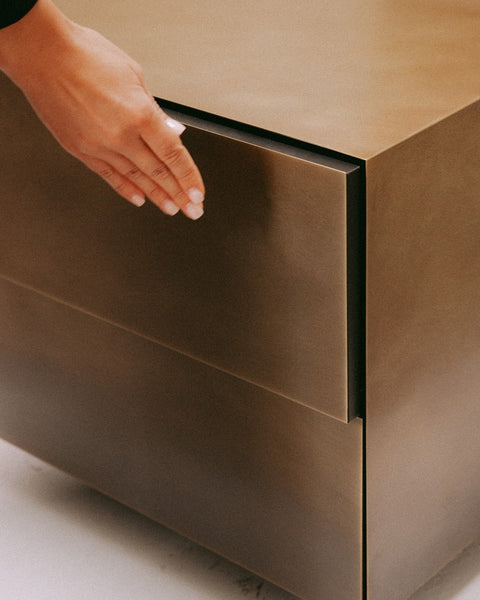
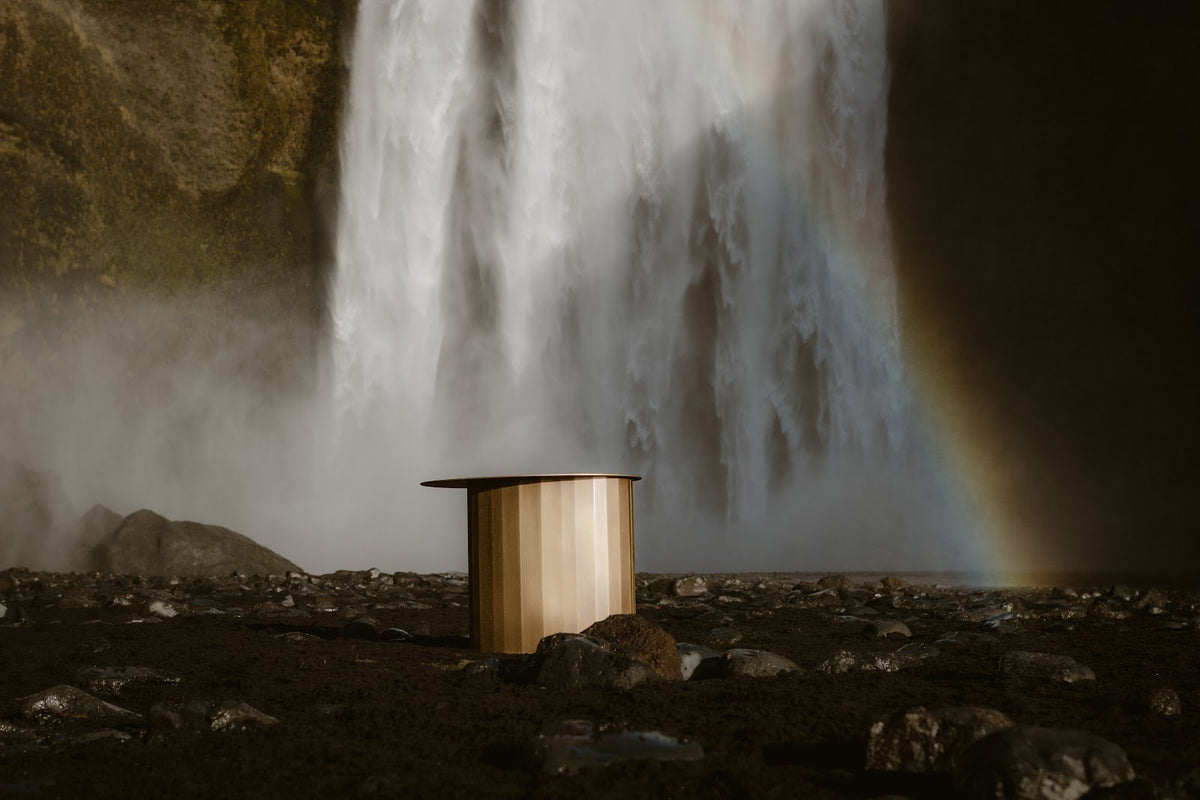
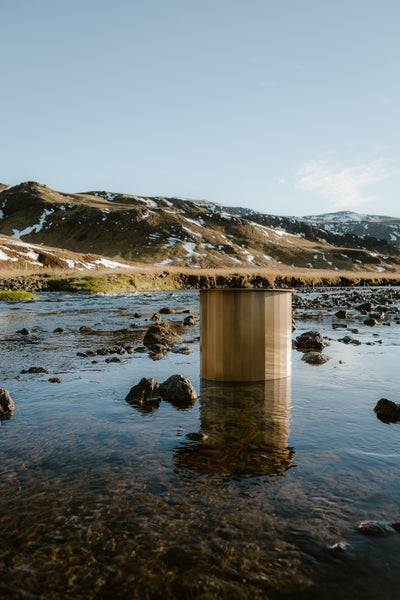
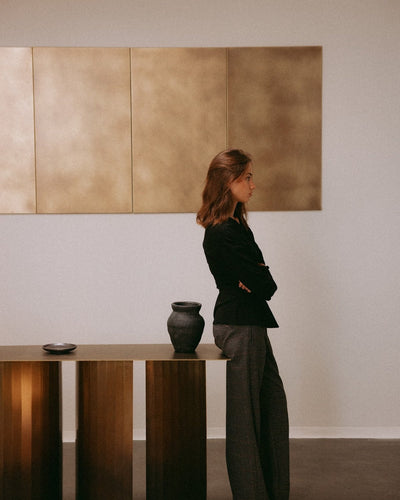
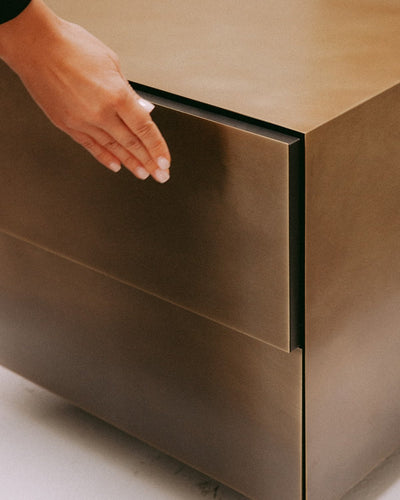
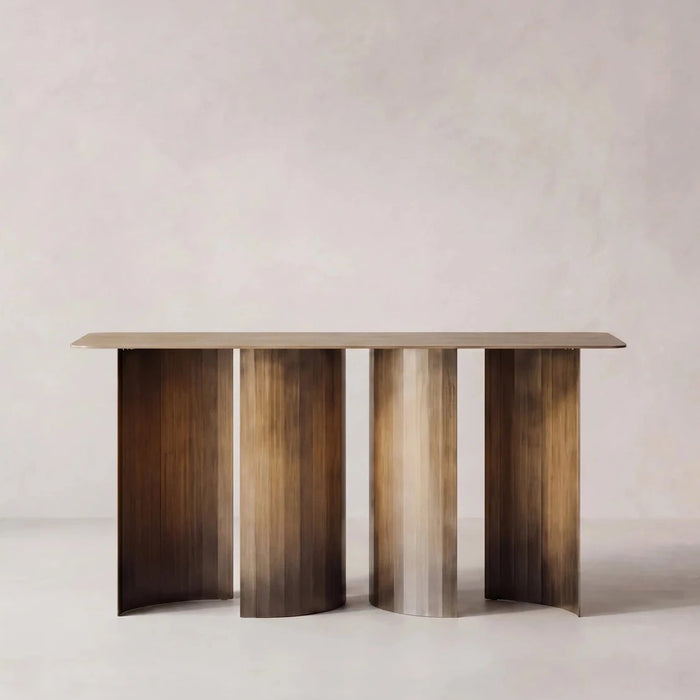
Then comes the burnishing, and here begins the part that cannot be repeated. The burnishing solution is applied in several passes with a compressed-air spray gun, after which the surface is sanded again by hand or by machine. How long the solution acts, where the application begins and where it stops determine the depth of the tone. Seen this way, creating a patina on brass is a process that requires experience and an eye that knows when a surface is finished. On TUKKON CONSOLE, the burnishing runs from bottom to top, from a dark, rich tone to warm shades of gold; on the YORU chest of drawers it is guided as a gradient from light to dark [1].
Finally, the surface is sealed. The patina on a piece of burnished brass furniture is thus created entirely in the workshop before the sealing is applied over it, and the sealing holds it in place [1]. For the tables this is a 2K clear lacquer, a transparent two-component lacquer, and for the other objects a 1K clear lacquer; through both, the burnishing remains visible without obstruction. What leaves the workshop is the finished state of the surface. In this process, burnishing and sealing brass are two halves of the same work: one gives the tone, the other holds it.
Patina on brass: oxidised, tarnished, burnished
Three words are in circulation for the dark layer on brass, and they mean different things. Any brass exposed to air is oxidised: oxygen combines with the copper at the surface and the metal becomes duller. This process is called tarnishing when it happens unintentionally and unevenly, on a door handle, a candlestick, an old fitting. Burnished brass is brass on which the same reaction was intended, guided and completed. The three states therefore differ not in their chemistry but in who determines them.
- Oxidised: reaction with the air, on any brass
- Tarnished: unintended and blotchy
- Burnished: intended, guided, sealed
Patina is the word that connects all three, and it rightly has a good ring to it. It refers to the layer a metal forms on its surface that gives it depth. Anyone who wants to know what “patinated” means therefore gets two answers: a patina can form by itself, or it can be produced deliberately in the workshop. For a piece of burnished furniture, the second applies.
Oxidised brass only turns green when moisture and acids come into play. The green layer is called verdigris; it forms, for example, where acidic fruit juices act on copper or brass, and is considered toxic [4]. It shares only its starting material with burnishing. Verdigris forms where moisture is left standing; burnishing is created by hand, assessed and then sealed.
Tarnishing, protecting, removing: bare and burnished brass
Bare brass tarnishes. A bare, unsealed surface reacts with air, moisture and the sweat of the hands that touch it, and turns dark and blotchy first in the places used most. This is where the many tips come from on how to protect brass from tarnishing or remove patina from brass: wax, oil, polish, home remedies containing acid. They are intended for a door handle or a candlestick made of bare brass.
- Bare brass: tarnishes, is polished
- Burnished brass: patina as the goal, sealed
- Care: soft, slightly damp cloth
With a piece of furniture in burnished brass, the question is reversed. Here the patina is the result of the work, and all care serves to preserve it. Such a piece is therefore neither stripped of its patina nor polished. Polishing and abrasive agents would attack the sealing and with it the burnishing, and acids, salts, standing moisture or alcohol can leave marks [1]. What the surface needs is little: a soft, slightly damp cloth, with a little soapy water or alcohol-free glass cleaner if needed, and then a dry one. In this sense burnished brass is the calmer material, because its care does not have to create anything that is not already there.
The protection that bare brass gets from wax or oil is provided on ZinCuTec furniture by the sealing. It preserves the tone with which the piece leaves the workshop. How bare brass is cleaned and what helps it is described in the article Cleaning and caring for brass. The binding instructions for each piece of furniture can be found in the warranty and care instructions.
Every piece its own: burnished brass in the room
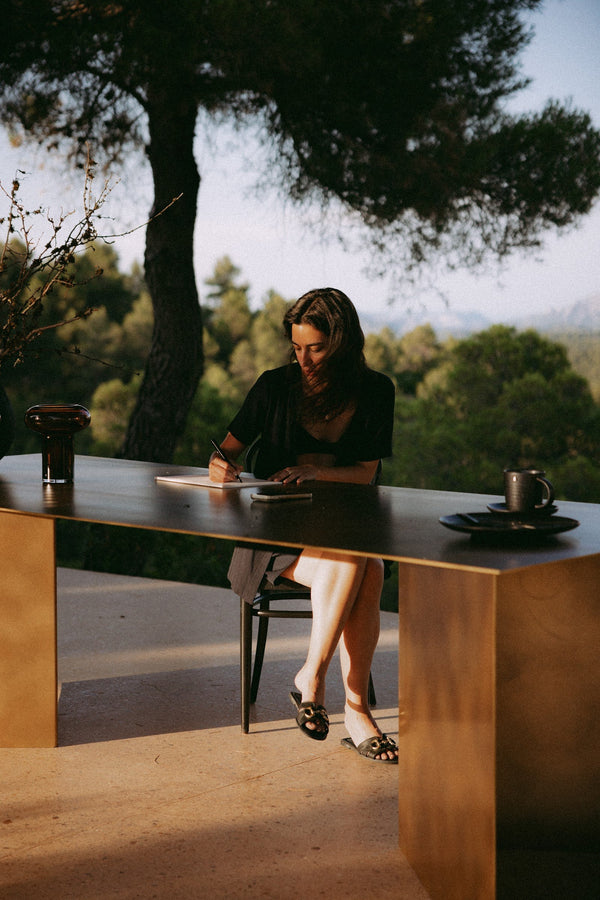
Because burnishing is guided by hand, it turns out differently on every piece. Two examples of the same design share dimensions and form, but their tone belongs to each alone. This is why brass, burnished and sealed, looks high-quality, while the same metal left bare is more reminiscent of a fitting: the surface shows that someone made decisions about it, and it shows this anew every day as the light changes.
- Tone: unique to each piece, form and dimensions the same
- Light: absorbed, the edges glow
- Effect: warm, calm, close
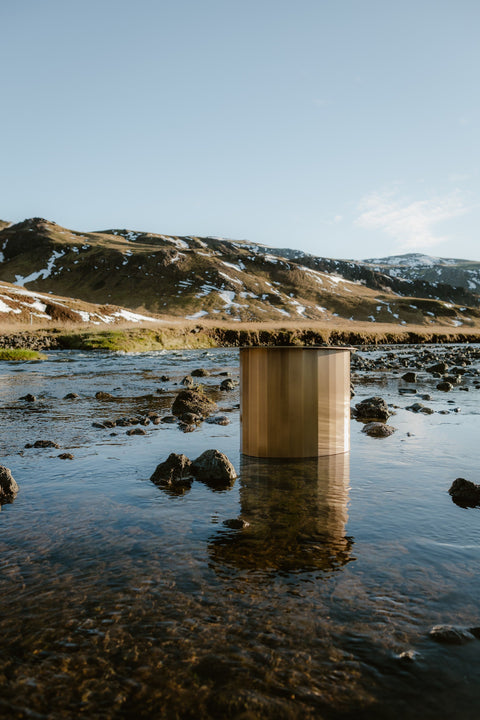
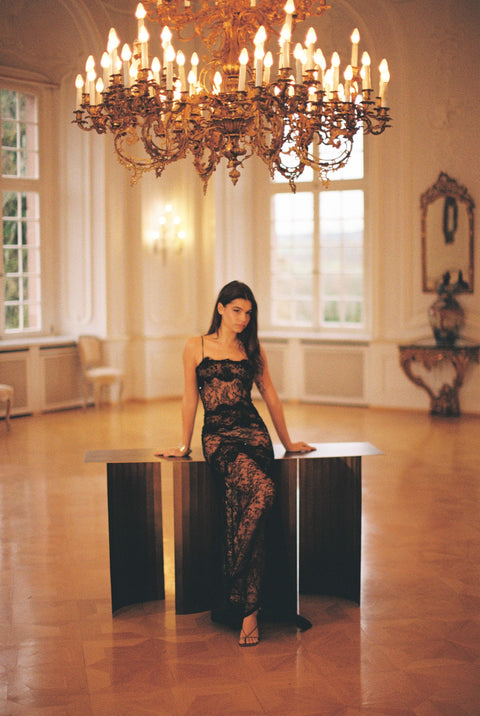
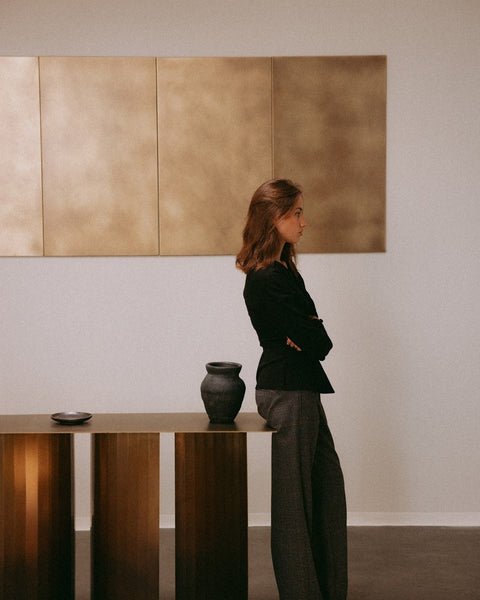
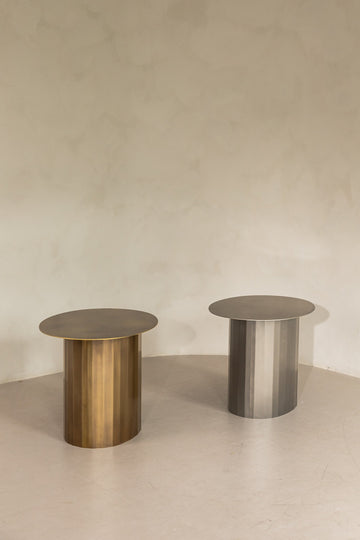
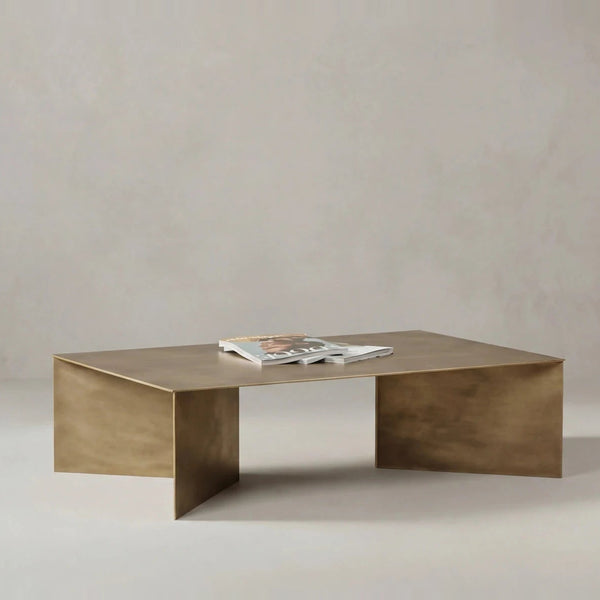
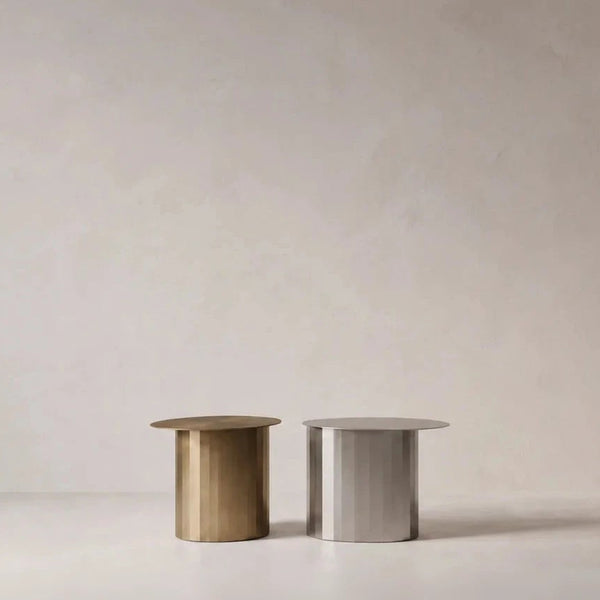
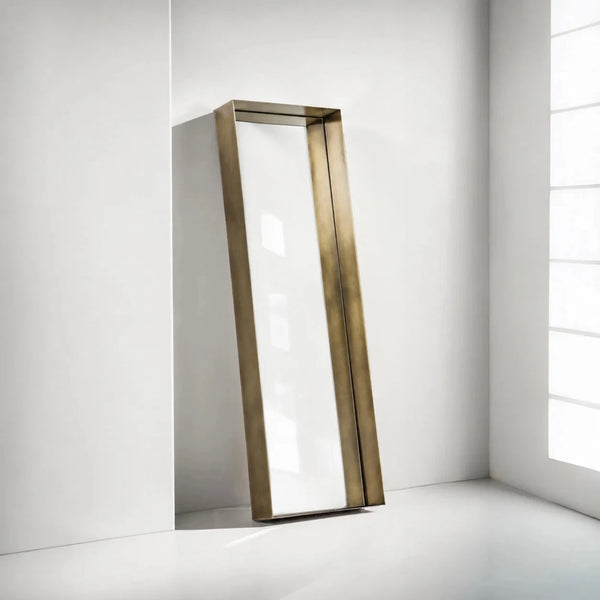
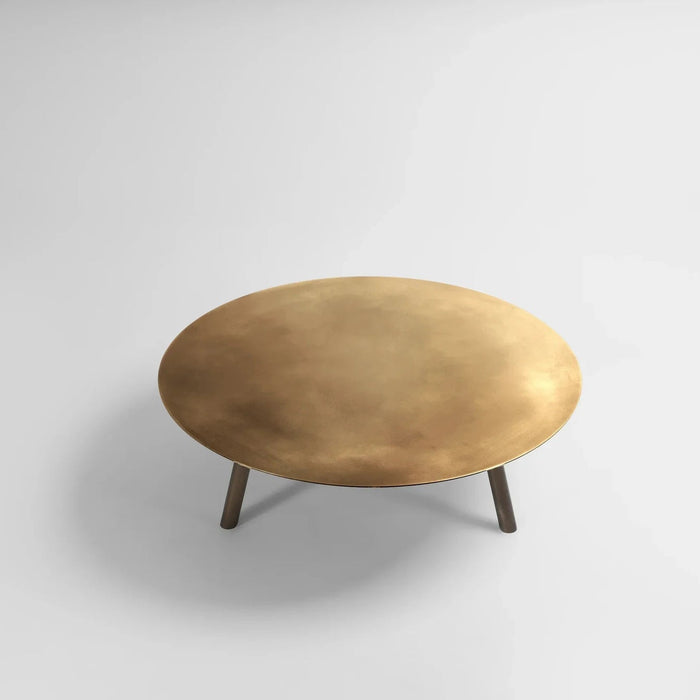
In a room, the dark tone behaves differently from light-coloured metal. It reflects little and absorbs light; the edges catch it and glow golden, while the surfaces in between remain still. On the round coffee table ELYSIAN, a disc 60 cm in diameter, the gradient can be followed without interruption. On YORU it runs across two handleless drawers; on the mirror REFLEXION it frames the glass.
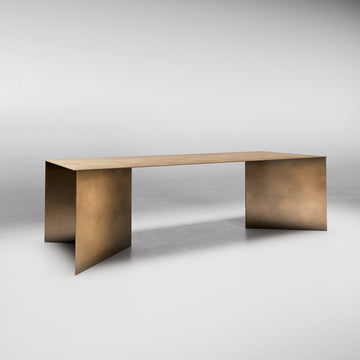
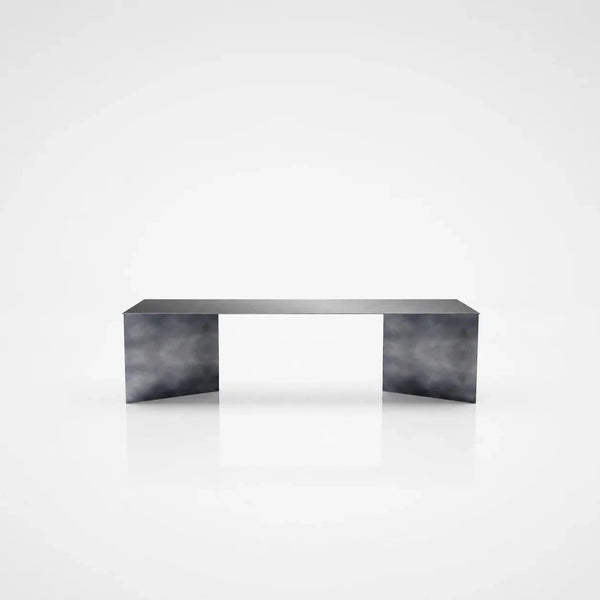
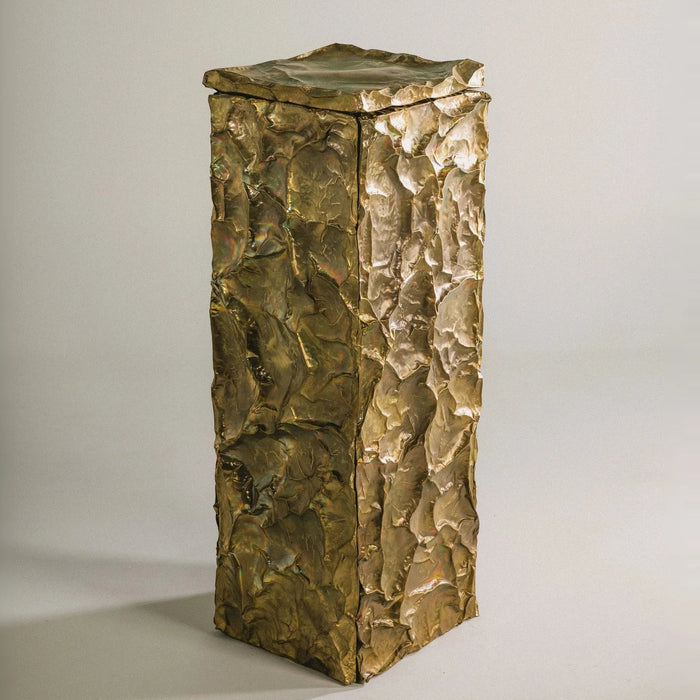
It is most evident on the objects that do not have to carry anything, because nothing on them distracts from the material. MONOLITH GOLDEN PEAK stands 100 cm tall in the room as a pure body of burnished brass. Among the furniture, TUKKON CONSOLE lays fine lines of light over its stepped contours. The furniture available in this material is shown on the page handcrafted brass furniture.
A piece of furniture in burnished brass carries its making on its surface, visible to anyone who steps closer. The tone is created in the workshop, under a hand that guides it and brings it to an end. The sealing holds it, and what remains in the room is a surface that does not throw light back but takes it in.
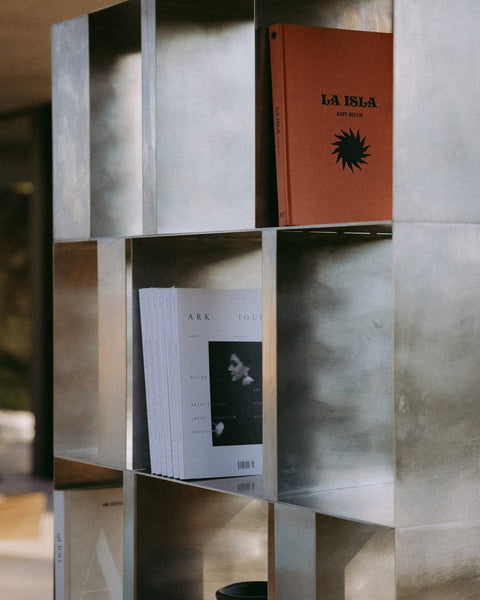
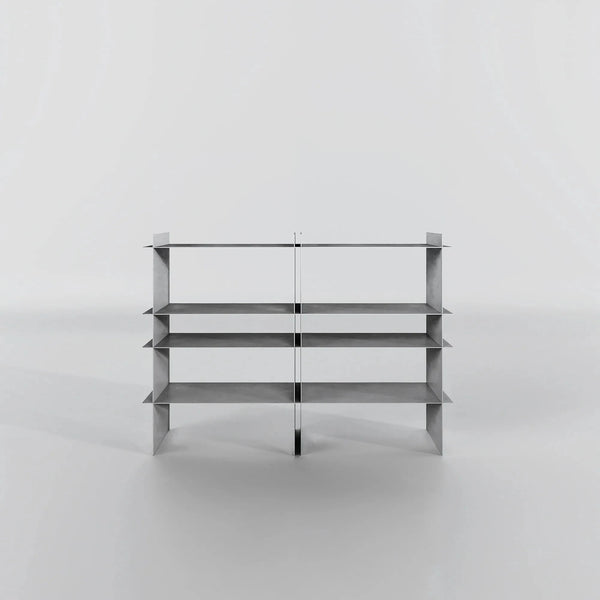
Brass and stainless steel side by side, with their different tones in the same room, are the subject of the article Warm or cool: brass and stainless steel in the room. What else reveals how a piece of furniture was made is shown in the article on high-quality furniture and its details.
Mentioned in this article
Pieces from this article.


Frequently asked questions
What is burnished brass?
Burnished brass is brass whose surface has been darkened through deliberate oxidation. The tone develops within the metal itself and does not lie on top as paint or opaque lacquer; depending on how it is guided, it ranges from honey through bronze to deep brown. Because burnishing is guided by hand, it turns out slightly differently on every piece.
How is brass burnished?
The surface is first sanded bare and cleaned, because burnishing makes scores and residues visible. A burnishing solution is then applied, causing the top layer of metal to oxidise; at ZinCuTec this is done in several passes with a compressed-air spray gun, after which the surface is sanded again. Exposure time and guidance determine the depth of the tone. For furniture, sealing follows at the end. At ZinCuTec this takes place in the company’s own workshop; the tables receive a 2K clear lacquer, the other objects a 1K clear lacquer.
What does patinated mean for brass?
Patinated means that the metal carries a layer of reaction products on its surface, usually copper oxides. This patina can form by itself on bare brass or be produced deliberately, as in burnishing. On ZinCuTec furniture it was created in the workshop and is preserved by the sealing.
Does burnished brass tarnish?
Unsealed burnishing continues to react with air and moisture and can darken further or develop marks. ZinCuTec furniture is sealed after burnishing, the tables with 2K clear lacquer, the other objects with 1K clear lacquer. The sealing preserves the tone with which the piece leaves the workshop. Acids, salts, alcohol and standing moisture have no place on the sealed surface.
Can the patina be removed from burnished brass?
On bare brass, patina is removed with polish or acidic home remedies. On burnished and sealed furniture this is not intended: polishing and abrasive agents attack the sealing and the burnishing beneath it. Care is limited to a soft, slightly damp cloth, with a little soapy water or alcohol-free glass cleaner if needed, followed by wiping dry. If an area is damaged, the workshop can help.
Is patina on brass toxic?
Verdigris, a mixture of basic copper acetates that forms on copper and brass under the action of acids, for example from acidic fruit juices, is considered toxic. The brown burnishing of a piece of furniture is not verdigris; at ZinCuTec it lies beneath a sealing. The furniture is intended for direct contact with food only with the manufacturer’s express written approval.
What surface treatment does the brass of ZinCuTec furniture have?
The brass, CuZn37, is burnished in the workshop in several passes and then sealed; all tables receive a 2K clear lacquer, the other objects a 1K clear lacquer. The patina is created entirely in the workshop, before the sealing, which then preserves it. Cleaning is done with a soft, slightly damp cloth, with soapy water or alcohol-free glass cleaner if needed, without abrasive or polishing agents.
Sources & references
- [1]ZinCuTec GmbH: Produktangaben ELYSIAN, YORU, TUKKON CONSOLE, REFLEXION und MONOLITH GOLDEN PEAK sowie Gewährleistungs- und Pflegehinweise (Stand 10. Juli 2026), abgerufen am 11.10.2026 zincutec.eu/pages/pflege
- [2]Diehl Brass Solutions: Werkstoffdatenblatt 023, CuZn37 (CW508L), Zusammensetzung Cu 64 %, Zn Rest (Richtwerte), abgerufen am 11.10.2026 diehl.com/cms/files/Diehl_Brass_Solutions_Werkstoffdatenblatt_023.pdf
- [3]S. Siedle & Söhne: Brüniertes Messing (Brünierung als bewusst herbeigeführte Oxidation, die das Material nicht versiegelt), abgerufen am 11.10.2026 siedle.de/de-de/home/linked-pages/brueniertes-messing/
- [4]wissen.de Lexikon: Grünspan, abgerufen am 11.10.2026 wissen.de/lexikon/gruenspan
How we work: journal articles are written in the workshop, checked by a specialist before publication and updated when something changes. Editorial principles
Read on
You might also like.

How to recognise high-quality furniture: eight details you can touch
Weld seam, edge, surface, weight: how the quality of a metal piece of furniture can be checked by hand before you believe a description.Read article
Warm or cool: brass and stainless steel in a room
Two metals from the same workshop, sealed alike and cared for alike, with opposite effects: how burnished brass and brushed stainless steel set the tone of a room.Read article