





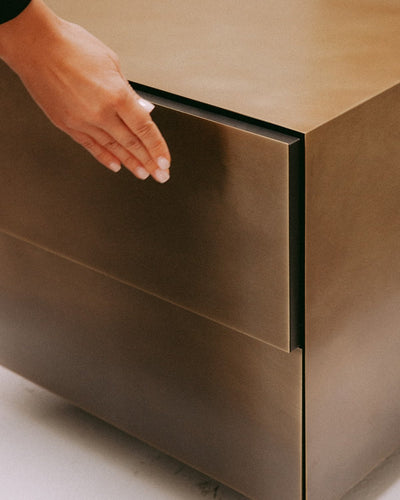
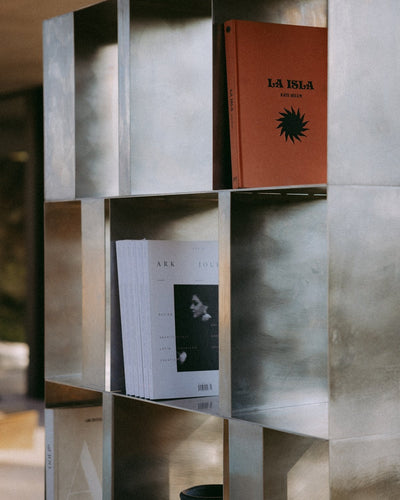
Furnishing an apartment: ideas for a home with five metal pieces
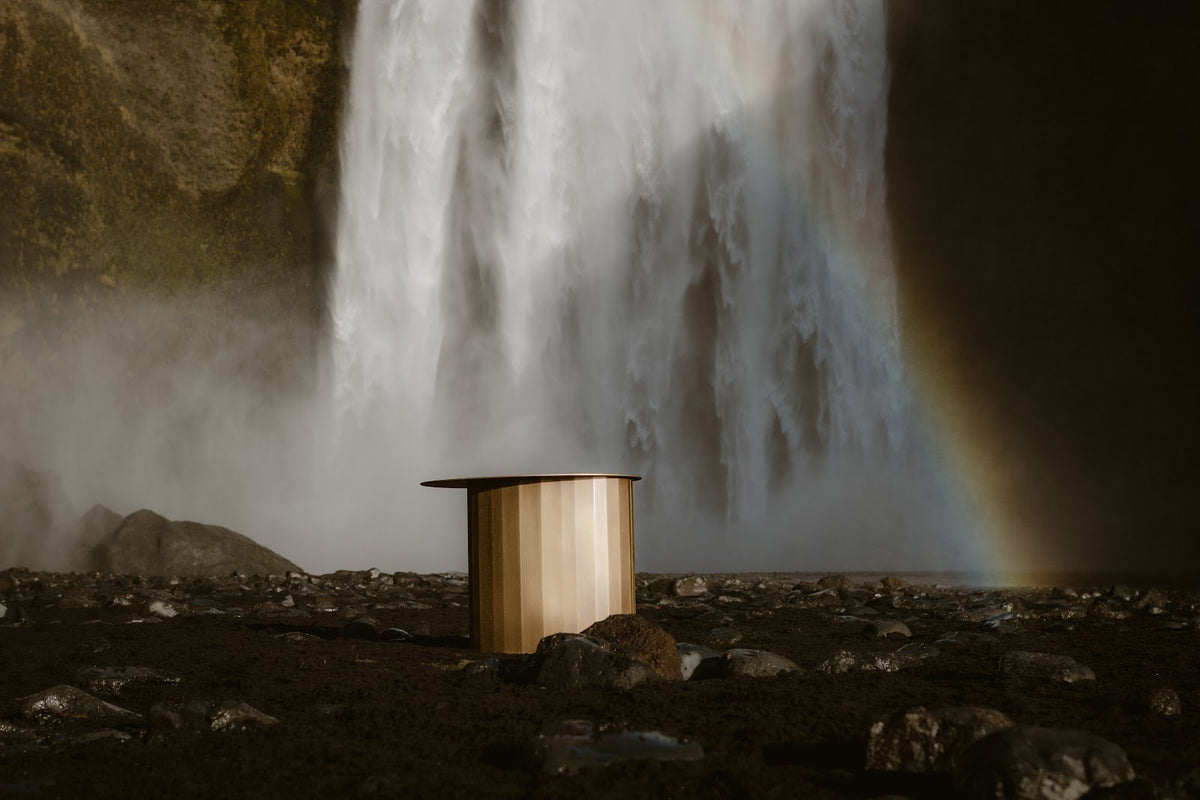
A curated scenario instead of a home story: how five pieces in brass and stainless steel give an apartment poise, while everything else is free to change.

In brief
- This article is not a home story with residents but an imagined scenario: five real pieces in brass and stainless steel furnish an apartment room by room.
- The idea behind it: first decide on the few pieces of furniture that are meant to stay, and only then on what can easily be replaced.
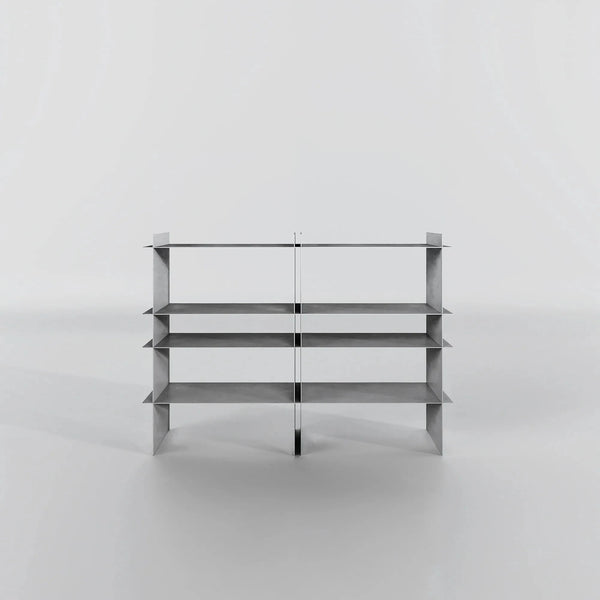
- The REFLEXION mirror hangs in the hallway, the KANJI coffee table stands in the living room, the CHOWA shelf hangs on the wall, and the ZEN DINING TABLE and ZEN BENCH stand in the dining area.
- Different pieces of furniture can be combined if the forms stay calm, no more than two metals are used and each piece keeps its distance from its neighbour.
Contents
- 01A home story without residents: how this scenario is meant
- 02Ideas for a new apartment: starting with five pieces
- 03The hallway: a mirror that welcomes
- 04The living room: a low table and an arc on the wall
- 05The dining area: table and bench from a single line
- 06Combining different furniture: what connects the five pieces
- 07Frequently asked questions
Ideas for furnishing an apartment often begin with a long list: sofa, table, shelf, bed, lamps. This article begins with a short one. Five metal pieces, spread across the hallway, living room and dining area, are meant to give an apartment poise, while everything else is free to change. The apartment itself is imagined: a scenario, room by room, not a visit to people who actually exist.
The five pieces, on the other hand, are real, and their dimensions come from the workshop. The rooms are deliberately kept general so that every idea can be used when furnishing your own home.
A home story without residents: how this scenario is meant
In German-language journalism, a home story is a feature that shows the private side of a person, as text, photo story or film [2]. Magazines visit people in their homes for this, and a good part of the appeal lies in the fact that these people and their rooms really exist.
- Home story: a visit to real people
- This article: an imagined scenario
- Fixed: five pieces with real dimensions
- Open: everything else in the apartment
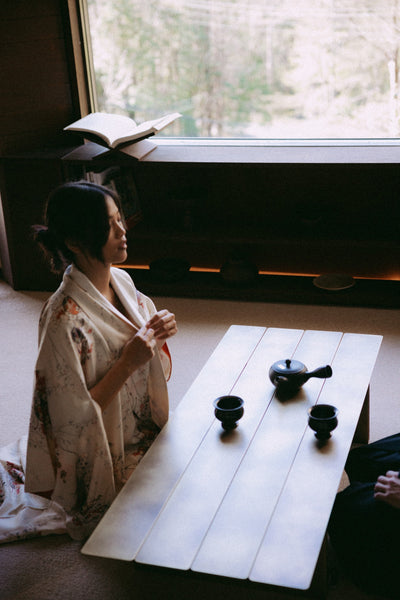
This article takes a different path. It invents no residents and no quotes. Instead of a home tour through a particular apartment, it describes how five pieces could carry an apartment, and leaves open who lives there. The photos show the pieces in staged rooms, not other people’s lives.
What makes a good home story is to be preserved all the same: an eye for how things connect. Which piece welcomes, which gathers people around it, which gives a wall its focal point? These three questions guide you through the scenario, from the hallway to the dining area, and you can take them away as ideas for your own home.
Ideas for a new apartment: starting with five pieces
Anyone furnishing a new apartment faces empty rooms and many decisions at once. One idea brings order to most of them: first decide on the few pieces of furniture that are meant to stay, and only then on what can easily be replaced. Textiles, lamps, chairs and books change over the years; a metal table rarely does.
- Hallway: REFLEXION
- Living room: KANJI and CHOWA
- Dining area: ZEN DINING TABLE and ZEN BENCH
- Everything else: free to choose, ideally calm
In this scenario there are five pieces: a mirror in the hallway, a coffee table and a wall shelf in the living room, a dining table with a bench by the window. They come from the same workshop but were not designed as a set. That is where their appeal lies: the apartment looks ordered without looking like a furniture range.
You can take the same approach when refurnishing an apartment you already live in. One of the five pieces is enough to start with. The other ideas wait until a room asks for them, and some apartments end up managing with three.
In this scenario, furnishing an apartment in a modern way does not mean following a trend. Modern here is whatever has a clear form and claims little: a smooth surface, a straight edge, a material that looks the way it is. Such furniture sits as naturally in a period building with stucco as in a new build with large windows, and it will find its place in the next apartment too.
The hallway: a mirror that welcomes
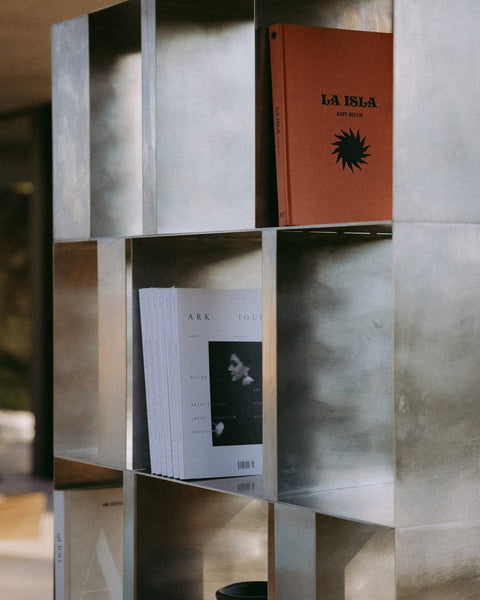
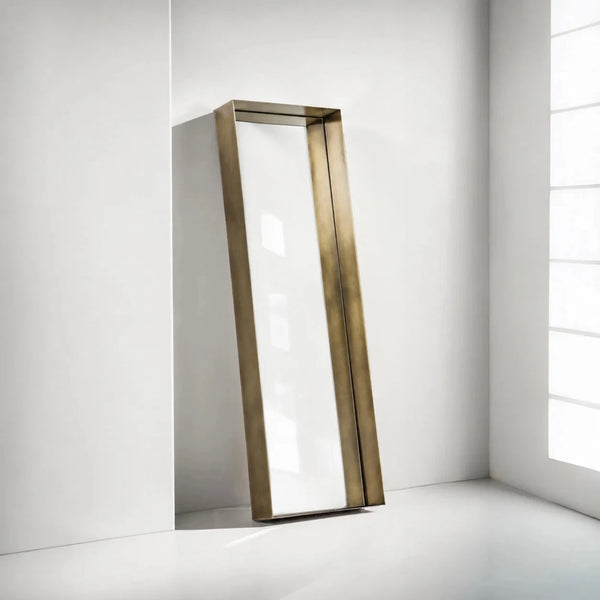
The first impression of an apartment is formed in the hallway. In the scenario, this is where REFLEXION hangs, a mirror framed by a surface of burnished brass or brushed stainless steel, made as a one-off piece in 200 × 60, 200 × 80 or 90 × 90 cm [1]. The tall format shows the whole figure, the square one rather a face and a piece of the room behind it.
- Piece: REFLEXION
- Formats: 200 × 60, 200 × 80, 90 × 90 cm
- Metal: burnished brass or brushed stainless steel
- Role: to welcome and pass on light
In brass, the mirror brings warmth to a room that often has little daylight. The brass gets its warm, deep tone from the burnishing in the workshop, and the sealing preserves it [1]. A dark border thus surrounds the reflection and holds it the way a passe-partout holds a sheet of paper.
In this scenario, the hallway needs nothing more. A narrow runner and a wall light are enough; keys find their place in a bowl on the chest of drawers that is there anyway. The article Designing a hallway brings together more ideas for this room.
When furnishing an apartment, people often think of the hallway last, even though they pass through it many times a day. A single good piece in this spot changes the way home: you see it when arriving and when leaving, in the half-light of morning and in the light of the wall lamp in the evening.
The living room: a low table and an arc on the wall
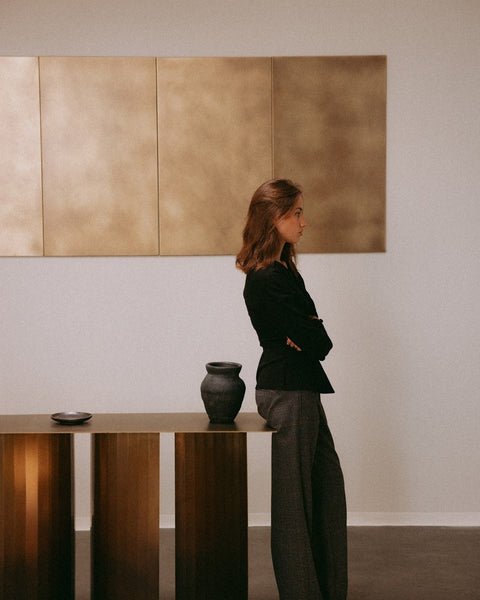
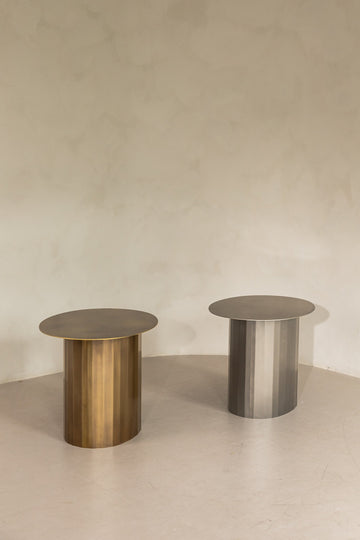
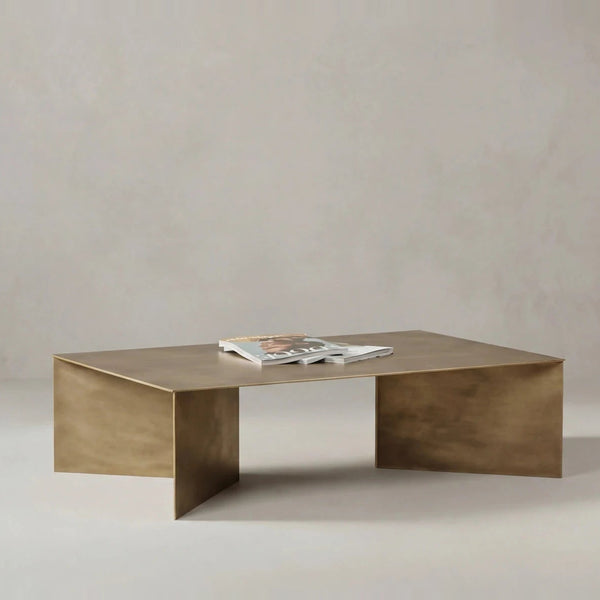
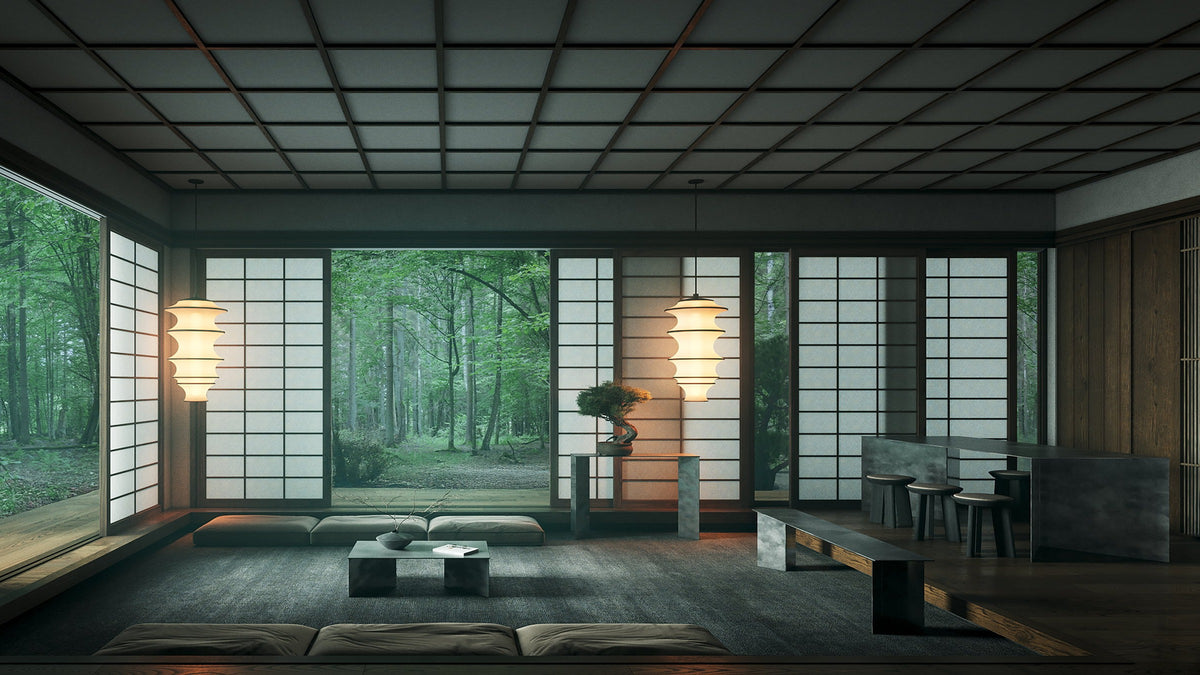
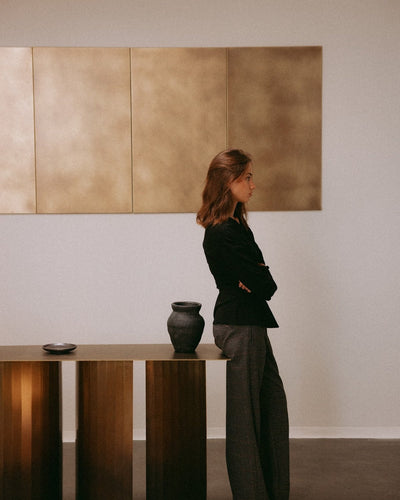
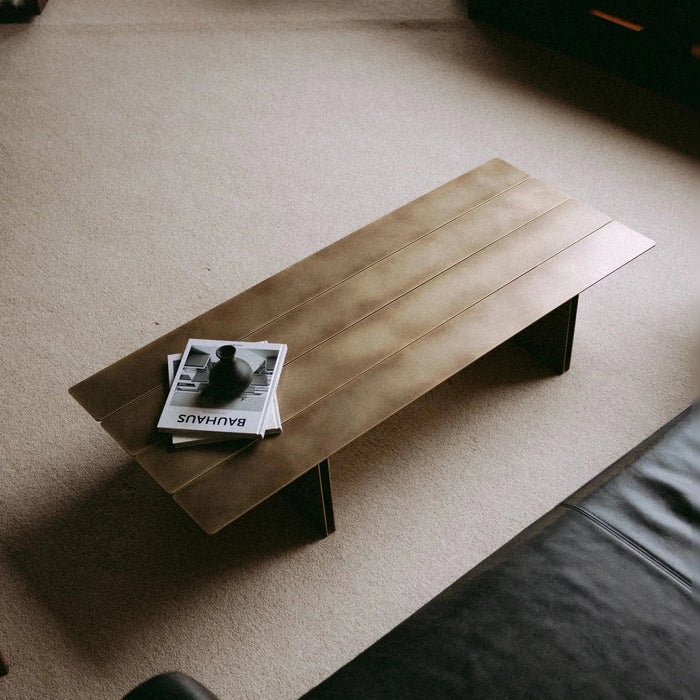
In the living room stands KANJI, a coffee table on an architectural scale, 130 × 52 cm at a height of 23 cm, in burnished brass or brushed stainless steel [1]. The long, flat form fits in front of a wide sofa and leaves room on either side for an armchair or a large floor cushion.
- Table: KANJI, 130 × 52 × 23 cm
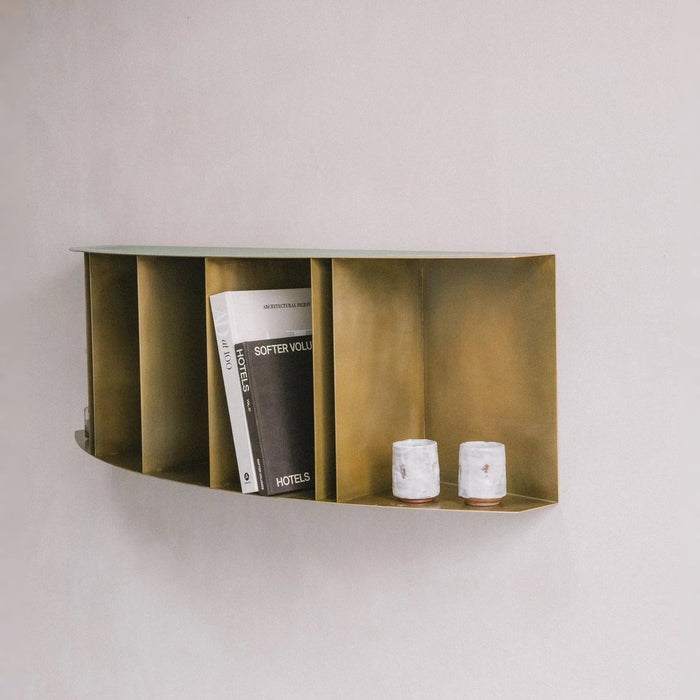
- Wall: CHOWA, 125 × 40 × 30 cm
- Metals: burnished brass or brushed stainless steel
- Companions: linen, wool, books
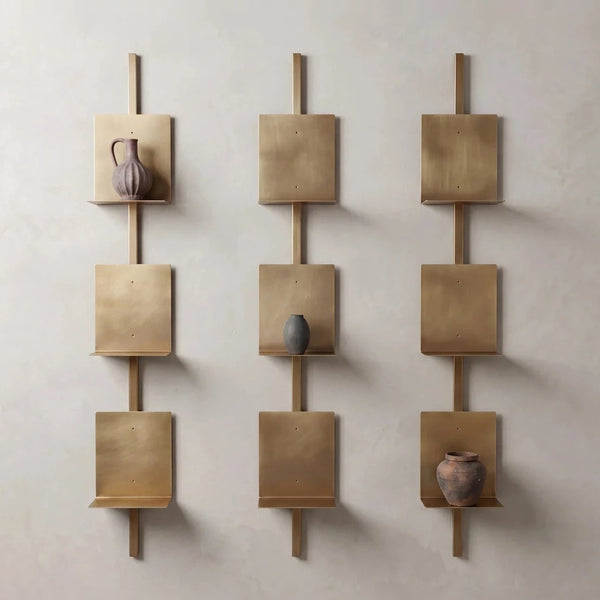
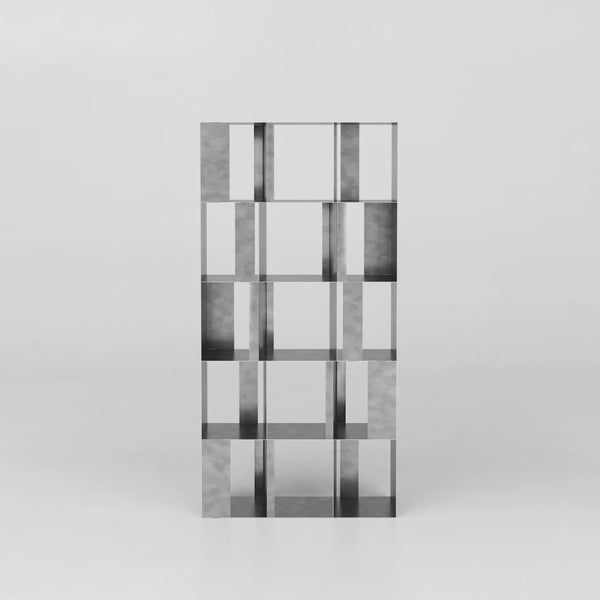
On the opposite wall hangs CHOWA, a crescent-shaped wall shelf in burnished brass or brushed stainless steel, 125 × 40 × 30 cm [1]. Three books and a shallow bowl rest in the arc. Here the shelf is less storage than image: it gives the wall a focal point, and a painting becomes unnecessary in this spot.
A simple furnishing idea for your own home can be drawn from this: one piece close to the floor, one at eye level on the wall, and enough space between the two for each to be seen on its own. A wool rug and linen curtains take the coolness out of the metal without covering it up. If you want to take the living room further, you will find more in the article Furnishing a living room.
Mentioned in this article
Pieces from this article.



The dining area: table and bench from a single line
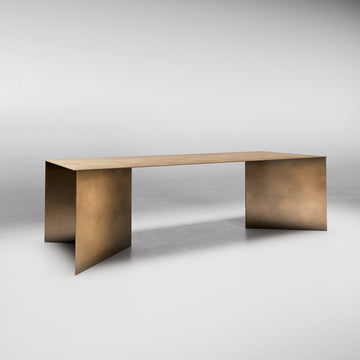
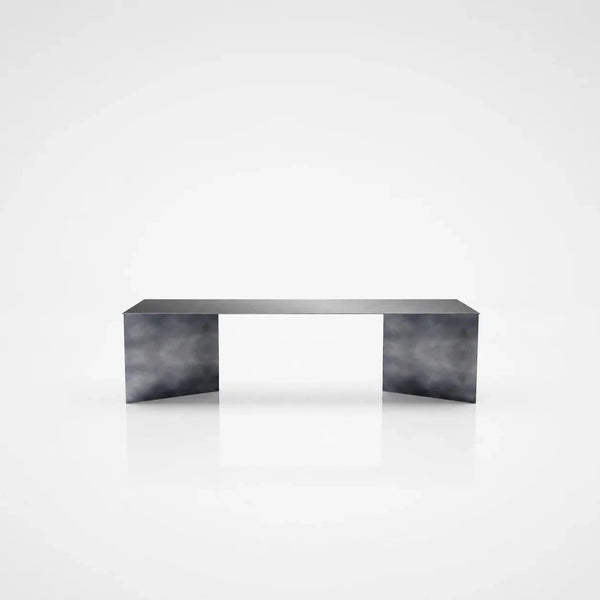
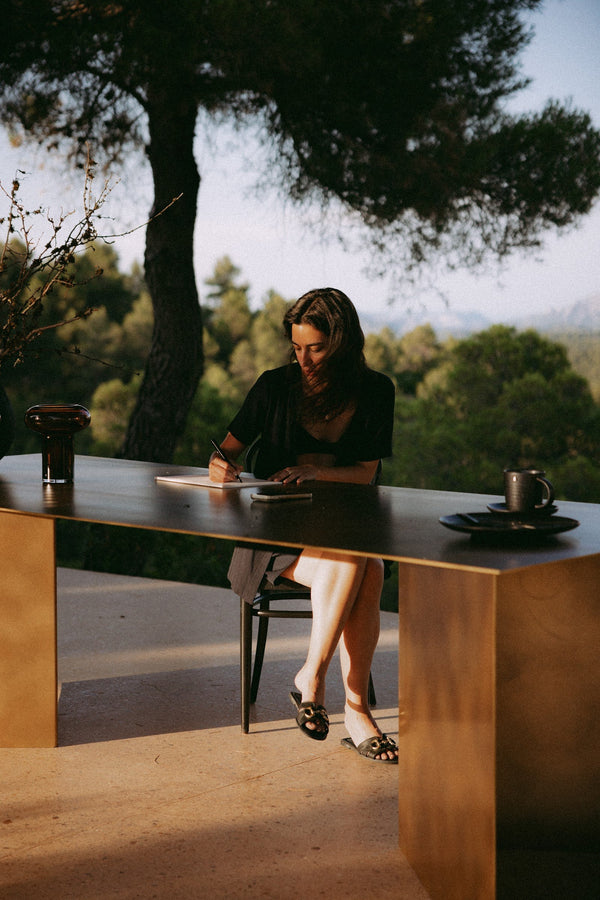
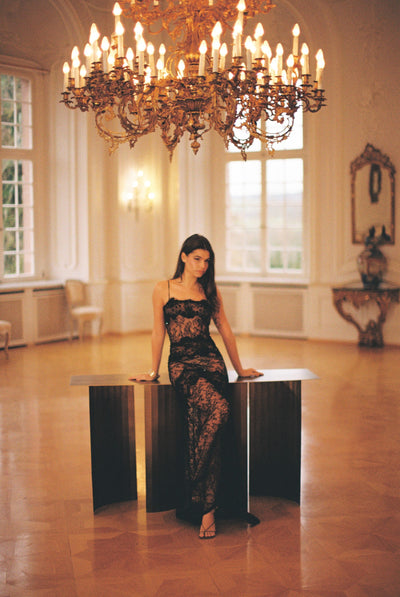
By the window stands the ZEN DINING TABLE at 200 × 100 × 75 cm, with the ZEN BENCH at 200 × 35 × 45 cm along its long side [1]. Table and bench share their length and a design language; how it came about is explained in the article The ZEN series.
- Table: ZEN DINING TABLE, 200 × 100 × 75 cm
- Bench: ZEN BENCH, 200 × 35 × 45 cm
- Opposite: chairs of your choice
- Light: a pendant lamp above the centre of the table
Opposite the bench, the scenario has chairs that need not come from the same workshop, upholstered or with woven seats. This way the dining area does not turn into an ensemble out of a catalogue. When guests come, several of them squeeze up on the bench; on ordinary days a book or a bag lies there.
A pendant lamp above the centre of the table makes the dining area a place of its own, especially when furnishing an apartment with an open floor plan. The brushed stainless steel picks up its light as a soft shimmer. Little stands on the top: a carafe, two glasses, nothing else that would have to be cleared away in the evening.
If you are furnishing a smaller apartment, you can also imagine the dining area without a bench. The table moves with its short side against the wall, and chairs stand on the other three sides. The idea remains the same: one piece carries the room, and everything else falls into place around it.
Combining different furniture: what connects the five pieces
Five pieces, two metals, three rooms: for an apartment not to look thrown together, it needs a common denominator. In this scenario there are three. The forms remain calm and without ornament. There are never more than two metals. And each piece keeps its distance from its neighbour.
- Form: calm and without ornament
- Metal: no more than two, brass and stainless steel
- Distance: space around every piece
- Existing furniture: may stay as it is
Anyone furnishing an apartment with existing furniture is combining anyway. Combining different pieces of furniture is easier when the new relates to what is already there. A coffee table in burnished brass picks up the warm tone of an old rug, a dining table in stainless steel the bright light by the window. Furniture with character does not have to look alike; it is enough for every piece to show the same care.
Combining furniture also means leaving gaps. A wall without a picture, a corner without a plant, a tabletop with only one object on it: only these free spaces allow the five pieces to take effect. How brass and stainless steel work together in one room is described in the article Brass or stainless steel, and all the workshop’s designs are shown in the Designer furniture category.
When furnishing a home, character rarely comes from many things, more often from a few that you look at more closely. A piece whose surface was created in the workshop bears this work visibly: in the grain of the stainless steel, in the tone of the burnishing, in edges that are set precisely. Such pieces get along with heirlooms, flea market finds and simple mass-produced furniture, because they do not dictate a style but set a standard.
In the morning the sun first falls into the hallway. It brushes the brass surface of the mirror, moves across the living room floor to the edge of the low table and reaches the dining table by the window towards midday. Five pieces, and each has its hour.
Frequently asked questions
What makes a beautifully furnished apartment?
It starts from a few pieces of furniture that are meant to stay, and from a calm base colour for walls and large surfaces. Each room gets a focal point, such as a table, a mirror or a shelf, and free space remains around this focal point. Textiles, lamps and books are added later and can easily be swapped.
Which furniture should you choose first for a new apartment?
The pieces of furniture that are meant to stay the longest, usually the dining table, sofa and bed, chosen with the floor plan in mind. Only once their place is settled do lamps, shelves and smaller furniture follow. It helps not to furnish all rooms at once, but to start with one and add to the others step by step.
How do you combine different pieces of furniture without the result looking restless?
Through a common denominator: similarly calm forms, a limited number of materials, for example no more than two metals, and enough space between the individual pieces. New furniture works best when it relates to a tone or material that already appears in the apartment.
What is furniture with character?
Furniture whose material, form and making you can recognise. This includes handmade pieces in solid material, surfaces with a pattern of their own such as brushed stainless steel or burnished brass, and designs with a clear idea instead of fashionable details.
What is a home story?
“Home story” is a term coined in German-language journalism for a feature that shows the private side of a person, as text, photo story or film. Usually magazines visit people in their homes for it. This article is deliberately an imagined scenario without real residents.
Which pieces belong to this scenario?
Five pieces by ZinCuTec: the REFLEXION mirror in the hallway, the KANJI coffee table at 130 × 52 × 23 cm and the CHOWA wall shelf in the living room, and in the dining area the ZEN DINING TABLE at 200 × 100 × 75 cm and the ZEN BENCH at 200 × 35 × 45 cm. All are available in brushed stainless steel and in burnished brass.
Sources & references
- [1]ZinCuTec GmbH: Produktangaben REFLEXION, KANJI, CHOWA, ZEN DINING TABLE und ZEN BENCH (Form, Material, Oberfläche, Maße), zincutec.eu, abgerufen am 12.10.2026; Versiegelung laut Herstellerauskunft vom 09.10.2026
- [2]Wikipedia: „Homestory“, abgerufen am 12.10.2026 de.wikipedia.org/wiki/Homestory
How we work: journal articles are written in the workshop, checked by a specialist before publication and updated when something changes. Editorial principles
Read on
You might also like.

Setting a festive Christmas table: brass instead of gold, calm instead of abundance
A Christmas table feels festive when the tabletop stays visible and a few things are given weight. How place settings, centrepiece, colour and candlelight come together without overloading the table.Read article
Setting the table: the rules of the place setting and why the tabletop has a say
Where cutlery, glasses, napkin and bread plate go follows a simple logic. How it can be applied on a metal table and what the tabletop itself dictates.Read article