








Cleaning and caring for brass: what a burnished piece needs day to day
Burnished brass receives its warm tone in the workshop, and a clear lacquer holds it in place. Care takes no more than a mild cleaner and a soft cloth, and everyday life just a few calm habits.

In brief
- With ZinCuTec pieces, cleaning brass means keeping the clear sealing over the burnished surface clean.
- An alcohol-free glass cleaner or soapy water and a soft cloth are all it takes; microfibre works well.
- Polish, abrasive cleaners and harsh household cleaners do not belong on burnished, sealed brass.
- The warm, dark tone is created during burnishing in the workshop, and the sealing keeps it just as it was made there.
- Objects may be set down gently, coasters and felt pads are a recommendation, and the workshop repairs scratches on request.
Contents
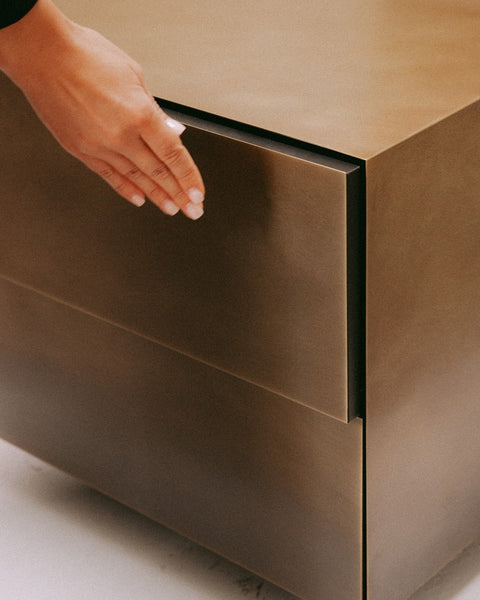
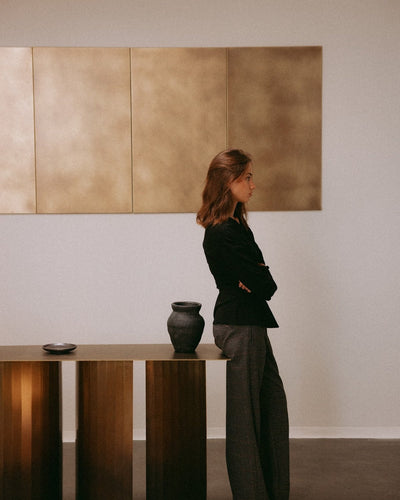
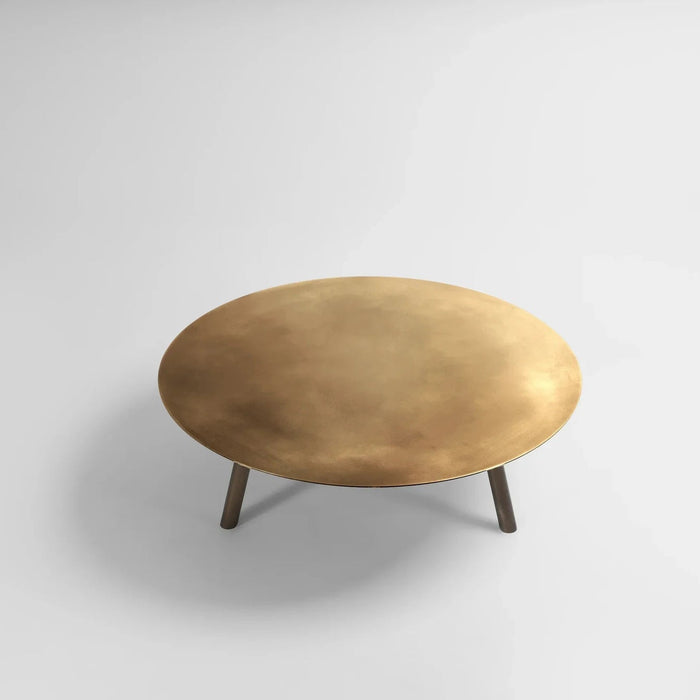
Cleaning brass, when the piece is burnished, takes only a few simple steps. The patina that gives a coffee table, a chest of drawers or a wall piece its warm tone was created in the workshop, and a clear sealing lies over it as protection. What you care for, then, is this layer: with an alcohol-free glass cleaner or a little soapy water and a soft cloth. The metal asks for nothing more, and this very calm is part of its appeal.
Many guides on the subject describe bare brass, such as door handles, candlesticks or fittings without a protective layer, and work with recipes from the kitchen. Burnished, sealed brass calls for a different approach. This article explains what the workshop gives the metal, how to care for brass furniture in everyday life and when to turn to the workshop itself.
What the workshop gives the brass
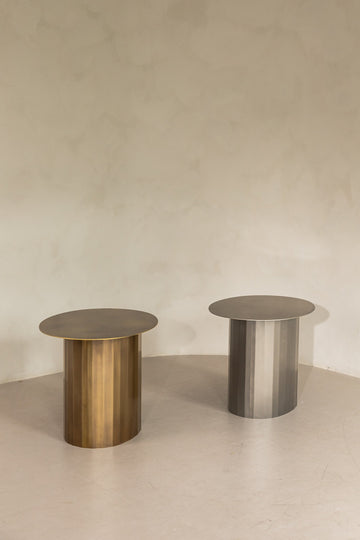
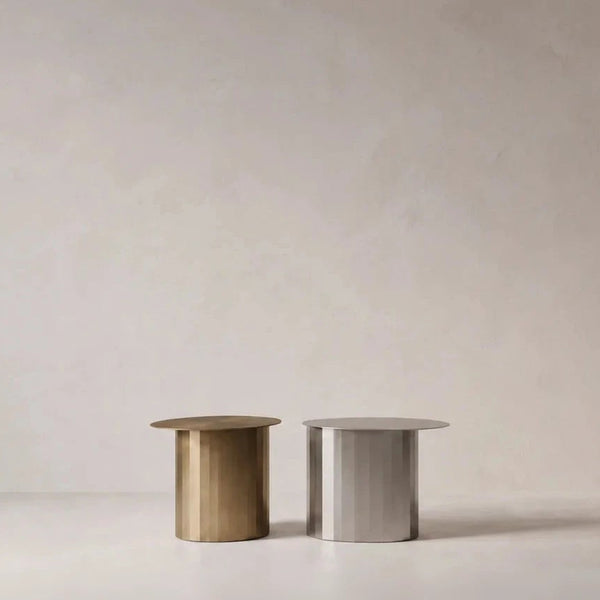
As its material, ZinCuTec works with the brass grade CuZn37, an alloy of just under two thirds copper and a little over one third zinc [2]. Bare, it shows a light, almost yellow gold. The deep, warm tone of the pieces only emerges through burnishing: the workshop sands the surface, cleans it, applies the burnishing solution with a compressed air spray gun, sands it again by hand or by machine and finally seals it [1]. The patina is created in these steps.
- Material: CuZn37 brass
- Tone: burnished in the workshop
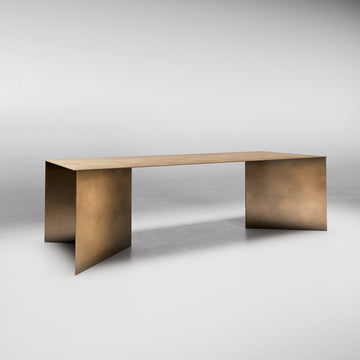
- Protection: clear lacquer, 2K on coffee and dining tables
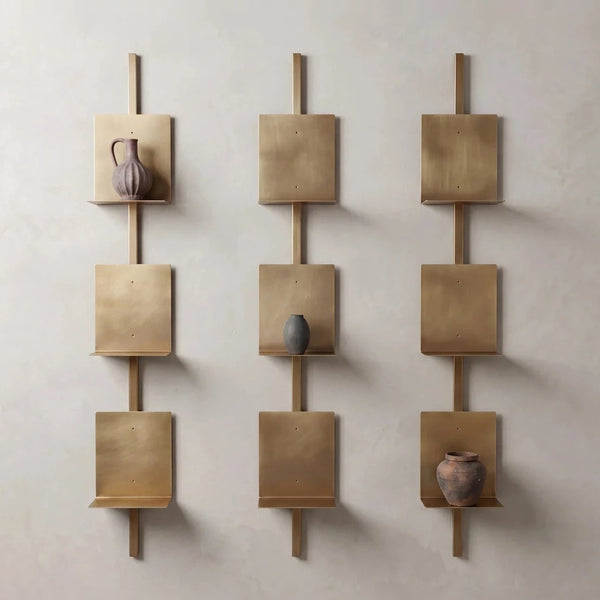
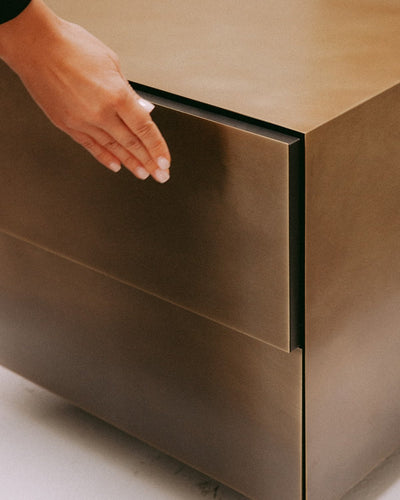
Over this patina lies a clear lacquer. Coffee tables and dining tables receive a 2K clear lacquer; the YORU chest of drawers, the REFLEXION mirror, the MONOLITH GOLDEN PEAK piece and the wall shelves a 1K clear lacquer; all other brass pieces likewise receive a clear sealing [1]. It holds the tone of the burnishing in place. So when you clean burnished brass, you never touch the metal itself, only the transparent layer above it.
More about the individual steps, and about the dark tone that truly refines the metal, can be found in the article on burnished brass surfaces. For care, a single thought is enough: the beauty is already there, and care keeps it visible.
Cleaning burnished brass: glass cleaner or soapy water
For cleaning burnished brass regularly, the workshop recommends two products: an alcohol-free glass cleaner or mild soapy water [1]. The glass cleaner is best applied sparingly to a soft cloth. For the soapy water, lukewarm water and a few drops of mild washing-up liquid are enough; the cloth is dampened in it and wrung out well. A pH-neutral cleaner is also possible [1], but these two are the ones recommended.
- Cleaner: alcohol-free glass cleaner or soapy water
- Cloth: soft, microfibre works well
- Finish: go over it with a dry cloth
Microfibre makes a good cloth [1], as does a soft, clean cotton cloth. Wipe the whole surface with a light hand. No force is needed, as dust and the marks of everyday life come away easily from the smooth sealing. A second, dry cloth takes up the moisture straight afterwards, so that no drops dry on the surface.
One property of the sealing soon becomes apparent: fingerprints do not remain on it [1]. When you clean a brass surface, you are therefore mainly removing dust and water marks.
Caring for brass furniture: what is good for the sealing
The sealing protects the burnishing as long as it remains intact itself. That is why neither polish nor abrasive cleaners nor harsh household cleaners belong on burnished brass [1]. Polish and scouring cream work with fine abrasive particles; they would first dull the clear lacquer and eventually, at that spot, reach the patina that was created in the workshop over several steps. Steel wool and the rough side of a sponge are also out of the question.
- Suitable: alcohol-free glass cleaner, soapy water, soft cloth
- Unsuitable: polish, abrasive cleaners, harsh cleaners
- Household remedy: soapy water is enough
The same applies to the recipes found in many guides to cleaning brass. They are intended for bare metal that lies open to the air and whose top layer is deliberately removed so that it becomes bright again. On a burnished piece, this bright base would be the opposite of what is intended, because its value lies in the deep tone of the burnishing. The only household remedy it needs is soapy water.
The binding reference is ZinCuTec’s warranty and care notes. If you would like to clean your brass with a different product, check briefly with the workshop beforehand.
In everyday life: glasses, heat and setting things down
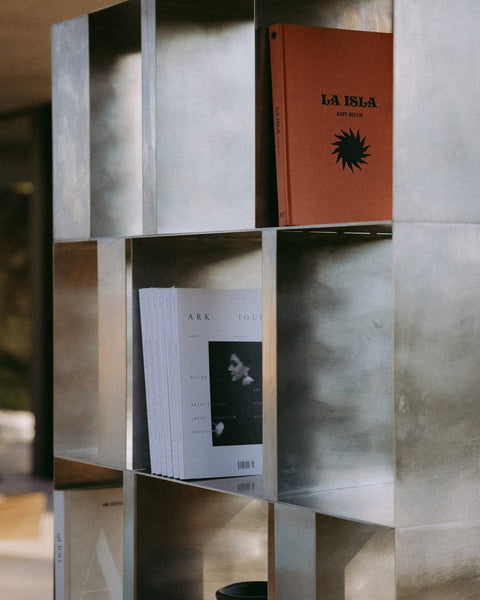
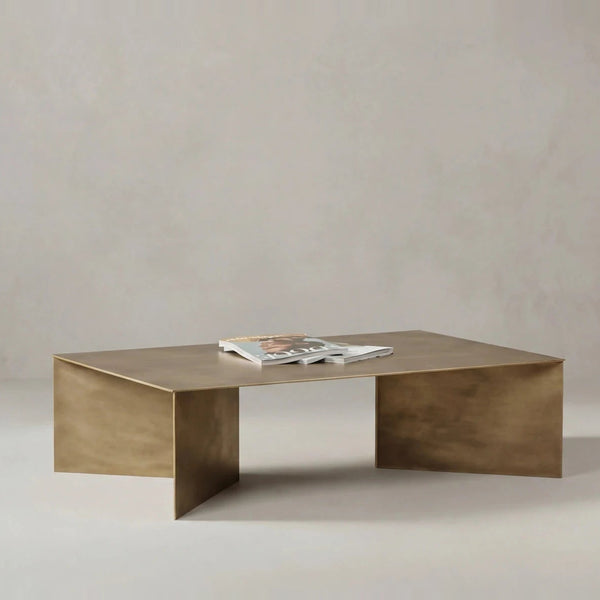
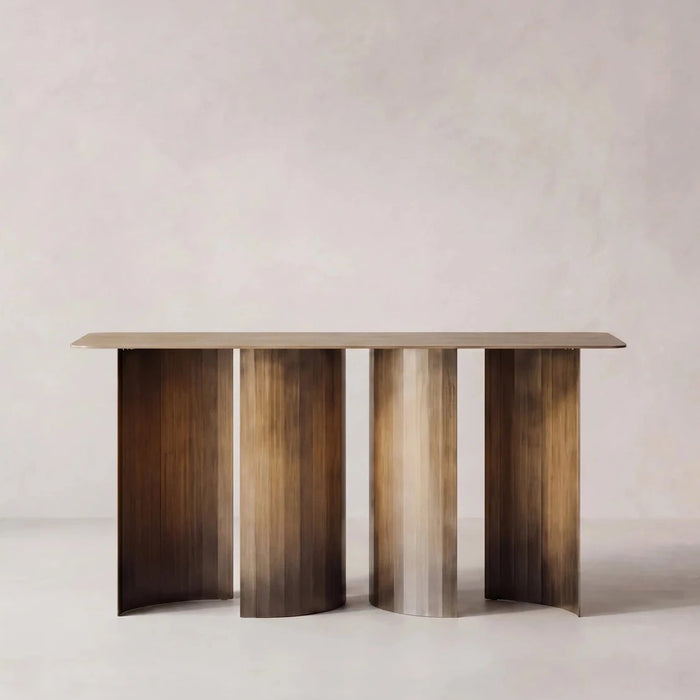
Burnished brass is made to be used, and caring for brass here mainly means using it with composure. Objects may be set down on the surface, even without coasters, as long as they are placed gently and level [1]. A book on ELYSIAN, a ceramic bowl on the TUKKON CONSOLE, a set of keys on YORU: all of this is part of living with a piece that does not want to stand behind glass.
- Setting down: gently, keeping things level
- Coasters and felt pads: recommended, not necessary
- Scratches: ask the workshop
The workshop nevertheless recommends coasters under glasses and felt pads under vases or candlesticks [1], though they are not necessary. Spills are wiped up promptly so that no ring forms, and for hot cups or pots a mat is the calmer choice.
Should the surface ever show a scratch, the workshop is the right point of contact. It repairs scratches on request and gives an estimate of the work involved beforehand; for scratches you have caused yourself, this work is charged [1]. A photo in daylight and a few sentences about the spot are enough for an initial assessment. Touching it up yourself rarely succeeds, because neither a lacquer pen nor a polish matches the tone of a burnishing created by hand.
From table to wall: each piece at its own pace
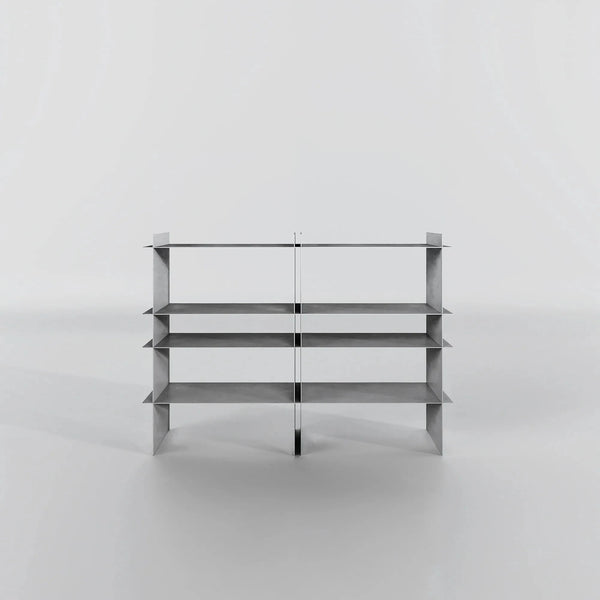
How often you should care for brass depends on how close a piece is to everyday life. The top of the ELYSIAN coffee table holds glasses and books and is the one most often given a cloth with soapy water. The front of the YORU chest of drawers and the surface of the TUKKON CONSOLE usually only need a dry cloth against dust, followed by a damp one when needed.
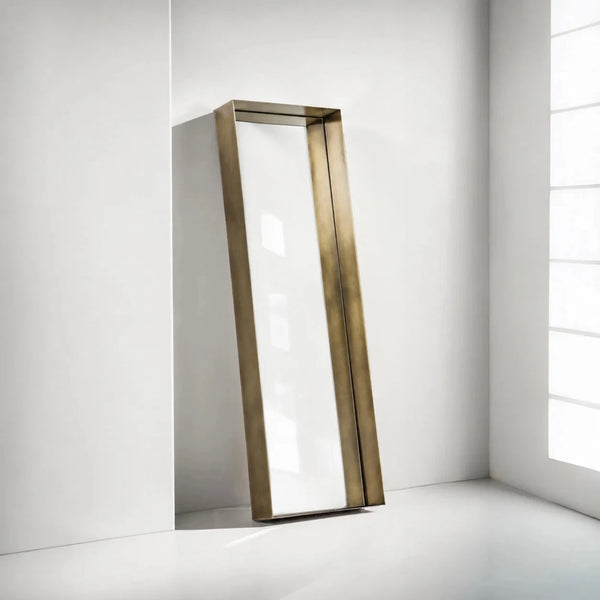
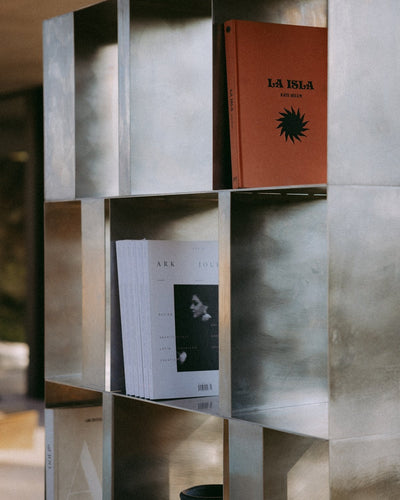
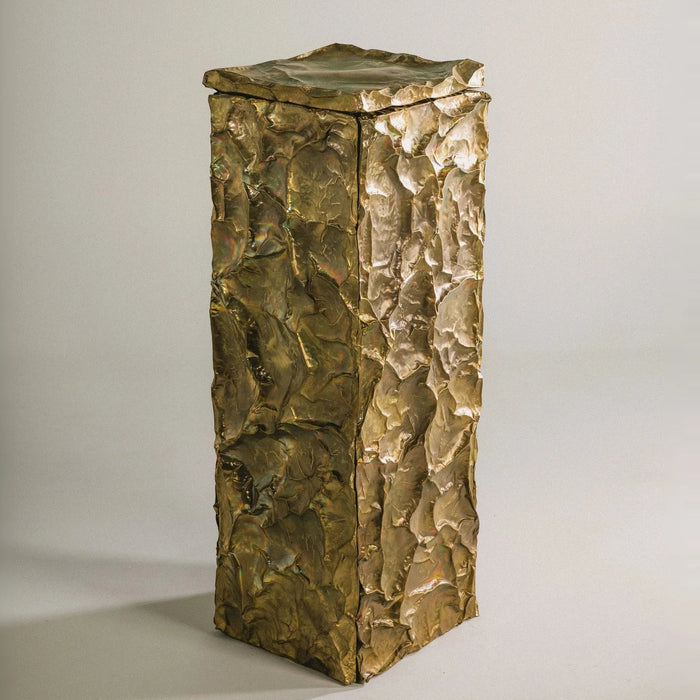
The frame of the REFLEXION mirror is rarely touched. An alcohol-free glass cleaner, the kind used for the mirror glass anyway, also suits the frame. On MONOLITH GOLDEN PEAK, the cloth follows the hammered surface without pressure, so that nothing collects in the hollows. In this way every brass piece stays just as it was delivered, in tone and in depth.
With burnished pieces, cleaning and caring for brass mainly means doing little, and doing the right thing: a mild cleaner, a soft cloth, an attentive eye on what you set down. The patina is what the workshop gave the metal, and the sealing ensures that it stays.
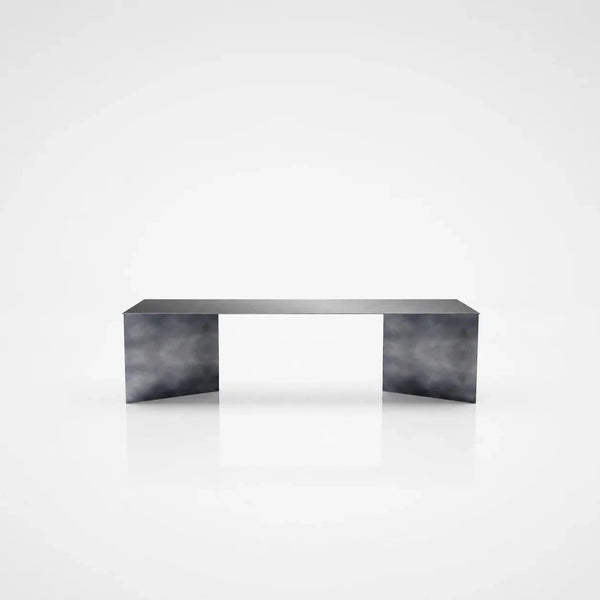
How stainless steel with its cloudy grain is cared for is explained in the article cleaning brushed stainless steel; how the two metals work together in one room is shown in Brass or stainless steel.
Mentioned in this article
Pieces from this article.


Frequently asked questions
What can you use to clean brass?
Burnished and sealed brass, as on ZinCuTec furniture, is cleaned with an alcohol-free glass cleaner or with soapy water and a soft cloth; microfibre works well. The surface is then wiped with a dry cloth. A pH-neutral cleaner is also possible. Polish, abrasive cleaners and harsh household cleaners are unsuitable because they attack the sealing. Guides with kitchen recipes refer to bare brass without a protective layer.
Which household remedies are suitable for cleaning brass?
For sealed, burnished brass, soapy water is the only household remedy, and nothing more is needed: lukewarm water, a few drops of mild washing-up liquid, a soft cloth wrung out well, then wipe dry. Acidic or abrasive household remedies are intended for bare metal and have no role on a sealed surface.
How do you clean lacquered or sealed brass?
With lacquered or sealed brass, you clean the transparent protective layer, not the metal. A soft cloth with alcohol-free glass cleaner or soapy water removes dust and water marks, and a dry cloth takes up the moisture. Anything abrasive, such as polish, scouring cream or steel wool, would dull the lacquer and expose the brass beneath.
Does burnished brass need polishing?
Burnished brass already has its tone: it is created during burnishing in the workshop, and the sealing above it holds it. A polish would first remove the clear lacquer and then the patina, until bright metal appears at that spot. Burnished brass is therefore not polished but cared for with alcohol-free glass cleaner or soapy water and a soft cloth.
Can objects be placed directly on burnished brass?
Yes. Objects may be set down gently, even without coasters, as long as they are placed level. Coasters under glasses and felt pads under decorative pieces are a recommendation, but not necessary. Spills are wiped up promptly. If a scratch occurs, the workshop repairs it on request and gives an estimate of the work beforehand.
How often should brass furniture be cared for?
There is no fixed rhythm. Surfaces used daily, such as a coffee table top, are given a damp cloth with soapy water or alcohol-free glass cleaner more often; frames, fronts and wall pieces usually just a dry cloth against dust. According to the workshop, no further care products or retreatment of the sealing are necessary.
Sources & references
- [1]ZinCuTec GmbH: Angaben der Werkstatt zu Brünierung, Versiegelung und Pflege (Oktober 2026) sowie Produktangaben ELYSIAN, YORU, TUKKON CONSOLE, REFLEXION und MONOLITH GOLDEN PEAK, abgerufen am 28.10.2026 zincutec.eu/pages/handgefertigte-messingmoebel
- [2]Diehl Brass Solutions: Werkstoffdatenblatt 023, CuZn37 (CW508L), abgerufen am 28.10.2026 diehl.com/cms/files/Diehl_Brass_Solutions_Werkstoffdatenblatt_023.pdf
How we work: journal articles are written in the workshop, checked by a specialist before publication and updated when something changes. Editorial principles
Read on
You might also like.

Burnished brass: why it is the burnishing that makes the metal precious
What happens in the metal during burnishing, how the patina is created in the workshop and why the sealing keeps it exactly as it was when it left the workshop.Read article
How to recognise high-quality furniture: eight details you can touch
Weld seam, edge, surface, weight: how the quality of a metal piece of furniture can be checked by hand before you believe a description.Read article