













Cleaning and caring for brushed stainless steel: calm for the cloudy grain
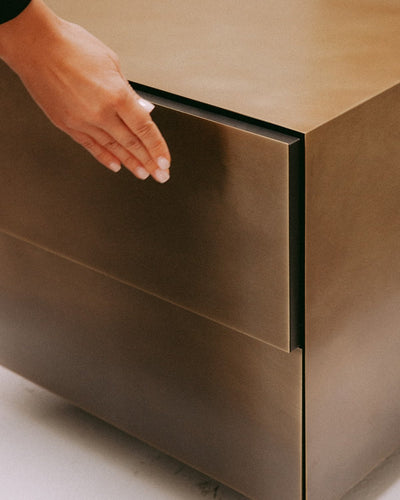
Beneath a clear lacquer lies a grain like a lightly clouded sky. What you care for is the layer above it, with alcohol-free glass cleaner or soapy water, and for scratches there is the workshop.

In brief
- At ZinCuTec, cleaning brushed stainless steel means keeping the clear lacquer over a cloudy grain clean; the dining tables have a 2K clear lacquer.
- The workshop recommends alcohol-free glass cleaner or soapy water with a gentle cloth, for example microfibre, followed by a dry cloth.
- Polish, abrasive cleaners and chemical household products stay away from the surface; candle wax is removed carefully with silicone remover.
- Scratches belong in the hands of the workshop: it reworks the spot on request, with the effort stated in advance.
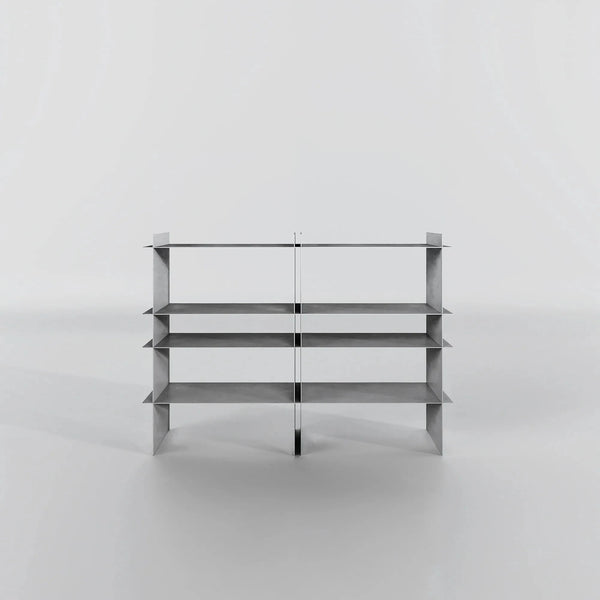
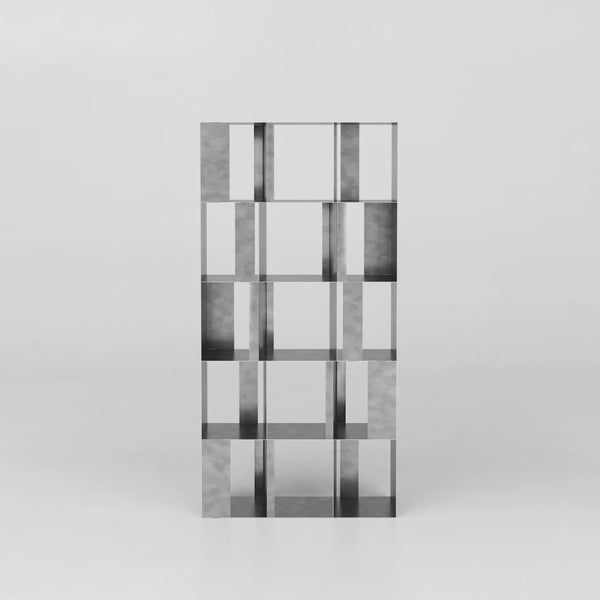
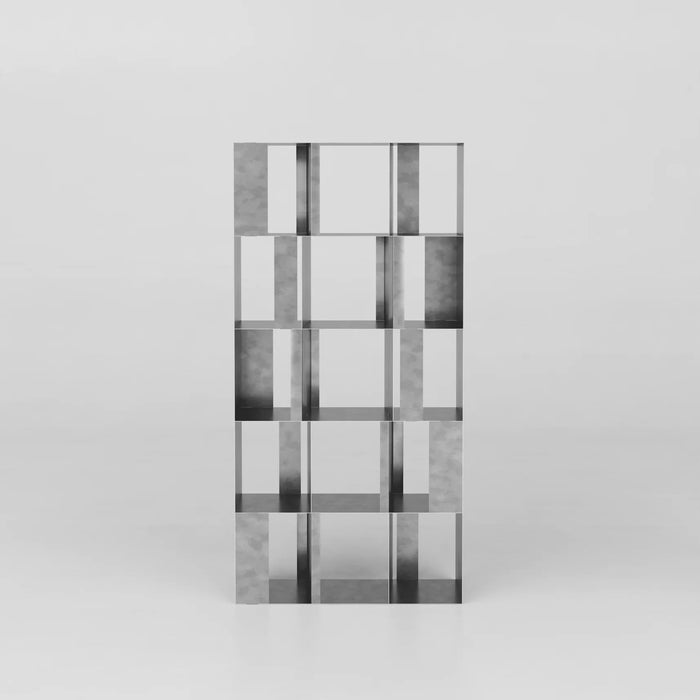
- The INFINITY BOOKSHELF is left RAW, may be wiped wet and is kept free of grease.
Contents
- 01The cloudy grain beneath the clear lacquer
- 02Cleaning stainless steel day to day: two products, two cloths
- 03At the dining table: plates, glasses and candle wax
- 04Scratches in brushed stainless steel: a job for the workshop
- 05Caring for stainless steel furniture, from the table to the open shelf
- 06Frequently asked questions
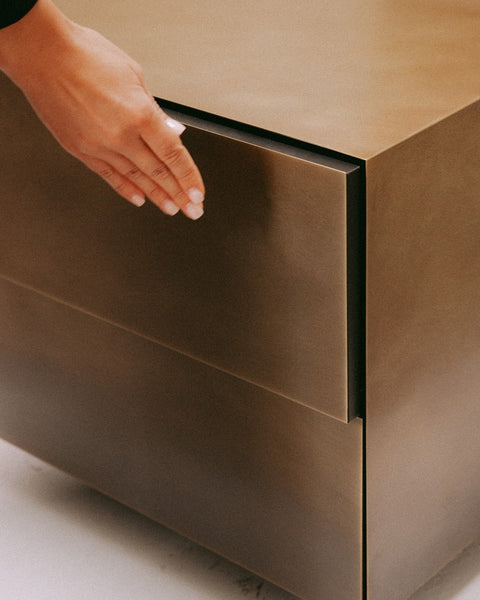
On a ZinCuTec dining table, cleaning brushed stainless steel is a quiet habit. Beneath a clear lacquer lies a grain reminiscent of a lightly clouded sky: light spreads softly within it instead of gathering in lines. What you care for is the sealing above it, and it needs very little: an alcohol-free glass cleaner or mild soapy water and a gentle cloth.
Most of the tips you find on stainless steel concern sinks, taps and cooker hoods, in other words open metal in the kitchen. A sealed piece of furniture follows its own rules. This article shows why the grain looks so calm, how to care for a stainless steel table in everyday life, what helps with candle wax and scratches, and why the INFINITY BOOKSHELF is an exception.
The cloudy grain beneath the clear lacquer
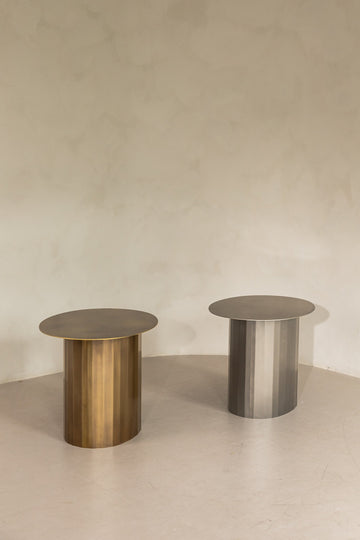
ZinCuTec makes its stainless steel pieces from material 1.4404, a stainless steel of the V4A grade [1]. In the workshop, every surface is given a cloudy grain [1]: the traces of sanding overlap in soft fields without following a line. In raking light a top therefore looks silky and alive, in direct light evenly matt.
- Material: stainless steel 1.4404 (V4A)
- Grain: cloudy, on all pieces
- Protection: 2K clear lacquer on dining and coffee tables, clear lacquer on the other pieces
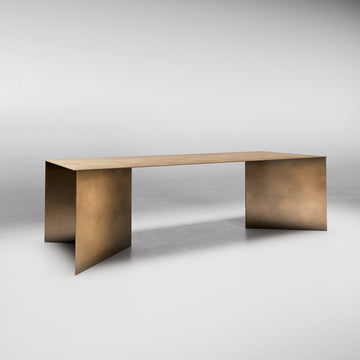
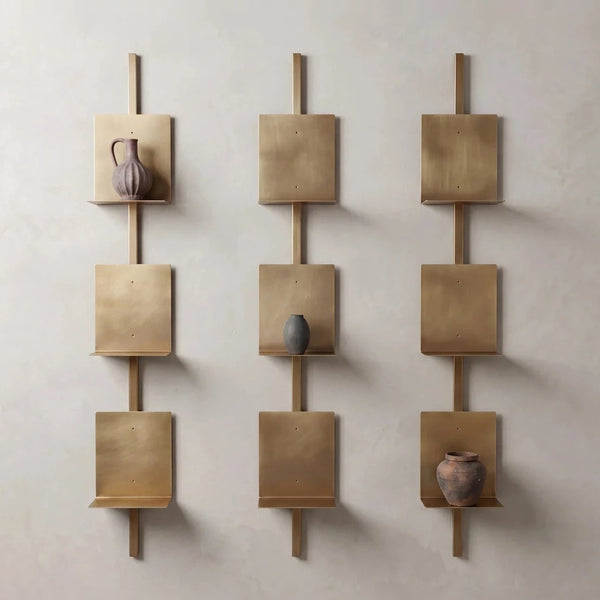
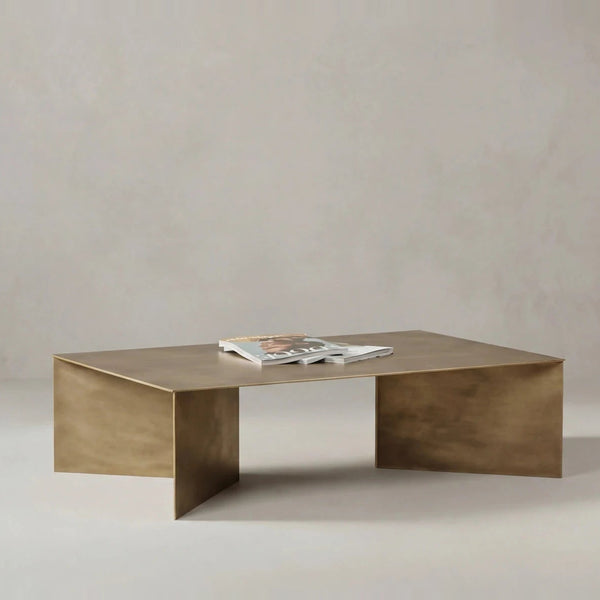
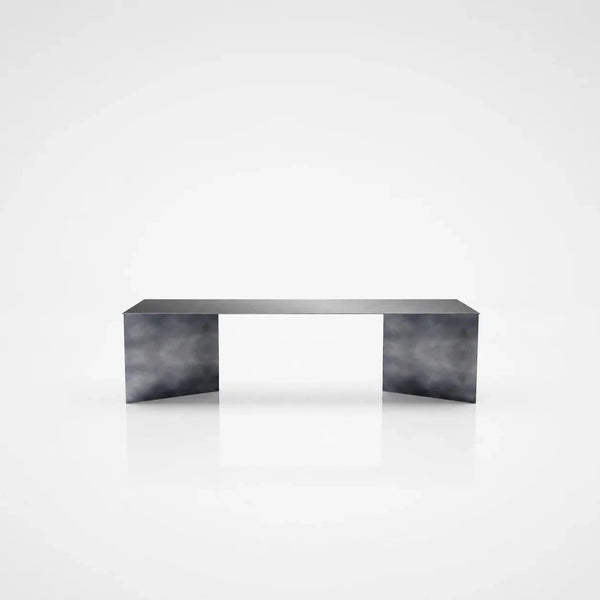
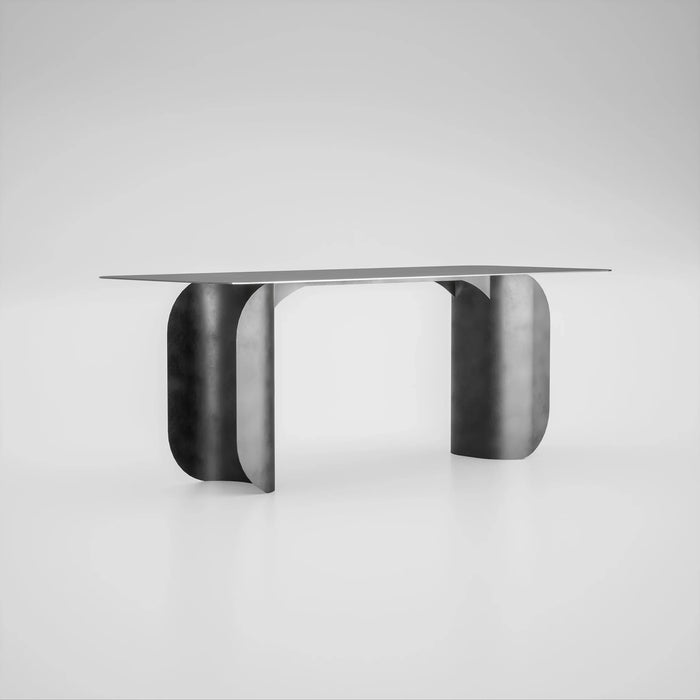
Over the grain lies a clear lacquer. The dining tables SAMURAI, SATORI, ZEN DINING TABLE and PYRAMID TABLE, like the coffee tables, receive a 2K clear lacquer; the wall shelves a 1K clear lacquer; the bench, the console and the TAISHO shelf a clear sealing [1]. The grain remains fully visible beneath it. What you clean, therefore, is not the stainless steel itself but the smooth, transparent skin above it.
What “brushed” means as a surface, and how it looks alongside burnishing and RAW, is explained in the article Metal surfaces compared; why the furniture is made from V4A is covered in V2A and V4A stainless steel in furniture. For everyday life this means: the work on the grain is done when a table leaves the workshop, and the lacquer preserves it.
Cleaning stainless steel day to day: two products, two cloths
For everyday use, the workshop names two products for cleaning stainless steel: alcohol-free glass cleaner and soapy water [1]. If you have a pH-neutral cleaner at home, you can use that too [1]; glass cleaner and soapy water remain the first choice. The soapy water is made from warm water and a splash of mild washing-up liquid; the cloth soaks it up and is wrung out until it is only damp. Glass cleaner is particularly suitable when a top should look clear again after an evening with guests.
- Cleaner: alcohol-free glass cleaner or soapy water
- Cloth: gentle, ideally microfibre
- To finish: wipe dry
A microfibre cloth is a good fit [1]. Guide it without pressure in calm, broad strokes over the top and take up the moisture straight away with a second, dry cloth. That way nothing dries on the lacquer, and the surface stays free of streaks and water marks. This is the calmest way to clean matt stainless steel, because no residue disturbs its silky look.
Fingerprints are not a care issue with these surfaces: according to the workshop, the sealing does not hold on to them [1]. Cleaning stainless steel here therefore mainly means removing dust and dried drops after a meal.
Polish, scouring cream, steel wool and chemical household products do not belong on the surface [1]. They would dull the clear lacquer and disturb the grain at that spot. The household remedies in kitchen guides are meant for open metal; on a sealed table, soapy water remains the product of choice.
At the dining table: plates, glasses and candle wax
A stainless steel dining table is made for what happens at it. Plates and cutlery may lie directly on the top; as with any surface, a scratch remains possible, for instance from the rough, unglazed base of a plate [1]. If you set things down gently and level, you do not need a coaster [1].
- Plates and cutlery: directly on the top is fine
- Coasters, placemats, felt pads: recommended
- Candle wax: silicone remover, carefully
Whether placemats, coasters and small felt pads under vases go on the table is a matter of taste; the workshop recommends them but does not require them [1]. If you like them, use them; if you prefer to see the whole surface, lay the table directly with a little care. Spills are wiped up promptly, before they dry.
Candles are part of a long evening at the table, and sometimes a drop of wax is left behind. Then put a little silicone remover on a soft cloth and wipe carefully over the spot [1]. Knives, scrapers or fingernails are not used, as they would put the lacquer at risk. Finally, the spot is cleaned with soapy water and wiped dry.
Scratches in brushed stainless steel: a job for the workshop
A scratch in the top is a matter for the workshop: it reworks the spot on request [1]. Before it begins, it states the effort involved [1]; for a scratch caused by the customer, the customer bears this cost [1]. Photos of the spot from two or three angles make the initial assessment easier.
- First step: contact the workshop
- Effort: stated in advance
- Sanding it yourself: not on sealed surfaces
Taking matters into your own hands gets you nowhere with a sealed piece of furniture. An abrasive pad, as suggested in guides for open stainless steel, would first go through the clear lacquer and then into the stainless steel. What would remain is an unprotected spot whose grain stands out from the cloudy pattern around it. The workshop, by contrast, knows the grain it created itself.
If you care for stainless steel in everyday life, watch above all for hard objects dragged across the surface: a set of keys, the foot of a bowl, a belt buckle on the bench. A piece of felt and a fixed place for keys usually keep the top free of them.
Caring for stainless steel furniture, from the table to the open shelf
How often you should care for stainless steel depends on use. The tops of SAMURAI, SATORI and ZEN DINING TABLE are given a damp cloth after meals. The seat of the ZEN BENCH and the levels of the TAISHO shelf usually only need a dry one against dust.
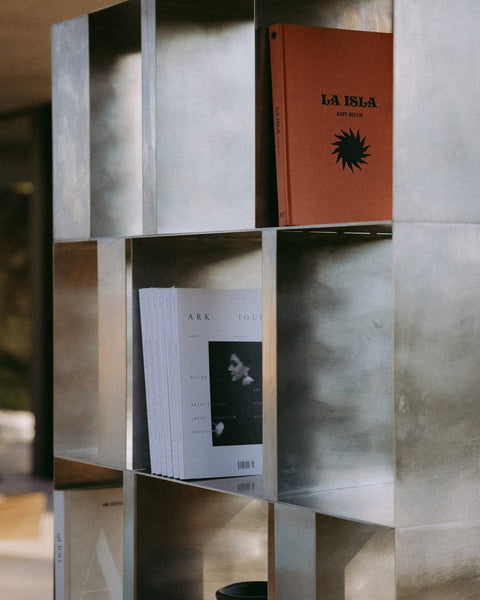
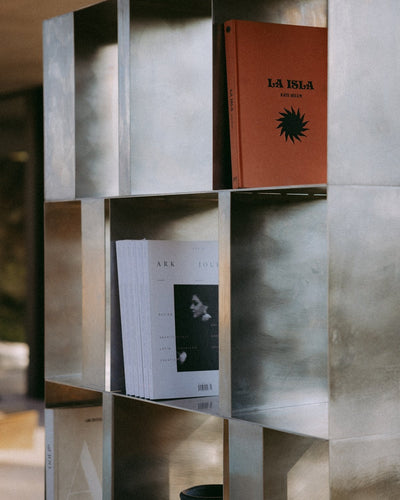
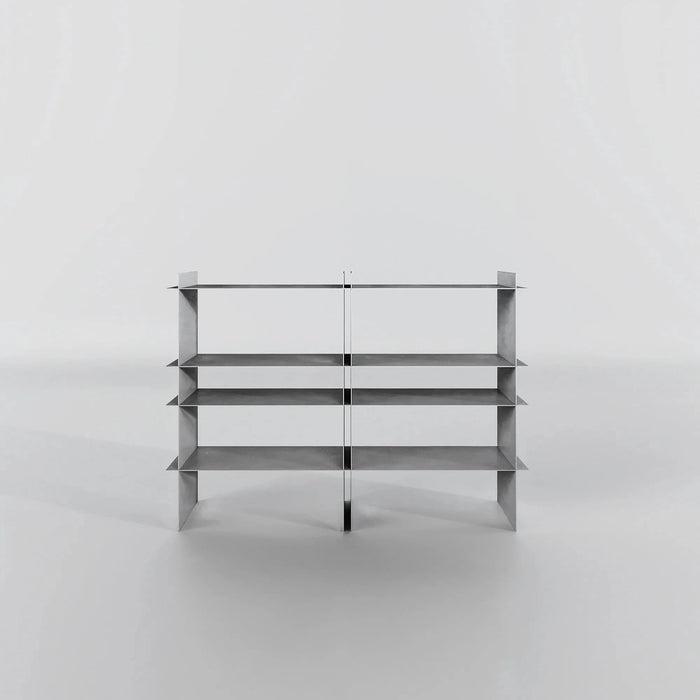
The INFINITY BOOKSHELF is an exception. Its modules are left RAW; it is the only piece without a sealing [1]. The open stainless steel may be wiped wet; its surface can react to grease [1]. Oil or greasy products, which some guides recommend for caring for stainless steel, are therefore kept away from the shelf.
The cloudy grain of the tables remains beneath its lacquer as it came from the workshop, and the shelf keeps the open character for which it was left RAW.
At ZinCuTec, caring for brushed stainless steel means giving a finished grain room: alcohol-free glass cleaner or soapy water, a gentle cloth, a second one for drying, and the workshop for anything more. The rest is use, and that is what a dining table is made for.
How the burnished brass pieces are cared for is explained in the article Cleaning and caring for brass; the binding notes on warranty and care can be found on the Warranty and care page.
Mentioned in this article
Pieces from this article.


Frequently asked questions
How do you clean brushed stainless steel?
On ZinCuTec furniture, a clear lacquer lies over the brushed stainless steel. It is cleaned with alcohol-free glass cleaner or soapy water on a gentle cloth, for example microfibre, and then wiped dry; a pH-neutral cleaner is also an option. Polish, scouring cream, steel wool and chemical household products would dull the lacquer and are therefore left out.
Can you clean stainless steel with glass cleaner?
Yes. For sealed stainless steel furniture, the ZinCuTec workshop expressly recommends an alcohol-free glass cleaner. It is used sparingly, after which you wipe with a dry, clean cloth. For open metal without a sealing, for example in the kitchen, the respective manufacturer’s instructions apply.
How do you get brushed stainless steel streak-free?
Streaks appear when residues of cleaner or water dry on the surface. On a sealed top, alcohol-free glass cleaner on a gentle cloth helps, followed straight away by a second, dry cloth that takes up all the moisture. Nothing else is needed.
How do you remove fingerprints from brushed stainless steel?
With sealed ZinCuTec furniture the question hardly arises: according to the workshop, the sealing does not hold fingerprints. The surface is cleaned as usual with alcohol-free glass cleaner or soapy water. On open stainless steel without a protective layer, for example on kitchen appliances, they show up more often.
Which household remedies are suitable for stainless steel furniture?
For sealed stainless steel furniture, soapy water made from warm water and a mild washing-up liquid is enough. Acidic or abrasive recipes from kitchen guides are meant for open metal and attack a clear lacquer. As a second product, the workshop recommends alcohol-free glass cleaner.
How do you remove candle wax from metal?
On sealed metal surfaces such as ZinCuTec tables, candle wax is wiped off carefully with a little silicone remover on a soft cloth. The spot is then cleaned with soapy water or alcohol-free glass cleaner and wiped dry. Knives, scrapers or fingernails are not used.
Can scratches be removed from brushed stainless steel?
Not by yourself on sealed furniture: an abrasive pad would cut through the clear lacquer and change the grain at that spot. The ZinCuTec workshop repairs scratches on request and states the effort involved before it begins. Self-inflicted scratches are charged.
Sources & references
- [1]ZinCuTec GmbH: Angaben der Werkstatt zu Werkstoff, Schliffbild, Versiegelung und Pflege (Oktober 2026) sowie Produktangaben SAMURAI, SATORI, ZEN DINING TABLE, ZEN BENCH, TAISHO und INFINITY BOOKSHELF, abgerufen am 28.10.2026 zincutec.eu/collections/esstische
How we work: journal articles are written in the workshop, checked by a specialist before publication and updated when something changes. Editorial principles
Read on
You might also like.

Burnished brass: why it is the burnishing that makes the metal precious
What happens in the metal during burnishing, how the patina is created in the workshop and why the sealing keeps it exactly as it was when it left the workshop.Read article
How to recognise high-quality furniture: eight details you can touch
Weld seam, edge, surface, weight: how the quality of a metal piece of furniture can be checked by hand before you believe a description.Read article